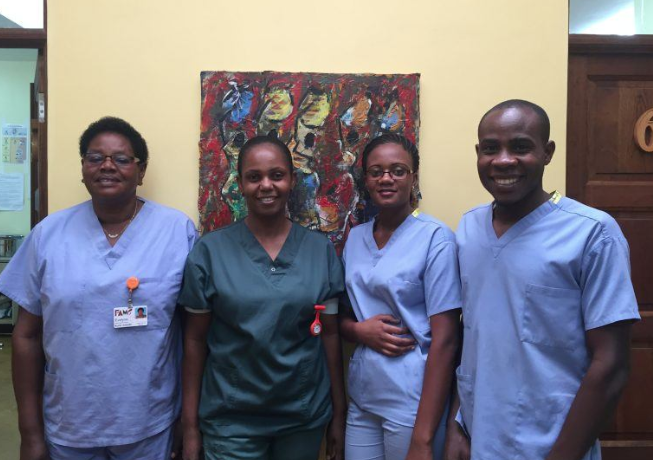
"I promised that I would never let them down." - Barnabas, Lab Tech

Based on interviews with Barnabas, FAME Lab Technician

 
Barnabas testing urine samples in our laboratory.

Barnabas testing urine samples in our laboratory.

Barnabas grew up in Tabora, about 522 km from FAME. Even when he was young, it was his dream to work in medicine. When he finished his schooling, he traveled to Babati to work as a Lab Tech Assistant. “I chose to work in the lab because I was interested in knowing the source of infection,” Barnabas reflected. “I like to see the different kinds of information from bacteria.” In 2013, he saw an ad for a position in FAME’s laboratory, applied and was hired. Two years later, he talked to the Laboratory Manager, Anthony, about furthering his education. “I told [Anthony] that I wanted to go back to school for a year, but that I wanted to come back to FAME to work again,” Barnabas explained. “[Anthony] said he would talk to the FAME leadership team to see if I could receive support because my plan was to return to FAME. Anthony, Frank, and Susan said they appreciated how I was doing my job. When the team said they were ready to support me, it was such good news for me to hear.” Barnabas returned to his hometown of Tabora in 2015 to attend school for one year to become a Laboratory Technician. “I promised that I would never let them down,” Barnabas said. “I did well and came back with a new title.” He didn’t want to leave FAME because he enjoys the way all the departments collaborate. “We know how to work as a team,” Barnabas said. “Everyone is willing to help other departments. No one sees any difference between all the specialties, which is a result of our strong teamwork. In return, our patients appreciate our service because we get good results.” A deeply committed staff member, Barnabas concluded by saying, “I promise I will work hard for FAME in order to improve our service.”
 
FAME Africa
"I started from zero." - Catherine, RN

Based on interviews with Catherine, FAME RN

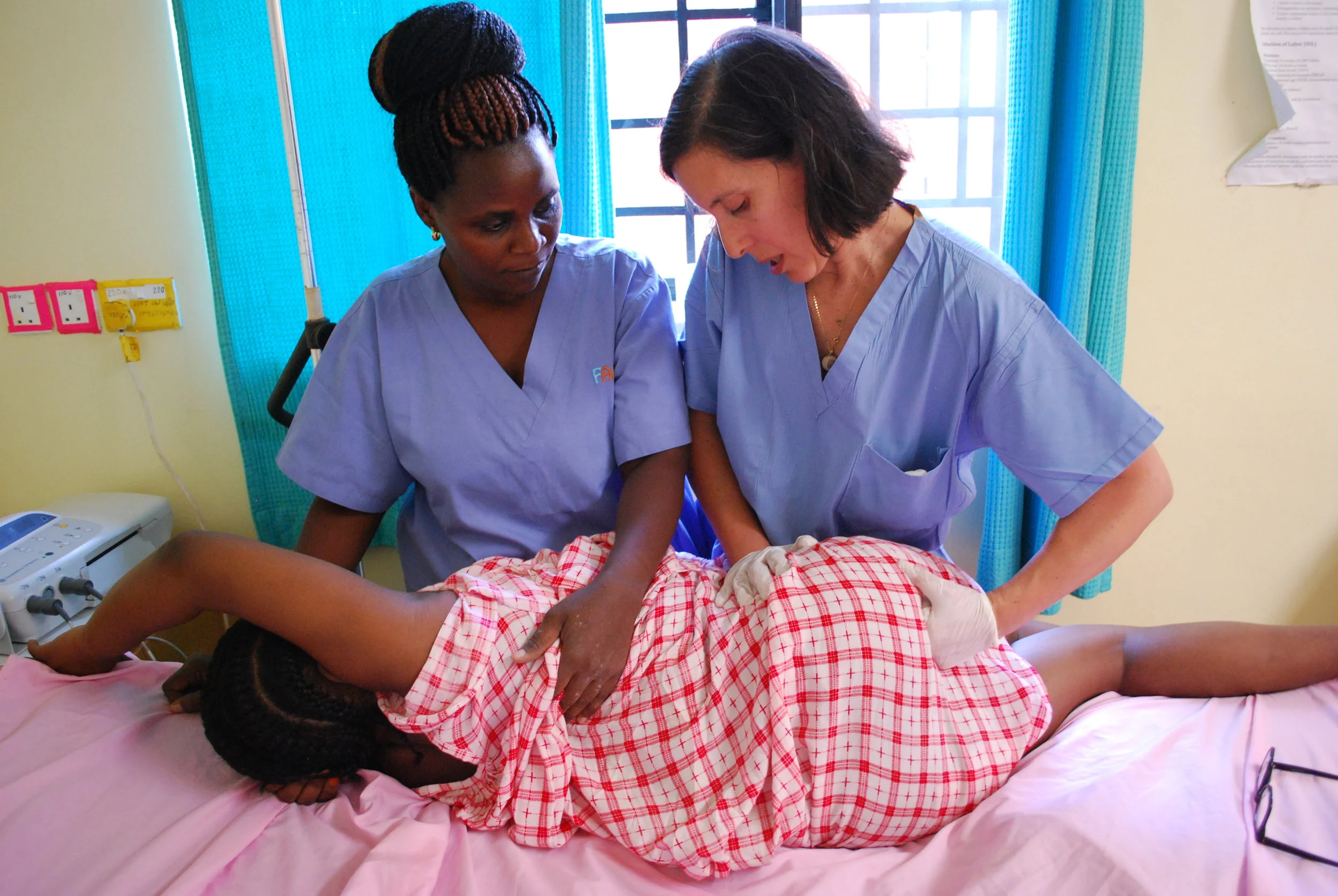
Catherine learning about birth positioning techniques with volunteer, Ann, in one of our delivery rooms.

Catherine learning about birth positioning techniques with volunteer, Ann, in one of our delivery rooms.

With her family living in Karatu, Catherine came to FAME in 2009 while still in secondary school. At this time, the team was still preparing the land for what was to become the FAME Hospital. Catherine started working on the housekeeping team, assisting some of the other members with the houses on campus. During her first year, she met Dr. Frank’s sister Jeanne.  Jeanne sat with her one day and asked her what she wanted to be when she finished secondary school. Catherine responded that she wanted to be a nurse. She shared stories about when she was young, already dreaming of being a nurse. “I used to tell all the other children that I was a nurse. They would bring me their “sick people” which were just stones. I would even pretend to give the stones injections.” After observing her aunt working as a nurse in a local hospital, she knew it was a profession she would be passionate about. FAME eventually offered her a scholarship to go to nursing school. As the youngest of seven children, she knew she would have to support herself if she wanted to achieve her dream. “I was planning on taking a break between secondary school and nursing school to work to make money to pay school fees,” she told us. “My family was so happy [when I received the scholarship]. They couldn’t have supported me on their own.” With all three years of tuition covered, Catherine had time to focus on her studies and enjoy school. She consistently received good marks and didn’t have to repeat any subjects. Now, she is one of our Registered Nurses, working with patients in both the Inpatient and Maternity wards. She enjoys working at FAME because “we have enough equipment and man-power.” From housekeeping to nursing, Catherine says, “I am so proud. Frank, Susan, and Jeanne are very important people in my life. I just thank them.”

 
FAME Africa
The Body Knows

By volunteer Ann Marie Gilligan, Registered Nurse

Blog originally posted on the Every Mother Counts website here.


Hospitals are not only for the sick. It is essential that women receive skilled health care when they give birth. In Tanzania, the rate of maternal and infant mortality is one of the highest in the world. FAME-Africa encourages women, particularly those with a high-risk pregnancy, to get to the hospital for their birth, especially if they do not have access to a skilled birth attendant, even if it may require many hours for their journey.

In my two weeks training the staff at FAME, I assisted in many births. I was asked to come and facilitate training for the medical team in “Maternal Positioning for Optimal Fetal Positioning.” This is a specialized training that optimizes fetal and maternal well-being by helping the fetus move into the ideal position for birth through a variety of maternal positioning. It is a very safe and straightforward process.

The first step of this process is to view the pregnant mother’s abdomen while she is lying flat on the bed. You get down to the level of the bed and observe which side of the uterus the fetus is leaning towards. Next, you do what is called ‘Leopold’s Maneuver’ to determine where the back of the fetus is in relation to the maternal spine and where the head of the fetus lies in relation to the maternal pelvis. You might then do a sterile vaginal exam to determine the dilatation and location of the fetal head. Based on these observations, you will then instruct the woman, through demonstration and a thorough verbal explanation, which positions she might take to facilitate moving the fetus into a more optimal position: specifically, the fetus’s back on the maternal left.

Studies are consistent in the conclusion that if a fetus is in one of the many less optimal positions at delivery, this alone is associated with a higher risk of adverse neonatal and maternal outcomes. This is why I am passionate about what I do and why I want everyone to learn more about it.

A young primigravida (a woman pregnant for the first time) from the Maasai tribe was admitted to FAME at 5:00AM in labor. She was examined vaginally prior to my arrival at 8:00AM, and was found to be 2cm dilated and the baby had not yet descended into her pelvis. She reported that she had been laboring for 24 hours. When I met her, she was lying laterally in her bed. Each time her uterus would contract, she sang out in a high pitch cry while rapidly slapping her lower back.

With the help of Tanzanian nurses interpreting for me, I told her that I would very much like to see if I could help rid her of her obvious lower back discomfort. She immediately said yes, and we walked with her to the room in the back of the ward where two delivery beds occupy a room that also serves as a nursery. My Tanzanian RN peer asked permission to touch her body and we viewed her abdomen, then placed our hands on her baby in utero and concluded what position she was in. This little one had somehow decided that the maternal right side was her temporary home while her head was up against the maternal iliac crest (hip bone). If the labor continued with the baby in this position, it could present multiple problems.

ann blog 2.jpg

Her contractions were palpating strong and were frequent, occurring every three minutes. Our patient was visibly tired and appeared to be in a lot of pain. Our goal was to help the baby get over to the maternal left side, therefore decreasing the discomfort to the woman’s sacrum.

First up was a 5-minute warm shower. The water was aimed frontal and low in the abdomen. This can help relax the muscles and ligaments supporting the uterus. Next, she was instructed on how to do some yoga stretching to bring the respiratory diaphragm off the top of her uterus. The abdominal lift came next to help the infant into a chin flexed position that would enable her to rotate to the other side of the uterus. Our last maneuver is named the “side lying release.” She was assisted into this lateral position in bed and her top leg was brought over and off of the bed. This technique stretches the lower uterine ligaments to make more room for the infant to rotate.

Once her baby was determined to be in the optimal position, I instructed her to get out of bed. I told her to use her voice to help release the intensity of her powerful contractions that were now felt solely in the front of her uterus, near her cervix. She was encouraged to make noise through calm rhythmic breathing and noises that she could call her own. I told her to listen to her body, as it is wise, and will guide her through purposeful movements. Once I gave her this permission and guidance, she became very fluid and danced through her contractions in a way that I have not witnessed in a very long time. She arched her back, swayed her hips, squatted, lifted her arms and waved them in unison. Her voice could be heard throughout the unit and out onto the paved walkways of this open facility. At one point, a male doctor came to check on her and he joined her in dance. We, including the woman, thought this doctor was funny and so we all laughed and danced together.

I encouraged the woman to continue in the upright position, taking short moments to rest when she could, while sitting on the birth ball with her head leaning onto the bed. Food and tea was encouraged throughout her labor. Her mother was always by her side. 

The next morning, I did not attend the daily doctors’ meeting and instead looked for the woman so that I could find out the result of her amazing efforts in labor. Isdori, one of the male midwives on staff, had assisted in her birth. I had left at 4:00PM, and she had delivered 2.5 hours after that, at 6:33PM. She had pushed for as little as one hour and her daughter had an Apgar score (a quick method to summarize the health of a newborn) of 9/10.

I walked into her room, occupied by two other post-partum mothers. She was still shielded by her draped mosquito netting. Her body was turned towards the wall in a fetal position wrapped around her newborn. I called out her name and her face turned towards me. She smiled – a smile that told me, “I did it, I am proud.” I stroked her forehead and smiled back, telling her she was so strong and brave. Her expression, the one of ultimate self-satisfaction, made my long trip to Karatu, Tanzania all the more worthwhile.

 
FAME Africa
An Evening Shared in the Labor and Delivery Unit at FAME-Africa
 

By Volunteer, Ann Marie Gilligan, Registered Nurse

Blog originally posted on Every Mother Counts website here.

I have worked the last several nights with a team of nurse-midwives in the Labor and Delivery unit at FAME-Africa, a grantee partner of Every Mother Counts. A nurse-midwife is a Registered Nurse that has additional training in pregnancy, childbirth, and postpartum care. All of the nurses at FAME-Africa who work in the Labor and Delivery unit have the title of “Midwife.” They are an incredible team, and I want to honor them by writing my first blog about what it is they do, day in and out, with a smile on their face. In the US, my job as a Labor and Delivery RN is hard. At least, I used to think so. This Tanzanian team is responsible for phlebotomy, level 2 nursery, ICU (intensive care unit), OB (obstetric) patients, OR (operating room), Post-Partum care, gastrointestinal examinations, the pharmacy, AND they deliver 50% of the babies. They are not assigned a patient, they work as one. Their individual care is woven together in a seamless fashion, creating a layer of excellent care provided at FAME.

 
Evelyn, Ruhama, Agness and Jacob, nurse-midwives at FAME

Evelyn, Ruhama, Agness and Jacob, nurse-midwives at FAME


Yesterday, after an already trying day, a patient was brought into the unit after suffering a seizure at home, seven days post-partum. She had global confusion, no ability to speak and responded only to deep pain stimuli. When told she would be arriving soon, none of the team members were on edge or changed what they were doing to prepare for this patient’s arrival. “We have seen this many times,” was the answer when I asked about their calmness. This team cared for her in a way in which I will never forget. The patient was brought in with her newborn in her mother’s arms, wrapped in several colorful African cloths. She was placed in a semi-private room with two other patients. One was a twin pregnancy with premature rupture of membranes and the other a laboring young woman.

Agness, Jacob, Evelyn, and Ruhama were part of her team of care. Agness got her settled, took her vital signs and welcomed her family. Jacob restarted her infiltrated IV within seconds in a hand where I couldn’t begin to see a vein available for use. Mama Evelyn put in a Foley catheter and got labs as the others handed her supplies without the need to be asked. Ruhama put in an NG (nasogastric) tube and spoke to the physician on call for orders. You have to realize how critical this patient was – she easily belonged in an ICU in the States.

These nurse-midwives already had a full unit of women laboring, postpartum and antepartum. When orders were placed by the efficient Tanzanian physician, they included a very critically needed yet potentially heart-stopping medication. In the US, this is prepared by a registered pharmacist. Ruhama calmly broke open the vials, confidently drew them up into her multiple syringes and gave a very combative patient her anti-seizure meds via IV and IM (intramuscular). After the patient calmed down, porridge was prepared by yes, a nurse-midwife, and placed, warmed, down her NG tube with precision and respect, having made sure the temperature was just right by placing a droplet on her forearm before pushing it into her stomach. The nurse-midwife talked to her comatose patient each time she came in contact with her, checking her mental status but also knowing the importance of including the patient in their care. My role could have included assisting with a number of those skills performed last night but I knew in my nurse bones that I was witnessing a symphony. So, I stood and watched, taking note, and beaming with gratitude that I can be included in this group called Registered Nurses.

 
Salina, two days post presenting to FAME-Medical with a complication

Salina, two days post presenting to FAME-Medical with a complication


The next morning I arrived on the unit. This new mama was lying in bed, surrounded by her immediate family, nursing her newborn with a glowing expression on her face.

 
FAME Africa
It Takes More Than A Village

By FAME Communications and Marketing Coordinator, Kathrine Kuhlmann

DSC_0259.JPG

There we were, with a sweet baby boy, who was barely a day old and suddenly an orphan. His Maasai mother had succumbed to eclampsia shortly following his birth. He was a small newborn and was placed into one of our incubators upon arrival, but he was strong.

One of FAME’s social workers, Kitashu, sprang into action as soon as he heard of the child’s current circumstances. He immediately contacted the family that was far from FAME in a very remote village in the Ngorongoro Conservation Area. He knew he would need to involve the family to find someone to breastfeed and help care for this charming baby boy. At FAME, and throughout Tanzania, the nurses know formula feeding is not a sustainable solution due to limited resources. In most cases in which a mother does not survive pregnancy, nurses and social workers look for a relative or neighbor with young children who can breastfeed an additional child. For this baby, it was a challenge for Kitashu to find someone. After communicating back and forth with the child’s village and relatives, he finally found a young Maasai woman a few villages over with a small infant who would be a great match for our new little one. She agreed to come to FAME for three weeks for our team to observe feeding and ensure this baby boy would continue to grow and remain strong.

During their stay at FAME, Kitashu worked with the young mother to ensure she, her young child, and our little one received the attention they needed. He brought them baby clothes, soap, and “kanga” – a common type of Tanzanian fabric many new mothers use. As the social worker on this case, he was able to develop a relationship with this newly formed family. And on discharge day, he disclosed with much joy that the family chose to name this new baby boy Kitashu because of all the support they had received.


Social worker Kitashu and his namesake still get to see one another for checkups during Well Baby Day in the Reproductive and Child Health Center at FAME. At three months old, he’s still doing well and growing stronger with each visit. As an observer, seeing Kitashu work alongside this family, ensuring the safety and stability of life for this new baby boy, was incredible. The family clearly has a lot of respect and love for Kitashu after the support he’d provided. Additionally, we were all in awe of this new young mother who was willing to travel to FAME for nearly a month to support baby Kitashu without having ever met his family and with a young child of her own in tow. They say it takes a village, but in this case, it took extraordinary kindness and unconditional compassion that transcends village boundaries.

FAME Africa