"FAME was a catalyst for me." - Martin, Lab Attendant

Based on interviews with Martin, FAME Lab Attendant

 
Martin talking with a patient in the laboratory after taking a blood sample.

Martin talking with a patient in the laboratory after taking a blood sample.

Working at FAME is a family affair for Martin. His father, John, is a member of FAME’s original 20- member staff. Since 2008, John has been on the Grounds and Maintenance team and has been the head of the team for the past seven years. Martin grew up in Karatu and did his schooling just a couple kilometers from FAME. When he was out of school, he started working on the grounds team at a local coffee plantation for about six months before he decided to come to FAME and see if there were any opportunities for him here. In 2014, he was hired as a groundskeeper alongside his father. Martin was planning to work for as long as it took to save money to attend medical school. Fortunately, luck was on his side. At that time, we hadn’t yet installed our digital recording system in the laboratory. When Anthony, the lab manager, started looking for someone to help input the lab’s records, he saw Martin as a smart young man with a lot of promise. He requested to pull him from the Grounds and Maintenance team and brought him to the lab where he would start his career in the lab inputting records into the computer. After a few months, FAME gave him a chance to apply for a scholarship to go to school to become a Lab Attendant and join the laboratory team. Martin had been interested in studying medicine, but it was his initial opportunity to help out in the lab that peaked his interest in the field. “In primary school, I was dreaming of working in medicine,” Martin said. “I always think about how long it would have taken me to collect enough money for the school fees and how I can ever thank Frank and Susan. FAME was a catalyst for me because they sped up my dream.” Martin traveled to Dar es Salaam for six months to study. “School was good because I had some prep,” Martin said. “I already had some experience doing things in the lab that other students didn’t.” When he returned from school, he joined the lab team full time as a Lab Attendant. He enjoys working with FAME’s medical staff because, “everyone at FAME works as a team and everyone is happy.” In the future, he hopes to further advance his capacity by returning to school in a program to become a Lab Technician for FAME. Martin started his journey at FAME hoping for any working opportunity nearly five years ago. Now, he’s a Lab Attendant in one of the most advanced labs in the country, all spurred by trust that led to a simple data entry job.

 
FAME Africa
"You're a lady. Work extra hard." -Dr. Anne, AMO

Based on interviews with Dr. Anne, FAME Assistant Medical Officer

 
Dr. Anne seeing a patient at Rift Valley Children’s Village during our mobile neurology clinic.

Dr. Anne seeing a patient at Rift Valley Children’s Village during our mobile neurology clinic.

Dr. Anne first heard about FAME while she was working part time at a health center in Dar es Salaam. She was scrolling through Google, looking for a full-time job when she came across a listing for FAME. The job description had noted that being a female Clinical Officer was an added advantage. When Anne saw that, she wanted to apply because “I knew they appreciated females.” She submitted her application and came to Karatu for the first time for her interview. She was initially nervous about leaving the big city of Dar es Salaam for rural Karatu, but after her tour and short orientation, she felt at home in the FAME environment. She knew she needed to make a good impression to get the job, so she researched FAME and prepared herself for their questions before going in front of a panel of six to eight FAME employees for her full interview. She joined the team shortly after in 2012 as a Clinical Officer (CO). In 2016, FAME offered Dr. Anne a scholarship to return to school to become an Assistant Medical Officer (AMO). Prior to Dr. Anne, FAME had sent Dr. Ivan and Dr. Ken to the same two- year program to upgrade from CO to AMO. Dr. Anne was a bit nervous about going back to school, so she reached out to Ivan and Ken for advice. “They told me, ‘You’re a lady. Work extra hard.’” She followed their advice. Dr. Anne reflected on her two years filled with a lot of studying and very little sleep. “When I got to school, everything looked difficult. Then I really knew [Ken and Ivan] were right; I needed to work hard. I only had four hours of sleep most nights.” Her diligence paid off when she received her final marks. She finished the program #1 in her class. “I didn’t even know my results until a doctor phoned from the Ministry of Health to congratulate me,” she said. “I am so humbled and privileged to have received that scholarship. FAME has made me what I am. I could still be a Clinical Officer, not knowing any skills like ultrasound, neurology, skills [learned] from volunteers.” Her decision to move to FAME is one she doesn’t regret. “I told my mom and dad not to worry because here I have Frank and Susan like my second parents. I feel at home here. FAME is where my heart is.” Dr. Anne returned to FAME after her AMO program in September of 2018. Since then, she’s been working with a lot of our visiting volunteers. “I’ve gotten a lot of exposure here. We have many volunteers that I can learn from. I enquire often to learn new skills,” she said. “I worked with the Neurology team and with Dr. Kelly in the operating theater. I’m learning outside of my comfort zone.” Dr. Anne expressed deep gratitude to everyone who made it possible for her to go back to school. “The best way for me to repay FAME is by working hard and being flexible. I am here to support and assist the whole team.”

 
FAME Africa
"I promised that I would never let them down." - Barnabas, Lab Tech

Based on interviews with Barnabas, FAME Lab Technician

 
Barnabas testing urine samples in our laboratory.

Barnabas testing urine samples in our laboratory.

Barnabas grew up in Tabora, about 522 km from FAME. Even when he was young, it was his dream to work in medicine. When he finished his schooling, he traveled to Babati to work as a Lab Tech Assistant. “I chose to work in the lab because I was interested in knowing the source of infection,” Barnabas reflected. “I like to see the different kinds of information from bacteria.” In 2013, he saw an ad for a position in FAME’s laboratory, applied and was hired. Two years later, he talked to the Laboratory Manager, Anthony, about furthering his education. “I told [Anthony] that I wanted to go back to school for a year, but that I wanted to come back to FAME to work again,” Barnabas explained. “[Anthony] said he would talk to the FAME leadership team to see if I could receive support because my plan was to return to FAME. Anthony, Frank, and Susan said they appreciated how I was doing my job. When the team said they were ready to support me, it was such good news for me to hear.” Barnabas returned to his hometown of Tabora in 2015 to attend school for one year to become a Laboratory Technician. “I promised that I would never let them down,” Barnabas said. “I did well and came back with a new title.” He didn’t want to leave FAME because he enjoys the way all the departments collaborate. “We know how to work as a team,” Barnabas said. “Everyone is willing to help other departments. No one sees any difference between all the specialties, which is a result of our strong teamwork. In return, our patients appreciate our service because we get good results.” A deeply committed staff member, Barnabas concluded by saying, “I promise I will work hard for FAME in order to improve our service.”

 
FAME Africa
"I started from zero." - Catherine, RN

Based on interviews with Catherine, FAME RN

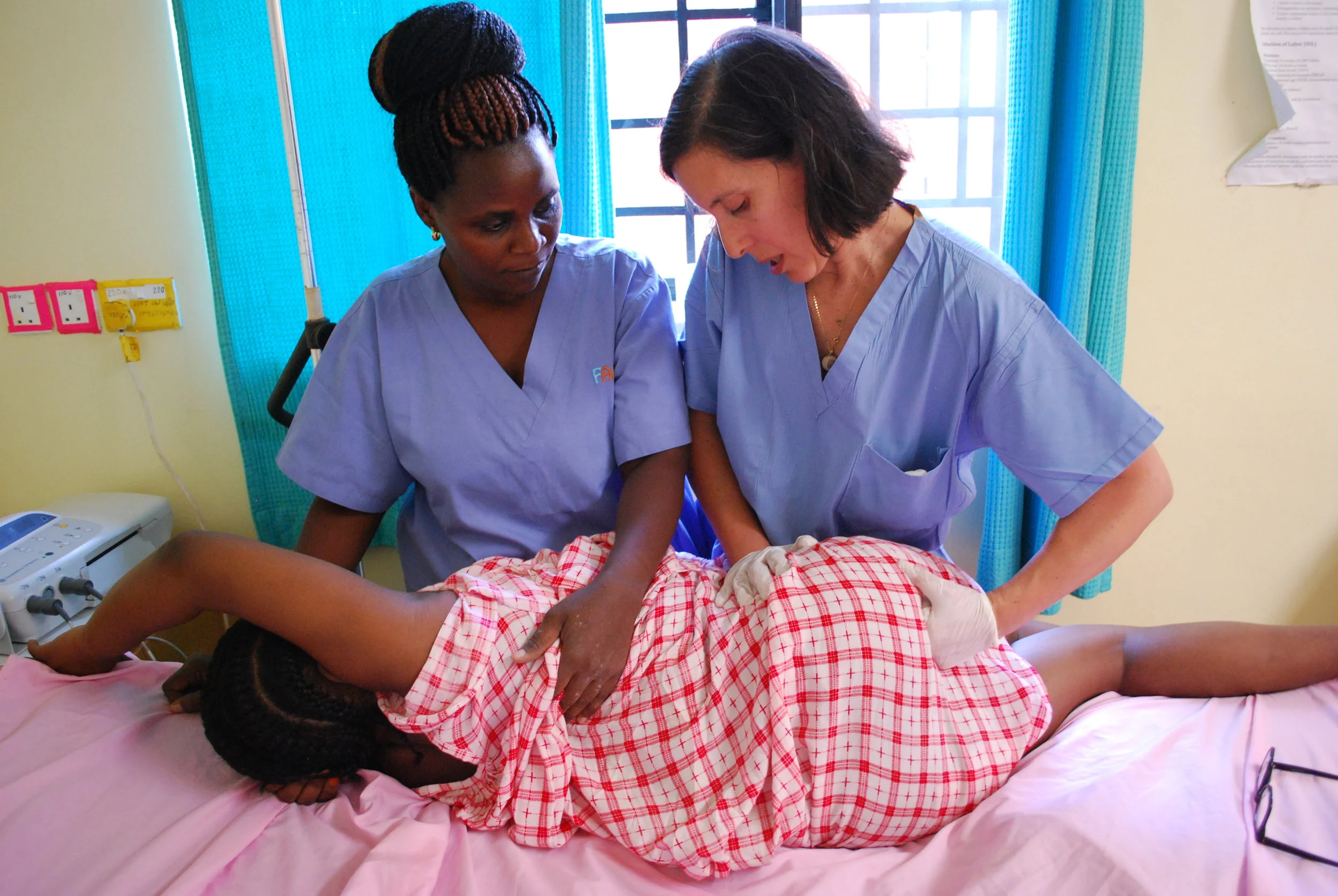
Catherine learning about birth positioning techniques with volunteer, Ann, in one of our delivery rooms.

Catherine learning about birth positioning techniques with volunteer, Ann, in one of our delivery rooms.

With her family living in Karatu, Catherine came to FAME in 2009 while still in secondary school. At this time, the team was still preparing the land for what was to become the FAME Hospital. Catherine started working on the housekeeping team, assisting some of the other members with the houses on campus. During her first year, she met Dr. Frank’s sister Jeanne.  Jeanne sat with her one day and asked her what she wanted to be when she finished secondary school. Catherine responded that she wanted to be a nurse. She shared stories about when she was young, already dreaming of being a nurse. “I used to tell all the other children that I was a nurse. They would bring me their “sick people” which were just stones. I would even pretend to give the stones injections.” After observing her aunt working as a nurse in a local hospital, she knew it was a profession she would be passionate about. FAME eventually offered her a scholarship to go to nursing school. As the youngest of seven children, she knew she would have to support herself if she wanted to achieve her dream. “I was planning on taking a break between secondary school and nursing school to work to make money to pay school fees,” she told us. “My family was so happy [when I received the scholarship]. They couldn’t have supported me on their own.” With all three years of tuition covered, Catherine had time to focus on her studies and enjoy school. She consistently received good marks and didn’t have to repeat any subjects. Now, she is one of our Registered Nurses, working with patients in both the Inpatient and Maternity wards. She enjoys working at FAME because “we have enough equipment and man-power.” From housekeeping to nursing, Catherine says, “I am so proud. Frank, Susan, and Jeanne are very important people in my life. I just thank them.”

 
FAME Africa
The Body Knows

By volunteer Ann Marie Gilligan, Registered Nurse

Blog originally posted on the Every Mother Counts website here.


Hospitals are not only for the sick. It is essential that women receive skilled health care when they give birth. In Tanzania, the rate of maternal and infant mortality is one of the highest in the world. FAME-Africa encourages women, particularly those with a high-risk pregnancy, to get to the hospital for their birth, especially if they do not have access to a skilled birth attendant, even if it may require many hours for their journey.

In my two weeks training the staff at FAME, I assisted in many births. I was asked to come and facilitate training for the medical team in “Maternal Positioning for Optimal Fetal Positioning.” This is a specialized training that optimizes fetal and maternal well-being by helping the fetus move into the ideal position for birth through a variety of maternal positioning. It is a very safe and straightforward process.

The first step of this process is to view the pregnant mother’s abdomen while she is lying flat on the bed. You get down to the level of the bed and observe which side of the uterus the fetus is leaning towards. Next, you do what is called ‘Leopold’s Maneuver’ to determine where the back of the fetus is in relation to the maternal spine and where the head of the fetus lies in relation to the maternal pelvis. You might then do a sterile vaginal exam to determine the dilatation and location of the fetal head. Based on these observations, you will then instruct the woman, through demonstration and a thorough verbal explanation, which positions she might take to facilitate moving the fetus into a more optimal position: specifically, the fetus’s back on the maternal left.

Studies are consistent in the conclusion that if a fetus is in one of the many less optimal positions at delivery, this alone is associated with a higher risk of adverse neonatal and maternal outcomes. This is why I am passionate about what I do and why I want everyone to learn more about it.

A young primigravida (a woman pregnant for the first time) from the Maasai tribe was admitted to FAME at 5:00AM in labor. She was examined vaginally prior to my arrival at 8:00AM, and was found to be 2cm dilated and the baby had not yet descended into her pelvis. She reported that she had been laboring for 24 hours. When I met her, she was lying laterally in her bed. Each time her uterus would contract, she sang out in a high pitch cry while rapidly slapping her lower back.

With the help of Tanzanian nurses interpreting for me, I told her that I would very much like to see if I could help rid her of her obvious lower back discomfort. She immediately said yes, and we walked with her to the room in the back of the ward where two delivery beds occupy a room that also serves as a nursery. My Tanzanian RN peer asked permission to touch her body and we viewed her abdomen, then placed our hands on her baby in utero and concluded what position she was in. This little one had somehow decided that the maternal right side was her temporary home while her head was up against the maternal iliac crest (hip bone). If the labor continued with the baby in this position, it could present multiple problems.

ann blog 2.jpg

Her contractions were palpating strong and were frequent, occurring every three minutes. Our patient was visibly tired and appeared to be in a lot of pain. Our goal was to help the baby get over to the maternal left side, therefore decreasing the discomfort to the woman’s sacrum.

First up was a 5-minute warm shower. The water was aimed frontal and low in the abdomen. This can help relax the muscles and ligaments supporting the uterus. Next, she was instructed on how to do some yoga stretching to bring the respiratory diaphragm off the top of her uterus. The abdominal lift came next to help the infant into a chin flexed position that would enable her to rotate to the other side of the uterus. Our last maneuver is named the “side lying release.” She was assisted into this lateral position in bed and her top leg was brought over and off of the bed. This technique stretches the lower uterine ligaments to make more room for the infant to rotate.

Once her baby was determined to be in the optimal position, I instructed her to get out of bed. I told her to use her voice to help release the intensity of her powerful contractions that were now felt solely in the front of her uterus, near her cervix. She was encouraged to make noise through calm rhythmic breathing and noises that she could call her own. I told her to listen to her body, as it is wise, and will guide her through purposeful movements. Once I gave her this permission and guidance, she became very fluid and danced through her contractions in a way that I have not witnessed in a very long time. She arched her back, swayed her hips, squatted, lifted her arms and waved them in unison. Her voice could be heard throughout the unit and out onto the paved walkways of this open facility. At one point, a male doctor came to check on her and he joined her in dance. We, including the woman, thought this doctor was funny and so we all laughed and danced together.

I encouraged the woman to continue in the upright position, taking short moments to rest when she could, while sitting on the birth ball with her head leaning onto the bed. Food and tea was encouraged throughout her labor. Her mother was always by her side. 

The next morning, I did not attend the daily doctors’ meeting and instead looked for the woman so that I could find out the result of her amazing efforts in labor. Isdori, one of the male midwives on staff, had assisted in her birth. I had left at 4:00PM, and she had delivered 2.5 hours after that, at 6:33PM. She had pushed for as little as one hour and her daughter had an Apgar score (a quick method to summarize the health of a newborn) of 9/10.

I walked into her room, occupied by two other post-partum mothers. She was still shielded by her draped mosquito netting. Her body was turned towards the wall in a fetal position wrapped around her newborn. I called out her name and her face turned towards me. She smiled – a smile that told me, “I did it, I am proud.” I stroked her forehead and smiled back, telling her she was so strong and brave. Her expression, the one of ultimate self-satisfaction, made my long trip to Karatu, Tanzania all the more worthwhile.

 
FAME Africa