Coaching Management Skills

By Business Volunteer, Diane Berthel

William Mhapa and Diane Berthel

William Mhapa and Diane Berthel

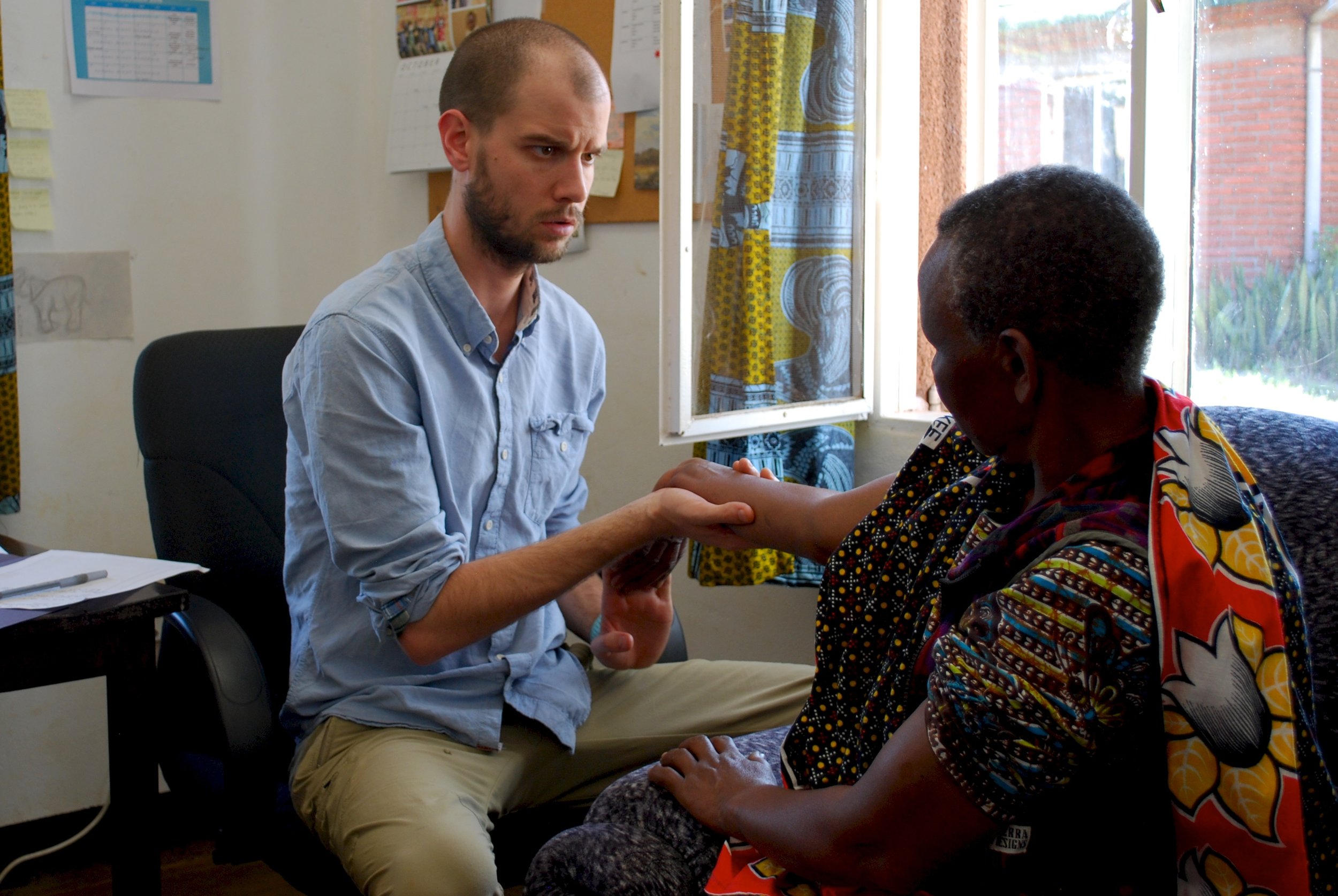
This is my third trip to FAME and it’s like coming home.  As the first business volunteer, initially we were uncertain about the value I could bring.  Turns out supporting the management staff connects on every level for me and them. Sometimes I’m not sure who is learning the most!  They are surprisingly self-aware and a most eager and grateful group of students.  I get more than my share of wide eyes and big smiles when something connects.  I can see that, so often, they have already envisioned it at work with their teams.  It makes the work deeply satisfying and a wonderful learning experience for me.

On a macro level I improve the skills and, equally important, the confidence in their leadership and management.  The first year I was here for only 3 weeks.  I got to know them, earn their trust and ask what they needed.  I just had time for a couple of sessions on leadership styles. Discovering that their learning model was lecture and write down every word the lecturer says, I used lots of activity and small groups.  Although uncomfortable at first, they quickly took to the change.

I should say that during my first two weeks, I mentored the wonderful COO, William Mhapa, and made lots of rounds on the hospital campus to get to know all staff including housekeeping, gardening and construction workers for the new maternity center.  Working on my Swahili, I greeted everyone with Jamba and got lots of smiles and waves.  Eventually someone shared with me that “hello” was Jambo - not Jamba.  It turned out I had been saying “fart” to everyone for two weeks.  When I finally had a session and introduced myself as the Jamba woman it was instant chemistry. 

When I left, a common request for my return was coaching – both individual support and the skills to coach their team members.   On my second trip I coached nearly every one of the managers.  Understanding the barriers to the typical models we use here – cost and unnecessary complexity - I created a very simple model for our first step.  I asked them several questions, including, list everything they do in each day.  We then put each of their activities in a matrix to examine their effectiveness and success in building the skills of their team.  I quickly learned that to succeed with this, we needed to vision what their role would look like if they were not performing all activities.  That included what FAME could be in the future; how things like data collection and analysis would be a higher-level responsibility for managers. It helped them to see how building skill and competence in their team would allow them time for higher level work. 

For some departments, I did team building sessions to warm up their teams.  In these sessions we looked at stages that lead to team accountability and results orientation.  In her coaching session, one of the nurse managers asked how you reward team members for results if there is no money. We discussed selecting a team member who stands out in their contribution.  Then end a meeting recognizing their excellence and asking them to share their secret with the team – both rewarding excellence and creating a learning opportunity for the team. Eyes wide she raced from the room and I don’t doubt that she implemented that very afternoon.  A few hours later I received a text that said, “You make that my day be good!”

I’m back for six weeks and we have a full agenda.  Coaching follow-ups, with a focus on strategic planning and resource management, plus tools for communication and negotiation are at the top of our list.  Already three days in, the momentum is contagious! 

Your support is critical to FAME serving the rural people of Tanzania and growing as a model for healthcare in the developing world.  I’m thrilled to share anything that will inspire your confidence in this amazing group of managers!

FAME Africa
"There's No Word for Down's Syndrome in My Language"

By Marissa Anto,

Children’s Hospital of Pennsylvania Neurology Volunteer

 
December.jpg

The new mama, Editha, tightly held her small six-week-old baby; only a tiny head visible, floating in a sea of pink ruffles from her dress collar and wrapped snuggly in a far too large fuchsia felt blanket. Just for context, it’s a balmy 80 degrees Fahrenheit outside. I notice baby Glory’s elongated almond eyes and immediately recognize the tell-tale sign of Down’s Syndrome. Before obtaining any history, I decide to examine the infant to confirm my suspicion. I find she has all the characteristic features including up-slanted palpebral fissures, transverse palmar crease on her hands, low-set ears, sandal gap toes and an increased skin fold at the nape of the neck. I start asking the young first-time mom questions about her pregnancy, the delivery and Glory’s first few weeks of life. Editha brought Glory in to see a neurologist at our mobile neuro clinic because she felt like the baby’s tone was low. Luckily, despite being small for gestational age (and with low tone), Glory was otherwise neurologically intact, feeding well and gaining weight. Yet I was concerned about her anterior fontanelle or soft spot on the top of her head because it was abnormally full and can signify hypothyroidism in a newborn. Hypothyroidism is a common hormonal abnormality that occurs in children with Down’s Syndrome and infants must be screened regularly for both this and blood count abnormalities as Down’s children also carry an increased risk for hematologic malignancy. Although Glory’s exam was largely reassuring, she needed to come to FAME ASAP for bloodwork (which couldn’t be done at her local clinic) to ensure she didn’t have any thyroid or blood abnormalities. Children with Down’s syndrome also carry a higher risk of congenital heart disease. Fortunately, Glory had a normal oxygen saturation and normal pink coloring without any appreciable heart murmurs. She would eventually need an echocardiogram or ultrasound of the heart to definitively rule out any heart defects.

As a pediatric neurologist, I am used to having tough conversations with families, explaining complicated and often distressing diagnoses. But how do you tell a new mom that her baby has Down’s syndrome when her language doesn’t have a word to describe the condition? In the United States, Down’s Syndrome or Trisomy 21 is fairly well-known to the public, with an estimated incidence of 1 out of every 700 babies born in the U.S. In Tanzania, this special population and the vocabulary used to describe them is virtually absent from mainstream society. I struggled to explain the condition and its common co-morbidities to Editha via an interpreter. Dr Anne tried looking up a Swahili word for Down’s but couldn’t find it. She asked one of our medical student interpreters, Abdulhamid, who also couldn’t come up with the appropriate terminology. I asked our social worker Kitashu, but he too said that, although he had previously seen some children with this condition, he had never known what it was called. Dr. Anne finally Googled a picture of children with Down’s and showed Editha, a look of understanding registering on her face. She said she now recognized what her baby has. 

Later that day, I searched online and found few posts on Down’s Syndrome in Tanzania. One was written by a mother of a child with Down’s Syndrome and was titled “There Is No Word for Down’s Syndrome in My Language.” In the article the mother details how there is no Swahili word to describe people with Down’s Syndrome and reflected that she had never known or seen children with Down’s Syndrome growing up in Tanzania. She speculated that families may have hidden children with Down’s or, even worse, completely neglected them due to the cultural stigma surrounding having children with special needs. She noted that there is virtually no data that exists regarding the incidence of Down’s Syndrome in Tanzania. The author of the article recounted that when her child was diagnosed with the condition, she unfortunately had very little support or guidance from the medical system in terms of what to do or expect for her child.

I wanted to make sure that this young mama before me did not feel the same way. I explained Down’s Syndrome to her and all the things we needed to screen Glory for at FAME. I explained that the baby’s fontanelle was full and that made me nervous, but the rest of her exam was reassuring. I gave precautions to return immediately should the baby develop any lethargy, vomiting, feeding intolerance or altered mental status prior to coming to FAME. Fortunately, Editha and Glory did come to FAME as instructed the following week. I was encouraged that Editha was able to make the two-hour journey to get her child the care she needed. Glory’s thyroid studies and blood count were both found to be normal. I reiterated all the things that would have to be routinely checked and what Editha should monitor for in baby Glory. I tried to reassure Editha that children with Down’s Syndrome can often lead very full, largely normal lives as long as their specific health care needs are met. Editha told me she only hoped that her baby would remain healthy and that she would do whatever she could to ensure this. This meant traveling two hours each way to FAME for a cardiac evaluation in a few months and making the long trip every time Glory needed blood work. I was reassured to see Editha so well-bonded to her baby, her affection and love obvious. She would do anything for this precious baby. And that is truly the most important thing a pediatrician can wish for any child but especially for a child with special needs.

 NOTE: The names of mama and baby have been changed to protect their privacy

 
NeurologyFAME Africa
One of Only 1,500

By UPenn Volunteer Neurologist, Mike Baer

I met my first, and only, Hadza patient several days after arriving at FAME. We had been told that she was presenting with a seizure and a headache, but when I met her the story was more concerning. She had collapsed suddenly two weeks prior, seized, and since then hadn’t spoken a word to her family. When I examined her she was mute and weak on the right side. A head CT showed that she had a large intraparenchymal hemorrhage extending from the left temporal lobe to the left frontal lobe, which we felt was caused by either a ruptured aneurysm or a mass that bled. Either way, the prognosis was poor. We started her on antiepileptic medications and hoped to gain more information from a CT scan with contrast, which could reveal an underlying mass. 

IMG_5581.JPG

The Hadzabe, I learned, are an ancient tribe of hunter-gatherers, who are struggling for survival and live in the Lake Eyasi region, just an hour or so away from our home base in Karatu. They traditionally communicate with a “click language” and survive on hunting game and foraging for fruit and honey. There are no formal leaders and little social hierarchy, so most important decisions are made through group discussion. With the rise of agriculture, livestock herding, and tourism their ability to survive as hunter-gatherers has become tenuous, and today less than 1500 individuals remain, including our critically ill patient. 

Unfortunately, just two days into her hospital stay, the Hadza patient had a second seizure. She was extremely lethargic afterwards, and the head CT with contrast showed that the bleeding had extended into her ventricular system, which was beginning to expand to create hydrocephalus. Her prognosis, even with surgery to relieve the hydrocephalus, had gone from poor to grim. We spoke with Dr. Badyana, the physician in charge of her care, and together we sat down with the daughter, who had remained at the patient’s bedside. Dr. Badyana explained that the patient’s condition had worsened and that the bleeding would ultimately end her life. We showed the daughter the images from the CT scan. She didn’t say much and she remained calm but it was clear that the news affected her greatly. Her demeanor was one I had seen before, back in Philadelphia during some of my end of life discussions for similarly dramatic intracranial injuries. The Hadza woman passed away comfortably the following day. 

During our four weeks at FAME, I and the other neurology residents from the University of Pennsylvania had the opportunity to interact with and learn from members of a variety of other tribes. We visited Daniel Tewa, a member of the Iraqw tribe and local farmer and historian, who showed us a traditional house that he had constructed, modeled after the home he was born in. He taught us about the traditions and customs of his people, many of which were changing from the pressures imposed on the Iraqw tribe from outside forces. We also treated a large number of Maasai and one of our translators, Kitashu, a Maasai and a FAME social worker, was helpful in helping us understand Maasai culture and how it related to the counseling and treatments we provided to our patients. I was particularly struck by the close social circle I witnessed and the readiness of the community to help in times of need. 

Working at FAME was an incredibly valuable experience. The clinicians, already proficient in a wide range of domains, were eager to learn about neurological diseases, a topic not widely emphasized in Tanzanian medical education. While we did treat a large number of patients, the most rewarding aspect of my work at FAME was helping the medical staff strengthen their capacity to independently care for many of the neurology patients that we saw. I look forward to seeing how FAME and healthcare in Tanzania advances to address the unique needs of the country’s diverse population, from the Iraqw to the Hadzabe and the Maasai. 

 
NeurologyFAME Africa
Adaptability, Resiliency, and the FAME Family

By Volunteer Neurologist, Joyce Liporace

 
img_1118.jpg

As a neurologist in private practice in the United States for over 30 years, I have found that caring for patients involves ordering a lot of tests and imaging studies. I am dependent on MRI scan results to formulate a treatment plan for my patients. While I was unsure of myself and wondered if I had much to offer without these results, I decided to spend a month volunteering at FAME Medical near Karatu, Tanzania. As soon as I arrived, I respected and understood the value of FAME’s international volunteer program, which encourages participation in patient care and, more importantly, working side by side with FAME’s Tanzanian doctors and nurses to share experiences and skills.

One of my first clinic patients was a 39-year-old man who thought he was having fainting spells. His description of stereotyped events allowed me to confidently diagnose him with seizures. We reviewed the typical risk factors for epilepsy, which were all negative. However, during the examination, I asked him to remove the wool cap from his head and discovered a left frontal skull defect. Stoically, he disclosed that he had been the victim of a leopard attack at age 29, resulting in the removal of a piece of his skull. That was undeniably a novel seizure risk factor — and a perfect example of the resiliency of the Tanzanian people! Their ability to move on from injury or hardships is amazing and inspiring.

On the Inpatient Ward, I cared for a 50-year-old woman who was told that she was pregnant. The pregnancy seemed to be prolonged, so she came to FAME for another opinion. She was NOT pregnant. Instead, Dr. Badyana, one of 14 skilled doctors at FAME, removed an eight-kilogram ovarian mass. She was very pleased that she was not pregnant! This was a perfect example of the comprehensive care provided by FAME doctors. They are excellent diagnosticians (often with limited lab tests), medical providers for the full spectrum of life from neonatal care to geriatric care, and skilled surgeons! I am in awe of the breadth of their abilities and felt humbled to work alongside them.

I did not expect to form solid friendships in my short four weeks at FAME but I was wrong. I was welcomed by the entire staff at FAME — the doctors, nurses, receptionists, support staff and, of course, Dr. Frank and Mama Susan. One of the Tanzanian doctors, Dr. Lisso, even came to Arusha to meet my husband, Tim and son, Michael, when they arrived for our safari. While at FAME, I was honored to travel to Ngorongoro Crater to visit a Maasai village and spend time with FAME’s warmhearted social worker, Kitashu, and his family. That afternoon had a permanent impact on my understanding of other ways of life.

An unexpected pleasure during my time was getting to know other volunteers. I walked with Jen, a volunteer nurse in the Inpatient Ward, to Gibbs Farm to meet Kim and Tracy, a volunteer nurse practitioner who specializes in Diabetes and volunteer neonatal nurse, for a fabulous brunch, went to Sparrow for dinner, and hopped in a bajaji, a three-wheeled vehicle akin to a tuk tuk, with Kathrine, FAME’s communications coordinator, to go fabric shopping.

There are numerous challenges in providing medical care in a developing country. The unique team at FAME finds ways to overcome these hurdles on a daily basis. I will always be grateful for the chance to share my experiences and learn new skills with my FAME family. My voyage to FAME led me to new landscapes far from home, but it felt like familiar territory in just a matter of days.

 
IMG_0242.JPG


FAME Africa
Traveling Through the Countryside

By Volunteer Neurologist, Dr. Michael Rubenstein

One of the unique aspects of our bi-annual Neurology Clinic is the team’s mobile clinic outreach that they provide for villages surrounding Karatu. Below are reflections on their experiences for their four outreach clinics last month:

 
DSC_1153.JPG

RIFT VALLEY CHILDREN’S VILLAGE: Our outreach began in the village of Oldeani at Rift Valley Children’s Village (RVCV). India Howell (Mama India) founded the children’s village in 2004, and over the years, they have continued to grow such that she now has nearly 100 children that call this their home and call her Mama. She has partnered with the community to improve their schools by helping to fund certain programs and she has offered healthcare to the residents of the surrounding community, as they knew that a healthy community would only improve the chance of success for their children. It was on the backdrop of India creating her children’s village in Oldeani that Frank and Susan ultimately decided to locate FAME here in Karatu, allowing them to be in close proximity to India and her children.

After morning report, we all loaded up and began our drive towards the village of Oldeani along a lovely route through cultivated fields and eventually arriving at the coffee plantations surrounding the children’s village. Driving into the parking circle in front of the administrative offices, there is a huge gathering of patients sitting on benches and waiting to be seen. Our first thought is how we are possibly going to see all these patients in one day, but we were relieved to find that the attendees are not all neurology patients as RVCV’s nurse Gretchen was seeing patients today in their regular clinic. Still, there are quite a few patients for us to see so we make sure with our social worker, Kitashu, that the patients are going to be properly screened. Triage, though, it really tough. At FAME, it’s easy for us to send them over to the outpatient department. Here, they would have to see Gretchen and she was definitely going to be a bit overwhelmed today.

Many of the patients here we’ve seen before, some for as long as I’ve been coming. We see some of the children from RVCV with epilepsy or ADHD, but there are more patients from the community that are seen. We usually see a larger percentage of epilepsy patients here than at other clinics, but otherwise, there is the typical smattering of diagnoses. Several of the patients are new to the clinic and we’ve diagnosed them with chronic illnesses, such as epilepsy, and they will require continued medications going forward from the clinic at RVCV. We had planned to finish early, but somehow the time got away from us and clinic stretched to after five.

KAMBI YA SIMBA: Kambi ya Simba is a small village in the Mbulumbulu ward of the Karatu District and about 45 minutes from FAME. It is a totally self-contained clinic, meaning that we bring all of the medications we will prescribe to our neurology patients and all of the tools that we would need to provide our care.

The drive to Kambi ya Simba took us through extremely fertile farmlands past the Rhotia valley and on to the Mbulumbulu ward. Despite the dry season, there is quite a bit of green as we meander through the hills in this area that sits at the top of the escarpment of the Great Rift Valley and continues until the mountains of the Ngorongoro Highlands meet the drop off and the road ends.

As we arrived at Kambi ya Simba, it was evident that the new dispensary has continued to grow even in the last six months since I was here last. In addition to the large number of buildings that are here now, they have rebuilt the original dispensary that we had begun to work in and now there is a covered arcade connecting everything. There is even an area to drop patients off who are arriving by car or motorcycle. Amazingly, a large number of patients arrive at the clinic on the backs of the motorcycle taxis called piki-pikis. Watching a nearly paraplegic patient load onto one of these as one of two passengers, in addition to the driver, can be a bit nerve-wracking to the say the least.

At the clinic today we have a smattering of return and new patients who all have to be screened for neurological disorders. Our purpose here is not to supplant the government medical staff here providing care, but rather to work with them and provide specialty care that would not otherwise be available in most of Northern Tanzania. These clinics allowing us to practice in their community is not something that is merely a given, but rather a sign of trust that we respect.

Before lunch we had seen our general mix of patients, with headaches and epilepsy, along with a few arthralgias, and still had several patients to get to after lunch who had showed up through the morning. The last patient we saw, though, was perhaps the most complicated. He was a gentleman in his thirties who came to see us in a wheelchair because he was unable to walk due to lower extremity “pain.” It turns out that this gentleman has lost most of the use of his legs, with no effects in his upper extremities, about ten years prior and hadn’t been evaluated medically for this condition.

His examination was myelopathic (meaning that he had a problem somewhere in his cord) as we surmised even before Lindsay, one of the U Penn residents, had first tapped on one of his reflexes. The process, though, had occurred gradually over several years and was purely motor-related as the predominance of his sensory examination was fully intact. Without a sensory level, though, we were unable to tell exactly what level in the spinal cord we were dealing with, but it was clearly thoracic in nature. Having purely motor-related findings is more the exception than the rule. There was little else we could come up with for this gentleman and, perhaps more importantly, nothing that we could do to make him better at this late date. Though we tried to explain to him what our thought processes were, in the end, the answer was the same, that very little could be done other than to make him more comfortable by using a medication such as baclofen for his spasticity which we prescribed.

We left Kambi ya Simba in the mid-afternoon to make our way slowly back to Karatu, once again traveling through the gorgeous countryside that we had traversed earlier in the day.

 
0818_Qaru TBA Outreach.JPG

QARU: The drive to Qaru is less than 45 minutes and is on a main thoroughfare, albeit gravel, as there are very few paved roads other than the main highway traveling from Arusha to Karatu, as well as the road that travels east from Makuyuni towards Tarangire.

It is important to understand that the purpose of our neurology mobile clinics is perhaps less to provide care for patients who cannot reach FAME, but rather to bring the concept to them that neurological diseases can be treated effectively. The villages are not so remote that their residents are unable to get to a medical facility capable of providing treatment; rather their illnesses are often just accepted as part of their life. This can often be most impressive for patients with epilepsy where it is merely a matter of placing them on the right medication and they can be seizure free or at least nearly so. Epilepsy carries with it a huge social stigma, which results in severely limited access to adequate medical care in countries like Tanzania. The percentage of these patients who are treated is appallingly low – in the range of 10%. It can be so rewarding to see one of these patients who has never known a life without seizures become seizure free with a simple medication. Thankfully, many of the patients we see are young children with epilepsy and we are able to place them on the appropriate medications at a much earlier age.

At Qaru, the number of patients waiting for us was rather small – a common occurrence at the mobile clinics. We do advertise the clinics much the same way as we do for those we hold at FAME (where we are always packed), but since we’re at each village only one day, if that happens to be a day of planting or harvest or your cow has run away, then you may not be able to make it. There were several new patients with epilepsy and a few follow-ups, as well as our normal smattering of patients with complaints that we couldn’t necessarily attribute to an underlying neurological process.

UPPER KITETE: It was off to Upper Kitete for the day, a trip of less than two hours, but out to the far reaches of the Mbulumbulu area and the top of the escarpment where one can travel only a few kilometers further before running out of land. We took the same road we use to get to Kambi ya Simba and then continue beyond for an equal distance making it almost twice as far as the closer village.

We arrived at the Upper Kitete dispensary only to find a huge gathering of patients that were thankfully not all for us as it was also their well-baby visit day. After some negotiation with the clinical officer here, we eventually ended up using the two offices that we normally use (the nurse’s office, otherwise referred to as the bat cave for the distinct smell of guano coming from the opening in the ceiling, and the labor and delivery room that was not currently being used), along with the outside area that we normally use as our pharmacy, but would now serve as our third examination room. The pharmacy was bumped to the end of the outdoor walkway and we just moved all of our patients to the other side of the building to wait for us so as to maintain some sense of privacy.

We got through our patients, though, and had our lunch around midday with still a few stragglers to see afterwards. One of our later patients was a gentleman who was brought to us sitting in a chair (not a wheelchair). We were told that he had been unable to walk for well over 10 years. His examination was myelopathic, suggesting some sort of cord problem, and we felt he most likely had a cervical myelopathy as it had been gradual in onset. We discussed the possibility of an evaluation, but were realistic with him: We noted that it was very unlikely that we would find anything that would be treatable at this late stage and, therefore, it would not benefit him functionally. The family understood and we did treat him with some baclofen for his spasticity, which was the least that we could do for him. As with our patient at Kambi ya Simba who was also paraplegic, he was eventually helped onto the back of a motorcycle by his sons and began his trip home. Not long after, we also loaded up and headed home, finished with our mobile clinic outreach for this season.

 
FAME Africa