A Herding Accident, A Caring Uncle and FAME’s Rapid Response

16-year-old Sironka* took his grandmother's cattle out to graze during his school holiday, as he did every morning. Unfortunately, he lost one of the calves. As he was running around frantically trying to find it, he fell on a big stone, landing on his stomach. His grandmother took him to the local clinic where he received some painkillers and felt better.

A few months later, he was building a house for the family’s goats when he fainted. At first, his mother thought it was the weight of the branches he was carrying that caused him to faint until she saw his swollen stomach. 

She rushed him to a local dispensary where he was given numerous injections over 3 days. This did not help and he continued to suffer from fainting spells, abdominal pain, loss of appetite until eventually he could not pass urine. 

Sironka’s uncle, who lives in Arusha, knew about FAME. He knew it was “a good hospital that makes people well” so he suggested that they bring him there. Unable to be accompanied by his mother who had to stay home with his siblings, Sironka traveled 50 miles alone from his village to get to FAME. His uncle met him in Karatu town and brought him to the hospital.

When we came to FAME he couldn’t talk, he couldn’t pass urine, couldn’t eat, couldn’t drink even water! And now he is asking for food and water. He says he’s hungry, something he hasn’t said in weeks! It’s amazing!
— Sironka's uncle

At FAME, the medical staff quickly realized that this was a grave situation. Sironka was taken to the radiology department for an x-ray, which showed that his fall had caused more damage than originally thought. Sironka had to have an emergency open appendectomy to remove his appendix, which was perforated and necrotic. FAME’s skilled surgical team was ready and the operation was a success. After five days at the inpatient ward, Sironka is ready to go home. 

“When they told me that the boy needed an operation, I was strong. I tried not to show fear. The boy had suffered enough and I knew that something drastic had to be done for him to get better.” - Sironka’s uncle

“Without this operation, he could have died. I believe that. We had lost hope. FAME is amazing, this operation has saved his life. The doctors were quick to act when we got here, we got immediate help and were not left waiting for hours. I believe this promptness and the skill of the doctors is what saved Sironka’s life. FAME is doing a good job!” - Sironka’s uncle

Sironka adds with a shy smile, “Ashe!” (Thank You!) 


*While the patient’s name has been changed to protect privacy, permission was secured to share his photo and story with FAME supporters, and to raise awareness of available medical care at FAME Medical.
FAME Africa
International Mother Language Day

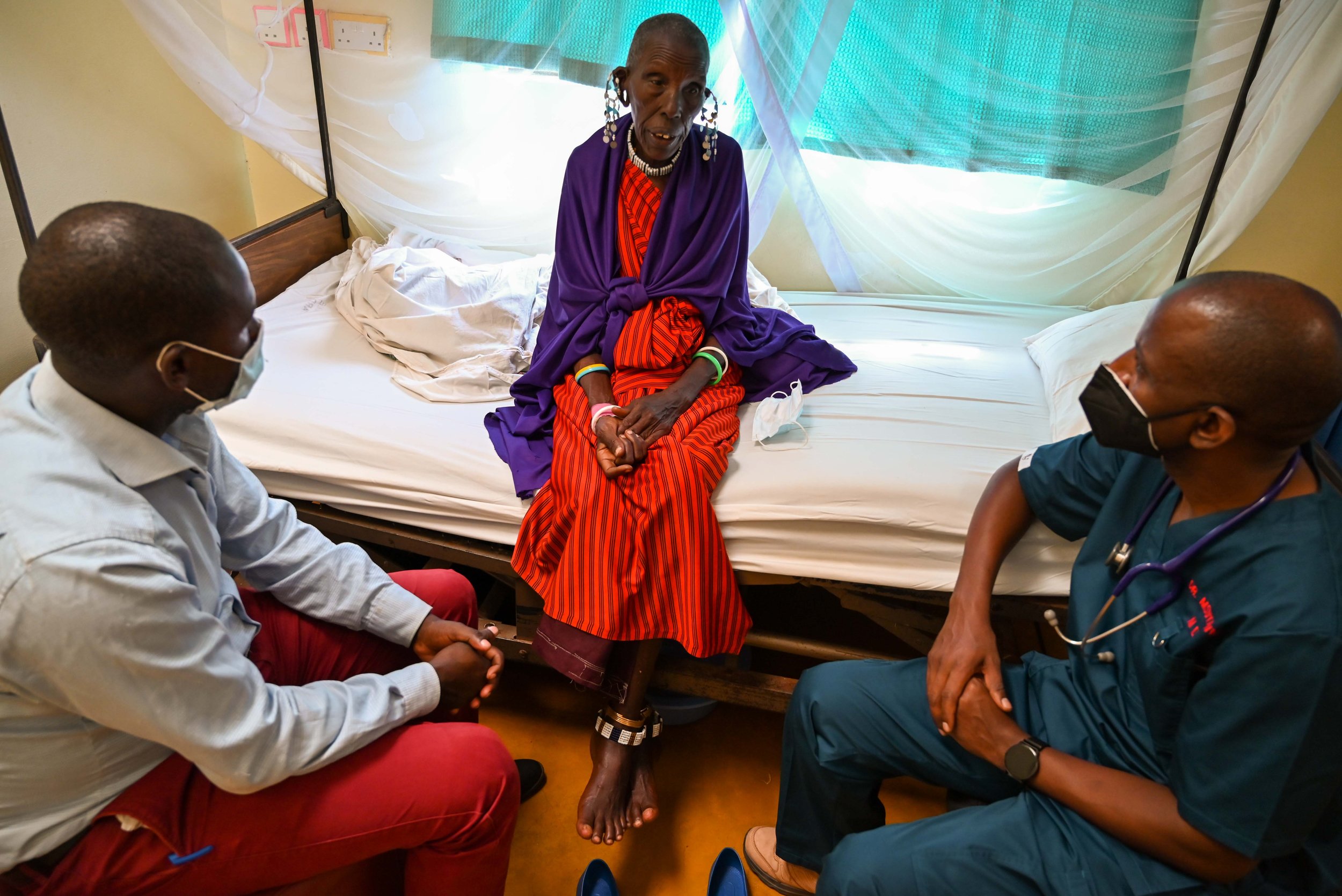
Social Worker Kitashu Nganana, translates from Maasai to Swahili for Dr. Wasii Msuya, during a patient consultation. 

Today FAME celebrates International Mother Language Day!

Mother Language Day is observed every year to promote linguistic and cultural diversity and multilingualism.

When FAME’s outpatient clinic was opened in 2008, 90% of our patients came from the Karatu area and predominately spoke Swahili, Tanzania’s main language used in the social, political, and educational sphere. However, 14 years later, our catchment area is now 85 miles and serves over 2.9 million people. Our unique location allows us to provide traditionally underserved populations with access to quality healthcare. 

The populations we serve do not always speak Swahili, Tanzania’s official national language, or English, Tanzania’s working language after Swahili. While various ethnic groups in Tanzania typically speak multiple languages, predominantly using their mother tongue within their own communities, for some their mother tongue is all they know. 

When we have patients at FAME who only speak their mother tongue, it is typically from our two largest ethnic groups that we serve: the Iraqw and the Maasai. In such cases, our Social Workers, Kitashu Nganana and Angela Obeid, translate for the doctors and ensure that the patient’s situation, needs, and wishes are understood and included in their treatment. 

Mother languages provide unity in diversity and a connection to heritage. We value diversity within our all Tanzanian medical and professional team, who are recruited primarily from the catchment area that we serve. As a result, our staff understands the various local languages and dialects of our patients, and we are never short of translators! At FAME we are able to serve every patient who comes through our gate.


FAME Africa
Antenatal Care Brings Life at FAME

At FAME, we are committed to improving access to quality antenatal care (ANC) in rural Tanzania, in order to reduce maternal and neonatal morbidity and mortality.  According to the World Health Organization, over 90 percent of pregnant women in Tanzania attend at least one antenatal visit, but then coverage drops significantly for the essential interventions that can be delivered with more ANC visits and continuity of care.

This was the case for Zawadi*, a 26-year-old Maasai woman who suffered four miscarriages before she came to FAME. 

“I have tried to have a baby for many years. Such a long time. I was getting pregnant, but the babies didn't stay long enough to be born.”

After her fourth miscarriage in four years, Zawadi was afraid that she would never carry a child to term. 

“After I lost my fourth pregnancy, I asked around if anyone knew of a hospital that could help me. I had been to many hospitals including some in Arusha, but I kept having miscarriages. Someone told me about this hospital in Karatu called FAME. They said everyone in Karatu knew where it was, and I would not get lost. So I came. I wasn't pregnant then, I just wanted to talk to a doctor about my situation.”

At FAME, Zawadi discussed her history of miscarriages with her doctor, and had some tests done. She was told that once she got pregnant, she had to come back to begin ANC. 

When Zawadi got pregnant again, she did just that. She returned  to FAME and was put under an ANC program that sought to manage her pregnancy-related complications. At this point, Zawadi moved from her home 80 miles away to Karatu town, leaving her husband to be closer to FAME. 

“When I fell pregnant I came back to FAME and was given some medication. Immediately, I could tell this pregnancy would be different. There was no pain, no vomiting and overall just great relief!”


Towards the end of her pregnancy, Zawadi was admitted to FAME for supervision and four weeks later, through a caesarian section, gave birth to a little girl. Three days later she and her daughter were ready to go home. 

“I never knew I could be a Mama. This is all thanks to FAME and its medical staff. They have helped me and reassured me when I was scared of another loss. I am very happy being a mother. My husband has named our baby Faraja (Swahili for comfort) as he says she has comforted us after everything we went through to get her. I quite like it! She is such an easy baby, sleeps all the time! And when she’s awake, I’m glad that my mother-in-law is staying with me and helping me take care of her.” - Zawadi

“Before Zawadi gave birth, I was so worried that something could go wrong. Now that she has given birth I'm so happy! I’m ecstatic! I want to thank God and all the doctors at FAME! Ashe naleng’ inchoo emayan intai Enkai! (Thank you so much, God Bless)” -Mother-in-law, quote translated from Maasai by Zawadi

Once baby Faraja is a little older, Zawadi and her mother-in-law plan to move back to their village, where everyone is eagerly waiting to meet the baby!

*While the patients’ names have been changed to protect privacy, permission was secured to share their photos and stories with FAME supporters, and to raise awareness of available medical care at FAME.

FAME Africa
Commitment to Patient Learning at FAME

In January, we highlighted International Day of Education and the emphasis that FAME puts into the capacity building of its staff, by empowering Tanzanian healthcare workers with the knowledge, skills, and resources necessary to provide quality patient-centered care.

As a learning institution, we are committed not only to improving educational opportunities for our staff, but FAME’s healthcare workers conduct hospital-based patient education as part of their healthcare delivery. The education of the patients not only ensures informed decision-making but also increases the chances for positive outcomes as the patients are more likely to engage in their care. 

This week, we had a newly diagnosed Type 1 diabetes case at FAME. Baraka* a 32-year-old Maasai man, walked into FAME feeling extremely tired and had difficulty walking. This was unusual for him as he is used to walking long distances with no problems at all. He thought he had malaria, and would quickly get some medicine and go home. Sadly, what he thought was malaria was in fact Type 1 diabetes. 

“I didn't know this disease existed. I do not know what it is.”

This is the first statement Baraka said to the medical staff when he was diagnosed. The staff took time to educate him on the disease: what it was, how to take care of yourself, and what to eat and why. 

With chronic illnesses such as diabetes, health literacy was of utmost importance. Limited knowledge about it would make it difficult for Baraka to successfully manage his condition, potentially leading to severe complications. Nurse Ameria James sat with him for hours going through everything he needed to learn. When she was done, she asked him questions until she was confident he understood the course of treatment and was self-confident in taking charge of his treatment.

“I am so happy about the treatment I have received. The doctors and nurses have patiently educated me about Type 1 diabetes and how to take care of myself. I have asked that they give this diabetes education to everyone so that more people are aware of this disease. If I wasn't chronically tired I wouldn't have come to FAME, and who knows how bad it would have gotten! I think it's important for people to know the symptoms to watch out for. When I go home, I am ready to follow everything I've learned here and if it's possible, I will take a doctor's number and call them if I have any problems.” 

After three nights at FAME, Baraka was discharged and went back to his village in Ngorongoro, 45 miles away.

*While the patient’s name has been changed to protect privacy, permission was secured to share his photo and story with FAME supporters, and to raise awareness of available medical care at FAME Medical.

FAME Africa
International Day of Education

Today is International Day of Education. Recognized by the United Nations, education is crucial in transforming the future currently entrenched inequalities.

At FAME, one of our core values is “lifelong learning” and we are dedicated to empowering Tanzanian healthcare workers with the knowledge, skills, and resources necessary to serve their patients well.

Dr. Ken Karanja, FAME’s Clinical Education Coordinator, explains FAME’s commitment to educating its staff: 

“My job as FAME’s Clinical Education Coordinator is to spearhead capacity building of our medical staff. We believe, and it has been our experience, that capacity-building interventions not only enhance knowledge but also build the confidence of our staff to handle difficult cases. FAME works in a rural setting, and our education is tailored to match our priorities and the context in which we work. Building capacity involves not only training the staff, but also mobilizing knowledge and support to promote the achievement of quality patient-centered care.”

Medical training takes place once a week with additional sessions set aside to review difficult cases and learn from them. Together with the doctor in charge, Dr. Karanja ensures that the medical staff is up to date with new developments in the medical field. FAME sponsors its staff to attend medical conferences around the country and beyond, who then come back and share what they learned. FAME has provided doctors with iPads equipped with different apps to enable them to research medical conditions quickly while on the job. 

FAME medical volunteers have been an instrumental part in building the capacity of and educating the FAME staff. Once at FAME, volunteers work directly with FAME staff to provide a rich and collaborative learning experience. Due to COVID-19, the volunteers that are not able to travel to Karatu teach over Zoom. This has allowed learning to continue throughout the pandemic. 

Since its inception, FAME has been growing and sustaining a medical facility that is an integral and vital part of our local community, through the continuous education and capacity building of our staff. Education and capacity building remains key strategic priority. 


Pictured: Volunteer Nurse Brad Snyder assists FAME’s Dr. Adam Likiliwike in a recent training session

FAME Africa