“A hospital with a machine that can see inside the head."

A happy David poses for a picture on his hospital bed.

Peter (left) poses with David.

Thank you, FAME, for being good to us. When we got here, we were all confused. We had an injured person and were also in very unfamiliar surroundings. But we were received and treated well.
— Peter

In Northern Tanzania, where FAME is located, boda bodas (motorcycle taxis) provide an affordable transportation option and an important employment opportunity for people in our catchment area. 

While boda boda drivers have ways to improve safety, they are inherently a dangerous form of transportation as they are vulnerable and exposed to traffic risks. Adherence to safety habits remains low with limited safety equipment use. 

David*, age 32, has been in FAME’s inpatient ward for the last three days. He does not remember how he got to FAME. All he remembers is hiring a boda boda to take him 20 minutes away to see his friend.

I was bored at home with nothing to do, so I called one of our neighbors who owned a boda boda to take me to visit my friend. On the way, we were laughing and talking, and that’s the last thing I remember.
— David

David’s brother-in-law, Peter, tells the rest of the story.

“I had gone home for my lunch break from work when someone came to the homestead at around 1 pm to say that he had heard the terrible news. David and one of our neighbors had been in a boda boda accident. He said some men had told him that the driver was okay, but David was badly injured.”

Peter called two male relatives and they rushed to the accident site together. 

“Everyone at home was screaming, fainting and crying hysterically. Many would not be able to accompany me in such a state, so I asked two of my brothers who seem more clear-headed to come with me.” -Peter. 

Once at the site, things were not looking good. The driver only had minor scratches, but David was unconscious and bleeding. He had not been wearing a helmet, so they feared his head had borne the brunt of the fall. Some of the onlookers who gathered around the accident suggested they take him to a nearby clinic, but one of them said: 

I know a hospital with a machine that can see inside the head.

The hospital they were talking about was FAME, and the machine was a CT scan.

In 2016, FAME acquired a CT Scan machine, generously donated by GE Africa. FAME’s CT scan machine is the only one within a 75-mile radius. In 2021, FAME performed 326 CT scans. 

Since Peter’s main concern was the damage to David’s head and brain, he asked for directions to FAME, and together with his two relatives, they brought him here in a taxi.

I was scared. Everything was happening so fast! And now we were in a hospital I had never been to before. Praying that they can heal him.
— Peter

The CT scan showed no acute traumatic brain injury. His chest exam also showed that everything was ok internally. David was only suffering from some severe cuts and bruises.

I am happy with the service at FAME. They have looked after me well, and I’m ready to go home now.
— David

*While the patient’s name has been changed to protect privacy, permission was secured to share her photos and story with FAME supporters, and to raise awareness of available medical care at FAME Medical.

FAME Africa
World Patient Safety Day: FAME Pharmacy

FAME celebrates World Patient Safety Day! As an organization committed to patient-centered care, FAME recognizes its duty to the safety of its patients first and works tirelessly to prevent and reduce risks, errors and harm to patients.

This year's theme is Medication Safety. While medications are the most widely utilized interventions in health care, the World Health Organization (WHO) has found that medication-related harm accounts for 50% of the overall preventable harm in medical care.

FAME’s pharmacy is the backbone that strengthens our work, and it plays a critical role in the provision of cost-effective quality pharmaceutical care. With almost 30,000 patient visits in 2021 alone, FAME’s pharmacy stays quite busy! 

FAME’s Head Pharmacist, Egbert Chogo, explains how FAME ensures medication safety: by giving the correct prescriptions and developing standard prescribing procedures that are adopted hospital-wide. The FAME pharmacy staff receive weekly training focused on strategies to eliminate pharmacist challenges with prescribing, dispensing and storing medication. As errors can occur at different levels of the medication use process, FAME doctors and nurses are also routinely trained to understand better the conditions they treat and the broad range of impacts that medication has on patients, enabling them to write the correct prescriptions based on individual patient needs and administer the drugs correctly. 

FAME is heavily invested in ensuring the proper storage of medicines. Some medicines, such as vaccines, must be kept within a specific temperature range to ensure they do not lose their effectiveness or shorten their shelf life. Storage of such drugs within the required temperature is paramount. On top of having fridges for this exact purpose, FAME’s drug storage room has an air conditioner and internal temperature regulation to ensure the temperature never exceeds 32°F.  It is always kept dark and dry, as exposure to light and moisture can accelerate the breakdown of certain medications, reducing efficacy. 

To help reduce the risk of medication errors at FAME, we are guided by the Five Rights of Medical Administration. These help us ensure we give the right drug, dose and route [how the drug is administered] to the right patient and at the right time. While this is not the only thing we consider to ensure medication safety, the five rights play a decisive role in handling medication.
— FAME’s Head Pharmacist, Egbert Chogo.

FAME has an automated system that flags drugs near their expiry date; while it is not a problem for fast-moving drugs such as anti-pain medications, slow-moving medicines such as antimalarials sometimes require the pharmacy to search for another facility to use the stock before expiration.

In such cases, FAME contacts the supplier to negotiate a swap to then be dispensed to health centers that might need them urgently. FAME also works with our neighboring hospitals, Rhotia Health Center and Karatu Lutheran Hospital. FAME’s pharmacists reach out to ask for an exchange of drugs in case their demand is higher. This is guided by the District Pharmacist from the Ministry of Health in Tanzania.

Because of this system and our diligent staff, FAME rarely sees medications go completely unused due to expiration dates. This is just one of the ways we ensure safe medication practices to prevent medication errors and reduce medication-related harm.

FAME continues to invest in medication safety to ensure medicine use is safe and reliable for all, improving patient outcomes and helping FAME fulfill its mission

FAME Africa
Human-Wildlife Conflict: The Leopards of the Serengeti

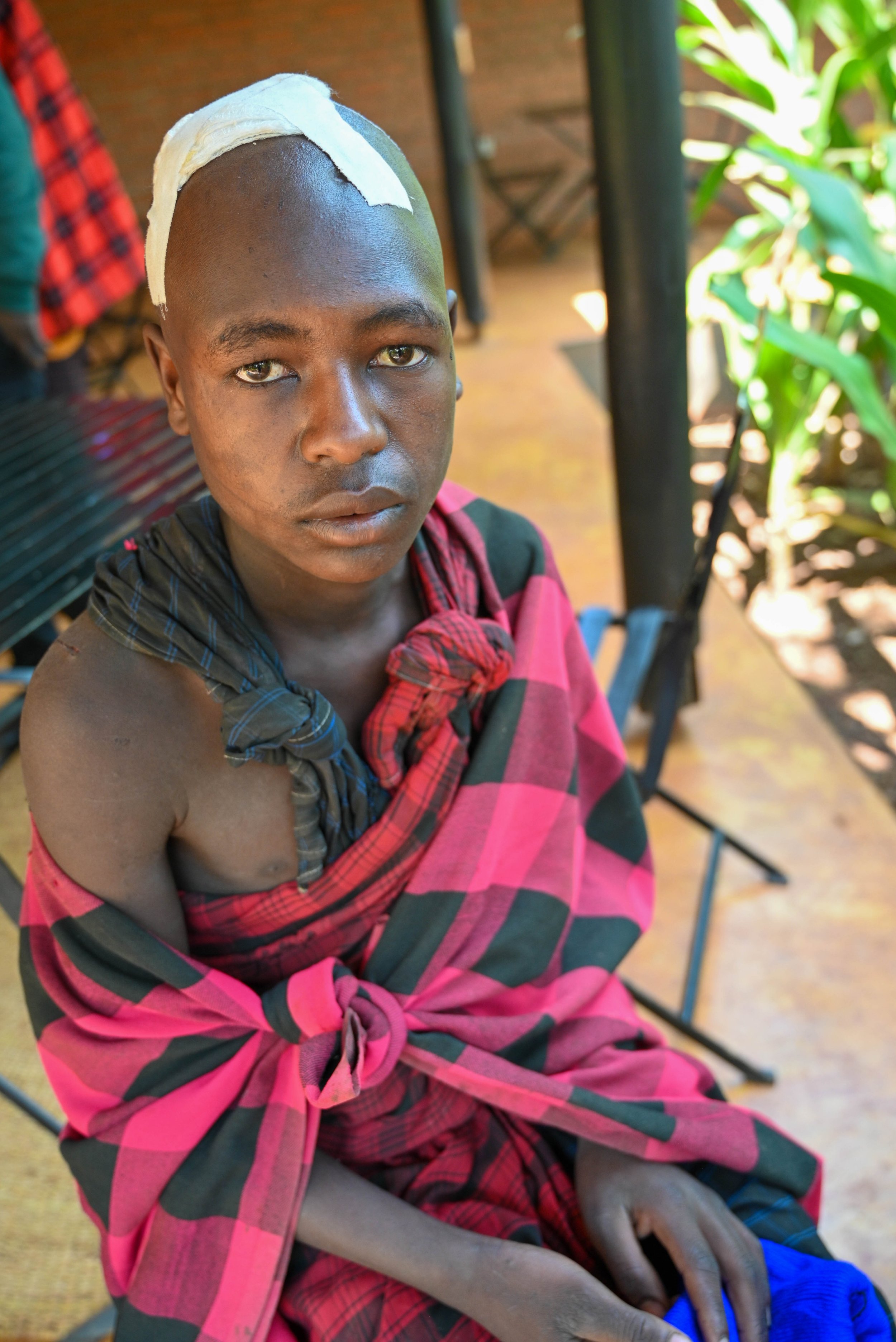
Legishon showing his head injuries.

One of the Leopards of the Serengeti as photographed by FAME’s Board Chair, Dr. Michael Rubenstein.

17-year-old Legishon* lives with his brother-in-law and two male cousins, 75 miles from home. The drought in the Serengeti has led to an acute shortage of water and has dried up the pastures for grazing, forcing them to move with their livestock and set up temporary camps elsewhere. 

It was a typical day when Legishon took the cattle out. He has been herding cows since he was a little boy, so he could easily handle the big herd by himself. As he ventured deeper into the plains, he suddenly felt something from above jump down onto his shoulder. 

“At first I didn’t know what it was, then I quickly realized that it was a leopard,” said Legishon.

Legishon tried to fight off the leopard unsuccessfully. He screamed for help, but sadly no one was around to help him.

As I lay there with the leopard on my back, tearing at my head and shoulder, I knew I was going to die. I could see my cattle in the distance and knew that they were safe. The herdsmen always said that the leopards seldom kill cows, especially if they had the option of killing humans or goats. I prayed that this was the case. At sunset, my cousins would come looking for me when I didn’t go back to the camp, and they would find the cattle. This was my last thought before I closed my eyes and waited to die.
— Legishon

However, after a few minutes of the attack, the leopard walked away. Legishon was left in terrible pain, unable to talk or move. He lay bleeding where the leopard had left him until some women picking firewood found him. 

At first, they thought I was dead, and when they realized I wasn’t, one of the women who knew my family called my brother-in-law.
— Legishon

Legishon’s brother-in-law knew of a local dispensary that had an ambulance. He called them and asked for help. The ambulance arrived at the scene and took Legishon to the dispensary.

“When we got to the dispensary, the doctor said that Legishon needed way more sophisticated medical care than they were able to provide. They mentioned that he needed a CT scan, and this was only available at FAME.” - Legishon’s Brother-In-law.

Once at FAME, the emergency response team knew exactly how to help Legishon, having treated numerous injuries from wild animal encounters over the years.

I was very scared. I’m not scared often; actually, I’m never scared of anything, but that day I was scared that we would lose Legishon
— Legishon’s Brother-in-law

Legishon went for an X-ray and CT scan, which confirmed that he had not suffered any neurological damage from the attack. He was given tetanus and rabies vaccine. After four days in FAME’s inpatient ward, he was ready to return home.

Thank you, FAME. Your good hospital has healed me. I’m ready to go back to my cattle!
— Legishon

“As a family, we are very grateful to FAME. You saved our son! I’m now taking him home to his mother, who I’m sure will not allow him to come back to the camp. When I told her of his accident, she was hysterical. Now she wants him home so that she can watch him all the time. But Legishon is a man, and you can’t watch a man. He’ll be back with the cattle soon enough, I’m sure!”
- Legishon’s Brother-In-Law

*While the patient’s name has been changed to protect privacy, permission was secured to share her photos and story with FAME supporters, and to raise awareness of available medical care at FAME Medical

FAME Africa
Sister Sister

Susan (left) poses with her younger sister Marta.

Meet Sisters Susan* and Marta* Duwe. Susan is 89 years old, and Marta is 68. They live together six miles from FAME, in a small village in Karatu. On this day, they are the first patients at FAME’s Outpatient department (OPD) for a follow-up visit, arriving at 8 am. They shared a boda boda (motorcycle) to get here. 

Susan and I live together. Our children have moved on, and our husbands are dead, so it’s just the two of us. A friend told us about this hospital and said she had a good experience. Susan was suffering from back pain at the time, so we came here to see a doctor.
— Marta

Once at FAME, Susan was diagnosed with lumbar (lower back) muscle strains. She was prescribed anti-inflammatory medicines to reduce inflammation, which gave her great relief. A month ago, she was sick again, this time with something different, so they returned to FAME. She was diagnosed with hypertension. After a month on medication, she is back for a follow-up visit. 

We have always had a good experience at FAME. Every time we come here, Susan gets better. Today I hope the doctor gives her the same medicine as last time, as it works very well. She can now help with chores like cleaning dishes, even though I ask her not to! She says she feels stronger.
— Marta

Susan only speaks her tribal language, so her sister translates for us. In many cases, relatives who speak Swahili are the best translators for patients, but in cases where a Swahili-speaking friend or relative is unavailable, FAME has on-site social workers who step in as translators.

FAME is Good! They help me a lot. Marta is very young, so she has no medical issues. I’m old and always need a doctor for something. I’m happy that Marta and FAME are here for me.
— Susan

*While the patients’ names have been changed to protect privacy, permission was secured to share their photos and story with FAME supporters and to raise awareness of available medical care at FAME Medical.

FAME Africa
Raising A Preemie
Despite her pneumonia diagnosis, Diana now weighs 6.6 lbs! I’m pleased with her progress. FAME is dedicated to supporting Diana, her mother, and families like theirs, as premature babies are more likely to have chronic health issues.
— FAME’s Dr. Ken Karanja, Diana’s attending physician.

Baby Diana* is five months old. She is admitted to FAME’s inpatient ward with her mother. She struggles to breathe and is wheezing. Diana is no stranger to FAME; she was born here prematurely at 28 weeks gestation, weighing only 2.4 lbs. She spent one month in the special care nursery in an incubator and was 3.1 lbs when she was discharged to go home. 

“When I got pregnant with my first child, my husband was very excited and asked several people what hospital they thought would provide the best prenatal care. FAME kept coming up repeatedly, so we decided to come here. And I’m glad I did because Diana was born very early and needed a lot of medical attention to save her. FAME was very good at providing this care.” said Diana’s mother.

Diana’s mother explains that Diana has been thriving and reaching all her growth and developmental milestones before this visit. She has taken advantage of the many follow-up clinics that FAME has offered her post-discharge, which are crucial to catching any motor or cognitive development delays. The sooner interventions are implemented, the better chance of minimizing any long-term deficits.

“A few days ago, Diana had a high fever and difficulty breathing. She also had difficulty feeding and was restless. Because she was born premature, we are always on high alert for any problems. So I quickly took a bus to Karatu and brought her to FAME.” 

Diana’s mother made the 30-mile trip to get her to FAME, where Diana was diagnosed with bacterial pneumonia and put on antibiotics. Using a nasal oxygen cannula, she is connected to an oxygen concentrator machine to help her breathe and she is expected to make a full recovery. 

In the next five years, FAME will build a dedicated pediatric team to run pediatric programs around wellness and growth tracking, early intervention and prevention. This will enable us to serve more babies with conditions like Diana’s. Donate today to support our growing pediatric team here.

Since we have been here, she has been doing well. The medicines at FAME are working! I’m happy and grateful to FAME for taking good care of sick people like my daughter.
— Diana's mother.

*While the patient’s name has been changed to protect privacy, permission was secured to share her photos and story with FAME supporters, and to raise awareness of available medical care at FAME Medical

FAME Africa