World Prematurity Day


This World Prematurity Day, FAME highlights its Special Care Nursery (SCN), which offers advanced care to premature babies and their families. FAME’s capacity in preterm care has expanded to enable admitting infants as young as the gestational age of 27 weeks with good health outcomes. In 2021, FAME treated 24 preemies; to date this year, we have already treated 33 preemies, a 37% increase from last year, and we expect that number to continue to increase as we come to the end of the year.

The burden and challenges of preterm birth in low-resource areas such as rural Tanzania are enormous because of the complexities of caring for these vulnerable infants and preventing complications. This is why we are excited that this year, FAME’s SCN was fortunate to receive a donation of phototherapy units used for treating neonatal jaundice, which has been instrumental in reducing the number of referrals of babies with newborn jaundice. In 2021 FAME referred at least two jaundiced babies every month to other hospitals but this year, we have successfully treated 40 children with jaundice at FAME, thanks to the new phototherapy units. 

The following are stories from mothers with preterm infants admitted to FAME’s SCN. At different stages of preterm birth, we meet Naserian, born extremely preterm at 27 weeks, George, very preterm at 28 weeks and Bernard, born moderate preterm at 32 weeks. These stories of resilience, hope and faith demonstrate how important FAME’s SCN is in our catchment area. 

Naserian: Extremely preterm (born at 27 weeks [estimated])

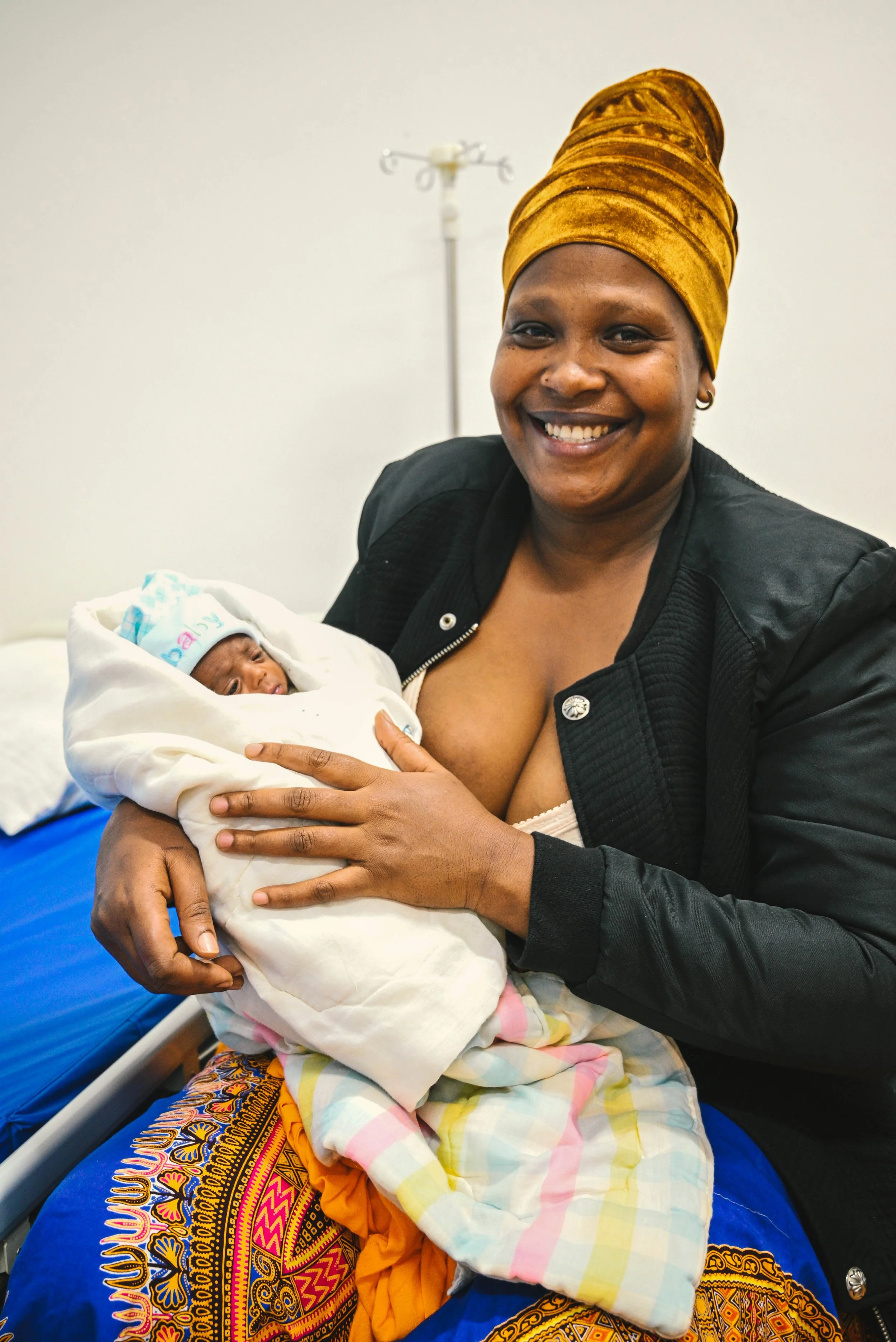
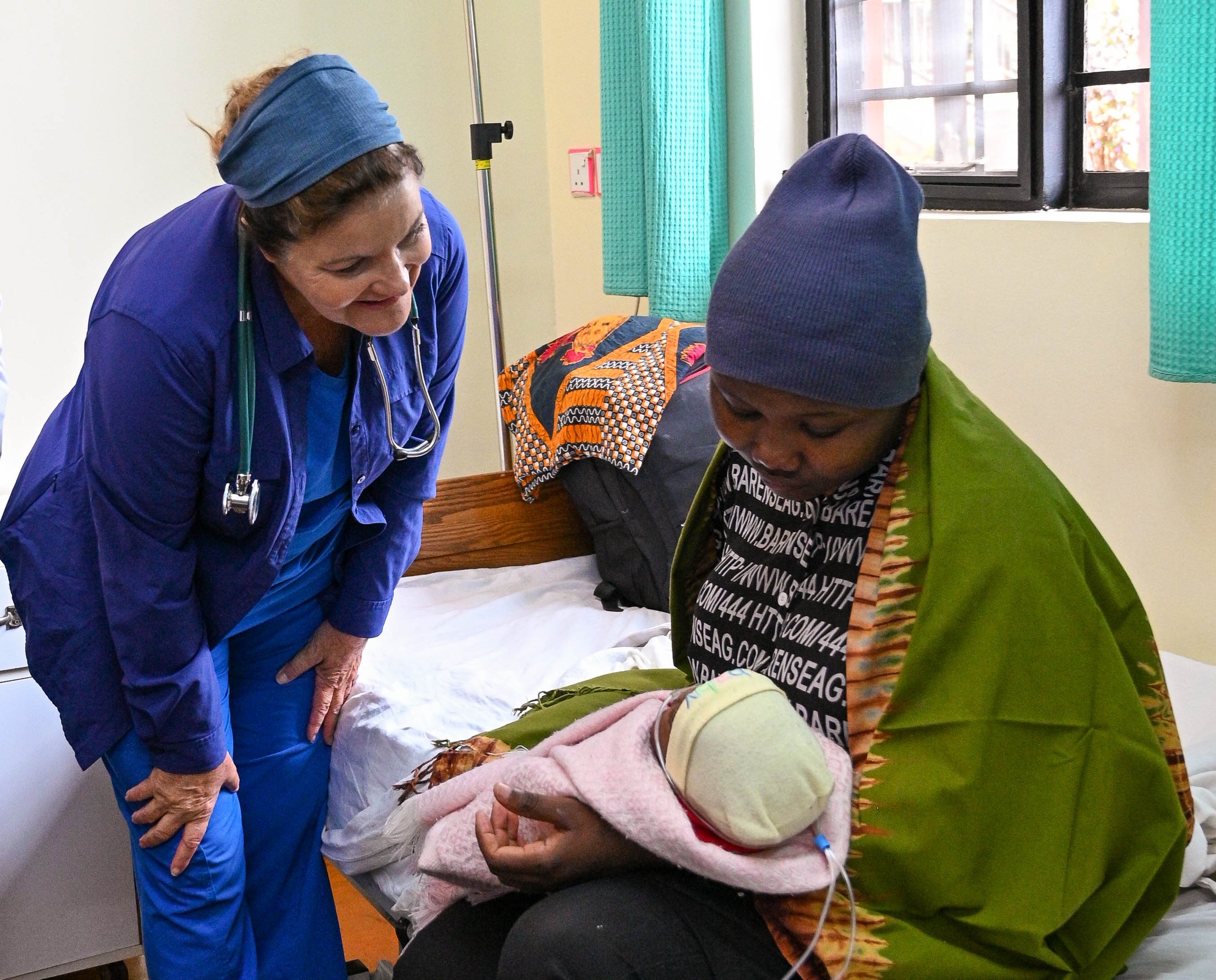
Naserian’s mother holds her little girl.

When Naserian’s* mother was five months pregnant, she began to feel ill. She thought it was normal abdominal pregnancy pains, but as the weeks went by, her condition became worse. She was six months pregnant when she went into labor. She had contractions, vomiting and her water broke. Her children ran to call the traditional birth attendant (TBA) who lived nearby, as Naserian had planned for home delivery. The TBA confirmed that she was in labor and that the baby was coming any minute.

When the baby was born, she was abnormally small. I could see the birth attendant’s face was shocked and scared. She advised my husband and me to visit a local clinic. I had given birth to three healthy full-term babies at home, so this was all very confusing!
— Naserian's Mother

At the local clinic, the doctor asked them to look for a bigger hospital, as the baby needed specialized care that he could not provide. Determined to save their child, the family got a neighbor to drive them to the hospital; he knew about FAME and that it was the closest “big” hospital, so he drove them 30 miles to get there. 

Once at FAME, they were received and the baby was rushed to the SCN. The mother did not know the child's gestational age, but the doctors estimated it to be 27 weeks. The baby weighed 2 lbs. 

Naserian

I am so grateful that FAME helped me. By the time we got here, I was already preparing for the worst. But the doctors and nurses have been so good at caring for her and she’s getting better. I have been here 12 days already and I can see some improvement. She’s 2.5 lbs today. I’m very hopeful. FAME also takes great care of me. They bring me a lot of good food every day. I can’t finish it all and I wish my other kids were here to eat the rest!
— Naserian's Mother

George: Very preterm (born at 28 weeks)
Leah holding her son, George.

George’s* mother, Leah, was only 28 weeks pregnant when she went into labor. She owned a busy restaurant and had no time to attend prenatal classes since she got pregnant. This was her fourth pregnancy and because the previous pregnancies were uneventful, resulting in healthy children born to term, she thought this would be the same. 

I was in my restaurant when it happened. My water broke, and it was a lot of water! Then the blood came. One of my employees rushed home to call my husband, who brought me to FAME in his car. I was crying the whole way. I thought this would not have happened if I had just attended the prenatal classes. I felt very guilty. I felt like I had killed my child.
— Leah

Leah’s son, George, was born naturally at 28 weeks, weighing 1.9 lbs.

George

He was so small! The doctors encouraged me to be positive, and they took him to the special care nursery. We stayed at this hospital for 29 days before I could take him home.
— Leah

George was 2.7 lbs when he went home. The doctors and nurses taught Leah how to feed and clean her son, who was still quite small. 

“When I came home, because of the support and information I had received at FAME, I was able to care for the baby. So far, he is doing well. He suffers from stomach issues sometimes, but we have made good progress; he's 3 lbs today! He is always on my chest feeding or sleeping, and I have had to close my restaurant to take care of him. I guess I could hire someone to run it on my behalf, but that would divide my attention and I want to give my son my full attention. I cannot let him down again.”

Bernard: Moderate Preterm (born at 32 weeks)

Bernard in a neonatal incubator with a phototherapy lamp at FAME’s SCN.

We meet Bernard's* mum, Linda, in the SCN at FAME’s maternity ward. She is 20 years old and this is her first child. Linda lives in Morogoro, 390 miles from FAME. Her mother, who lives in Karatu, fell ill and asked Linda to come to help her around the house until she was strong enough to do her daily chores. Linda took a bus and came to Karatu. When she arrived in Karatu 12 hours later, she felt extremely sick. She was 32 weeks pregnant.

“Immediately, I got to my mother's house; I knew something was wrong. My stomach hurt in a way it has never hurt before. My mother asked me to rest since I had been on a long bus journey. I went to bed, but that's when the bleeding started. Despite this being my first pregnancy, I knew something was wrong. I was worried since I had done all my prenatal classes in Morogoro and my doctor was there. I didn't know what to do. My mum got very scared and called my uncle, who works at a hospital and asked him if his hospital could help. The hospital turned out to be FAME.”

At this point, Linda was experiencing contractions. Her mother got a taxi that brought them to FAME. Once at FAME, she was taken to the labor ward, where she delivered her baby naturally and he was sent to the SCN. He was born prematurely at 32 weeks, weighing 3.5 lbs. 

I cried a lot. I thought my baby was dead because he was so small! The doctors were nice to me and explained everything. They told me that some babies are born younger than my son and they survive! I couldn’t believe it!
— Linda

After 16 days at FAME, Bernard is ready to go home with his mum. His weight has increased by 0.2 lbs and Linda is happy. Every little gain counts. 

I’m very happy that FAME has saved my child’s life. Every day I hold him close to my chest for hours [kangaroo care]; other times, he’s in this box with the light [Neonatal incubator with phototherapy lamp] that you can see. Take a picture of him; I want to show him how small he was when he’s older because I know he won’t believe me when I tell him.
— Linda

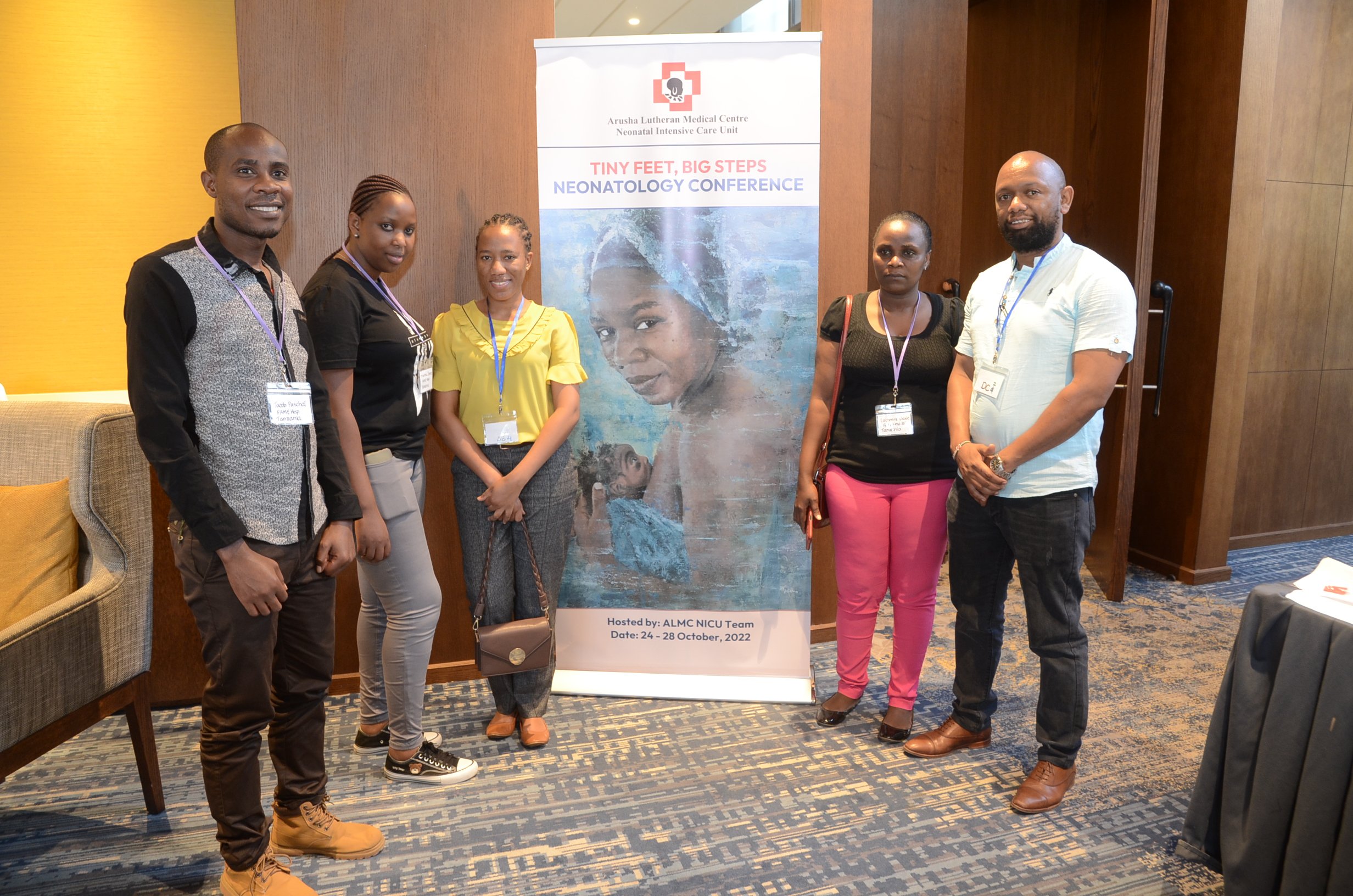
FAME staff at the neonatal conference. From Left: Jacob Ignatus, Nurse, Martha Jerome, Nurse, Dr. Joselina Mumbee, Catherine Duwe, Nurse and Dr. Ken Karanja.

On top of quality essential equipment, FAME continues to invest heavily in its staff and ensure they are up to date on any developments in the neonatal world. Last month, two doctors and three nurses from FAME participated in a neonatal conference called “Tiny Feet, Big Steps” in Arusha. The five-day conference was sponsored by Arusha Lutheran Medical Center (ALMC) and covered topics such as thermoregulation, neurodevelopment care in NICU and apnea of prematurity, among others. This training helped improve their knowledge, skills, motivation and capacity to care for the preterm infants that pass through our doors.

*While the patients’ names have been changed to protect privacy, permission was secured to share their photos and story with FAME supporters and to raise awareness of available medical care at FAME Medical.
FAME Africa
Volunteer Reflection: Nurse Barbara Dehn - Vice President of Women's Healthcare at Peppy and FAME Board Member

Nurse Barb, as she's affectionately called, has been coming to FAME for seven years. She first learned about FAME from a friend who donated supplies and knowing that Nurse Barb was interested in global health, encouraged her to check out this hospital in northern Tanzania that practiced sustainable healthcare. 

My first impression of FAME, once I arrived, was that staff members were incredibly resourceful. They could do life-saving work that we can only do in an intensive care unit in the United States. They managed to care for complex patients with few resources but with much knowledge, care and diligence. Despite the sometimes difficult conditions, the staff remained smiling, collegial and always in a good mood. They would take my hand at tea time and ask if I had taken chai [tea].
— Nurse Barb

Nurse Barb has been back five times since joining the FAME board four years ago. 


“When Dr. Frank and Susan honored me by asking me to join the board, there was no question that I wanted to be more involved and was ready to do everything needed to support FAME’s vision. So I rolled up my sleeves and got down to work.”

As a volunteer, one of Nurse Barb’s responsibilities was to train the Tanzanian staff. 

It’s been beyond inspiring because everyone wants to learn. The staff is hungry for knowledge and eager to ask about topics they want to learn. Whenever I come to FAME, I do not presume to know what people want to learn; I discuss it with the team and design a program suitable for them.
— Nurse Barb

Training, however, did not end in the classroom.

“I would sit in a department, for example, the Reproductive and Child Health Clinic (RCH) and the staff would ask me questions as situations arose. They were willing to acknowledge things they were unfamiliar with or had not learned. I was very respectful as I was a visiting guest. The staff had enormous amounts of knowledge that I did not know and they were always generous with teaching me all sorts of things. It's truly a collaboration. I have learned so much from the FAME staff.”

Nurse Barb advises would-be volunteers to step back and observe while listening twice as much as they speak.


Since she started coming to FAME, Nurse Barb has been purview to FAME’s incredible growth, which has happened without compromising the quality and efficiency of care provided. FAME has ensured hospital processes are working at full capacity before expanding and taking more responsibility. 

“The COVID-19 response was extraordinary and helped cement FAME as a sustainable model that doesn't need volunteers to save the day. The FAME staff responded to the global pandemic and implemented solutions that worked. Egbert [head of pharmacy] created non-rebreather masks from locally available materials. At FAME, I have witnessed ingenuity, creativity, initiative and the drive to make Karatu safer and healthier.”

Nurse Barb talks about FAME’s social workers and their work. 

FAME social workers inspire me. How they handled the rabies case was impressive. They speak multiple languages, ensuring that all patients are treated with the same level of respect as everyone else and that language is not a barrier to accessing healthcare. This enforces the egalitarian nature of FAME.
— Nurse Barb


FAME is always looking for new donors, as our patient fees only cover a fraction of the costs associated with running the hospital. Nurse barb has a message for anyone looking to support FAME.

At FAME, a little goes a long way. The number of people FAME serves in a year on its budget is remarkable. Talented people are working every day with minimal resources and performing miracles. Your donations help elevate healthcare for some of the poorest people in the region!
— Nurse Barb
FAME Africa
“FAME is for Families”

FAME’s mission has always been to advance patient-centered care in rural Tanzania. Over the years, FAME has also encouraged families to play an active role in the patient’s medical care, thus promoting individual and family health. The patient and family-centered approach to healthcare emphasize collaboration between the healthcare staff and families, leading to better outcomes and improved patient experiences. 

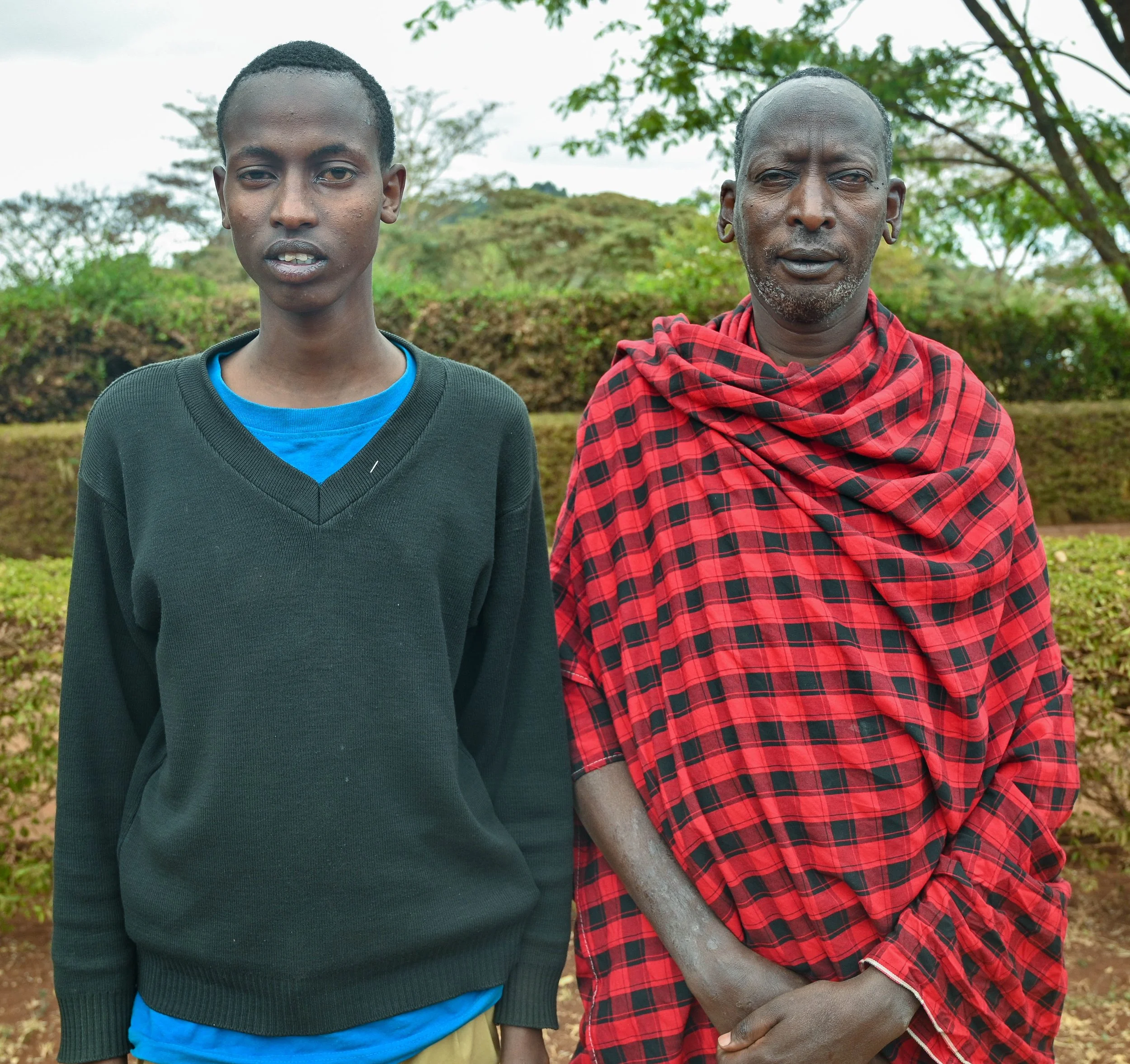
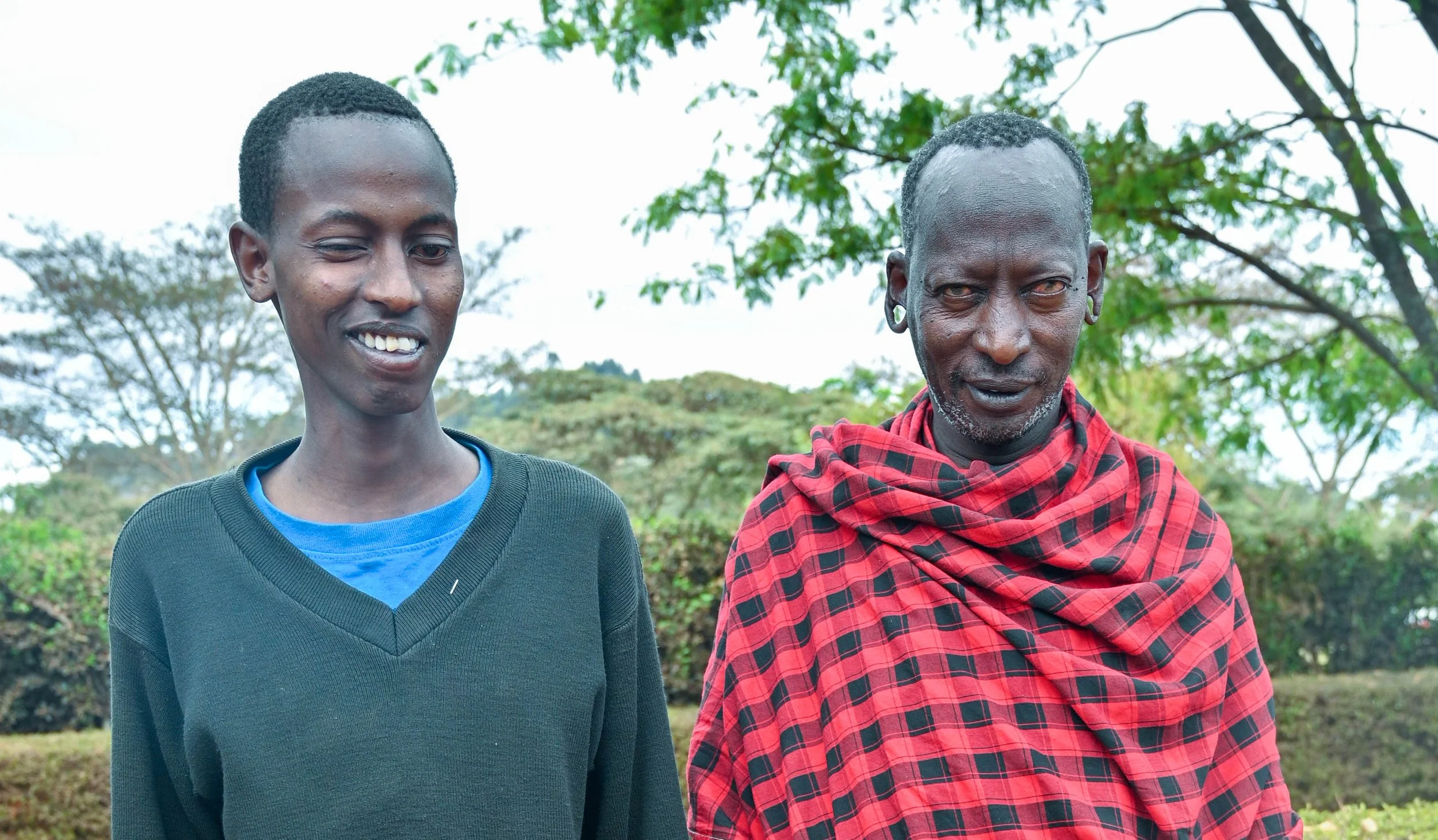
Today, FAME received new patients at its Outpatient Clinic (OPD): Mzee Lengele*, age 56, and his son Matthias, age 19. With new patients accounting for 43% of FAME’s patients in 2021, FAME is always happy to see new faces at the hospital! 

Mzee Lengele has been suffering from back pain for the last couple of weeks, making it difficult for him to take his cows out for grazing. He’s not sure what caused the injury but thinks it could be when one of his cows kicked him hard. 

I can stand still without discomfort but can’t move around much or run after the cows.
— Mzee Lengele

His son Matthias* suffers from an eye infection and his mouth is lopsided. He comes from a boarding school where his father picked him up. His teacher had called his father and explained that she feared he needed more specialized care than they could offer at the school.  

I have been unwell for the last week. My teacher sent me to the school dispensary several times, but it didn’t help. After a week, she said she would have to call my father to take me to the hospital.
— Matthias

When Mzee Lengele got the call that his son was sick and needed to see a doctor, he had also been thinking about seeking medical attention for his back.

I have always heard about FAME from my neighbors, but I have never been here. This is my first time. When my son’s teacher called to say he needed urgent hospital care, I knew I had to get a place to treat my back and Matthias’s illness at the same time without compromising on the quality of care. My neighbors assured me that FAME is for the whole family and that everyone receives the best possible patient-oriented care at a reasonable cost.
— Mzee Lengele


The father-son duo had a long journey to FAME as their village is 200 miles away from FAME. However, this did not deter them; they were among the first patients at the OPD today. 

We left home when it was still dark! I’m happy we made it here early. From my first impression, this is a very good hospital. The buildings look very nice, and the reception we received was fast and efficient. And indeed, FAME is for families, as I see everyone here: fathers, mothers, children of all ages and even old mzee’s like me! I’m happy we came.
— Mzee Lengele

FAME continues to value and embrace patients and their families as essential partners and is always looking to identify strategies to improve the provision of patient and family-centered care in our catchment area. 

*While the patients’ names have been changed to protect privacy, permission was secured to share their photos and story with FAME supporters and to raise awareness of available medical care at FAME Medical.

FAME Africa
Volunteer Reflection: Dr. Joyce Cuff - Doctor of Philosophy (Ph.D.) Radiation Biology and Biophysics

Dr. Cuff on one of the training sessions for FAME staff.

Dr. Cuff training FAME staff: looking on is FAME’s Dr. Ken (middle) and Dr. Gabriel (right).

Few people get to have a post-retirement career, let alone one as rewarding and challenging as the one I was given when I signed up to volunteer at FAME for 13 months in 2010-2011. I have watched and sometimes participated in seismic shifts as FAME matured from a simple Clinic to an established Hospital. In 12 short years, FAME has opened a free-standing and well-equipped lab; an in-patient hospital; routine surgeries; a rapidly growing Reproductive and Child Health program; a free-standing maternity center; on-site housing for staff and volunteers; and even a cafe for residents and visitors.

The following is a true story and one that gets at who, what and where FAME is. It is the story of Lazarus (not his real name, but an obvious choice, as the story reveals). Lazarus came to us when we were at a clinic housed in a single building. Lazarus looked like any ordinary patient with his shuka (traditional Maasai Blanket) over his head. 

One day a volunteer doctor/legend at FAME, Dr. Duane, brought Lazarus to see me in the lab. Dr. Duane wanted me to do a test on Lazarus. As I waited for a hint about what sort of test, Lazarus removed the shuka from his head and revealed a growth almost as large as his head, growing out of his neck. It was an anthrax tumor. We did some sampling and found that there did not appear to be active anthrax present. The doctor removed the tumor and, since we did not yet have an inpatient ward, sent the patient to a nearby guest house so he could come back daily for a while to make sure everything was ok and to have dressing changes. 

Three days went by and no word from Lazarus. Concerned that something awful had happened, reception called the number on record for Lazarus. We were told the patient had died, but nobody seemed upset at FAME for the death. The doctor was quite beside himself. The next day as the doctor entered the clinic, there was Lazarus sitting on a chair, waiting to see him!

When shown the number that was called to see how he was progressing, Lazarus said he did not recognize the number. No excuse was ever given for the three-day disappearance. One wrong number; one successfully recovering patient; one doctor trying to roll with the punches - a snapshot of FAME: who, what and where FAME is.

FAME is a community that cares deeply for its patients; it is a place where extraordinary things can and do happen with surprising regularity; it is located in a place where ongoing or even frequent contact with patients can be quite a challenge.
— Dr. Cuff

PS. A few years later, reception tracked down Lazarus at the doctor's request. Lazarus responded by coming to the clinic and strolling in with their neck exposed, accompanied by his new wife for a delightful reunion.

FAME Africa
Expanding Pediatrics at FAME: David's Story

David.

David and his mother.

At FAME’s Outpatient Department (OPD), we meet 4-year-old David* and his mother. David has been suffering from ear pain for the last month. He had been playing with his friends when he came home with his ear hurting. 

“David came home from the playground complaining of ear pain. I didn't think much of it and put it down to tiredness or having jumped around too much, but by the following morning, his ear was swollen and he complained of increased pain. I asked him if he had any idea why his ear hurt and he said no. So I took him to a local clinic.” - David’s Mother. 

The doctor at the clinic gave him some ear drops and painkillers and sent him home. However, after a week, there was no improvement, so she took him back. The doctor said there was nothing further he could do as he didn't understand what was causing the problem. 

Determined to get help for her child, David’s mother decided to try another clinic slightly farther from home. This time, the doctor examined David and said he thought he had a foreign body inside his ear canal. Surprised, the mother asked David if something could be inside his ear. 

I have a small seed in my ear. My friend put it there.
— David

The doctor attempted to remove the seed but said it was impossible because of swelling. He asked her to return when the swelling went down and sent them home with different ear drops, tablets and an ointment. 

David's ear became infected and started oozing pus in just over a week. His mother took him back to the doctor and said the medicines he gave them were not working. One look at David’s ear and the doctor said he needed to see an ear specialist urgently and recommended FAME.

The doctor said I should bring him to FAME, an excellent hospital with qualified doctors who may be able to handle David’s situation. He said that he had referred many of his patients to FAME and they all had good things to say. So we took a bus to FAME, 50 miles from home.
— David's Mother

Once at FAME, they saw a doctor at OPD. The doctor struggled to inspect David’s ear because David was irritable and uncooperative, making removal difficult and risking injuries. The doctor admitted him to FAME’s inpatient ward, put him on IV antibiotics and pain medication and planned to inspect the ear under sedation.

“I wish he had told us about the seed in the ear in the beginning. We would not have wasted valuable time and his condition would not have worsened.” - David’s Mother. 

The next day the FAME staff performed an otoscopy (procedure to examine the ear) under anesthesia. The ear was found to be enlarged and containing necrotic tissue.

The infection was much worse and the ear more fragile than we thought, with no sign of the foreign object. We feared an increased risk of eardrum damage if the foreign body was close to it and knew multiple attempts at removal would lead to serious complications. We determined that this complex case warrants a referral to an ear, nose and throat (ENT) specialist in Arusha. Foreign objects in the ear, nose and throat are a common problem we often encounter in pediatric patients, though not exclusively. Most of these objects can be removed in our outpatient clinic, but prompt recognition and management are required to minimize complications. David’s case had been ongoing for over a month, making the removal of the object quite complicated. This is why we decided to exercise caution and have an ENT specialist look at it
— Dr. Ken Karanja

Cases like David’s are one of the reasons that over the next five years, FAME is committed to building a dedicated pediatric team that will be trained and equipped to handle screening, assessment and referral of more complex cases involving newborns, children and adolescents.  FAME’s investment in reproductive, maternal, and child health, along with outcomes for newborns generally and in our Special Care Nursery, has established its reputation as an institution committed to the well-being of newborns and children and has built a trusting relationship with the families that we work with. In David’s case, Dr. Ken counseled David’s mother extensively about the safest option, which was referring David to an ENT. FAME’s doctors work in close collaboration with other doctors and medical centers throughout Tanzania and have a deep knowledge of the options available.  Even when FAME is not the best-equipped institution for handling a case, our team takes a holistic and collaborative approach to patient-centered care, ensuring the patient feels well-cared for and receives the most appropriate treatment possible.

*While the patient’s name has been changed to protect privacy, permission was secured to share his photos and story with FAME supporters and to raise awareness of available medical care at FAME Medical.

FAME Africa