International Day of Education

At the Foundation for African Medicine and Education (FAME), we place the same value on education as healthcare. Because at FAME, we know that to provide high-quality, patient-centered care, we must be completely committed to learning, growing and transforming as individuals and as a team. On this International Day of Education, FAME is proud to highlight its investment in education and the life-long learning of our staff. 

At FAME, we recognize that positive outcomes for our patients rely on the strength of our team. Therefore, FAME views capacity-building as a long-term investment in our Tanzanian staff’s ability to treat patients by creating new structures and approaches to deal with complex cases, supporting patients and their families and working to effect necessary systemic change as a model institution for patient-centered care. By continuously educating our staff, FAME ensures that we are best positioned to have an even more significant impact on the populations we serve for generations to come. 

Here’s a look at what's in store for education and capacity-building at FAME in 2023:

Mental Health Course for all FAME staff

FAME’s Housekeeping Team, at the mental health training.

FAME’s Social Worker, Angel Obeid, educates the housekeeping team on the importance of mental health.

This year, FAME has introduced an in-house mental health course training to support the prevention and alleviation of staff stress and anxiety. 

Mental health conditions are increasing worldwide (WHO) and mental health stigma remains strong in northern Tanzania. Mental health problems are believed by many to be a myth and those who struggle with mental health have nowhere to turn.

In light of this, last year, FAME sponsored its Social Worker, Angel Obeid, to attend a Mental Health for Organizational Success course at the Institute of Social Work in Dar es Salaam. This course brought together government and private organizations to learn and discuss mental health conditions. The training equipped Angel with information and skills to train her fellow employees at FAME. 

I’ve started training FAME staff on stress management in an occupational area. In today’s world, there is so much going on that can affect people’s mental health and FAME wants to ensure that our staff feels supported. This course seeks to increase mental health awareness amongst our staff to create more understanding and less stigma and to offer details on the access to quality mental health care and treatments available. I’ve already trained the housekeeping department and they have been very receptive and asked many questions. I intend to do this with every department at FAME. Everyone must know that mental health conditions are indiscriminate and can affect anyone.
— Angel

Diane Returns!

FAME’s long-term volunteer, the amazing Diane Berthel.

Long-term volunteer, Diane Berthel, has returned to FAME for three months to spearhead our intensive management training across departments. 

Last year, Diane led a three-month process to develop FAME’s current Strategic Plan. She met with all department heads to discuss the strategic priorities identified and the resources needed to support them through their work. 

This year, Diane plans to meet with department heads to discuss the progress made on the strategic priorities and the next steps they need to take to ensure that FAME continues to see growth and success in these areas. 

There will be individual and team coaching to establish initial goals regarding the strategic priorities during my three-month stay. I will pay particular attention to resource management in three general areas; employee capacity, data analysis and use and internal and external collaborations. The overall focus will be to offer support to achieve interim and long-term strategic priority goals.
— Diane

Welcome back, Diane!

Doctor and Nurse Training continues

A past doctors training session. FAME doctors were joined by FAME Co-Founder and Co-Director, Susan Gustafson (third left) and volunteer Emergency Medicine Doctor, Natalie Strokes (right, in scrubs).

FAME’s Head Nurse, Kizito Koinet (left) leads a nurses training session.

In 2023, FAME will continue providing educational opportunities for its medical staff.

In 2022, FAME staff received over 100 trainings and lectures from specialists from around the world. This year, on-campus trainings, online consultations via zoom and western-trained medical specialists from overseas medical communities coming to FAME as on-site volunteers will take center stage. 

Some educational opportunities offered to FAME staff in 2022 included epilepsy case management, electronic fetal monitoring, rabies awareness, emergency care, cervical cancer screening, malnutrition education and postnatal care, among many others. 

Capacity development is critical to achieving results and sustaining what we have already built. It is a process of learning new skills, which in FAME’s case, has fostered a great sense of ownership. A big thank you to all our supporters; we are so grateful for the support and look forward to another year of collaboration.
— Dr. Ken Karanja, FAME’s Clinical Education Coordinator.
FAME Africa
Malaria at FAME

Malaria is a serious and sometimes fatal disease caused by a parasite that commonly infects a certain type of mosquito that feeds on humans. In the United States, about 2,000 cases of malaria are diagnosed each year, with the majority of cases in travelers and immigrants returning from countries where malaria transmission occurs (CDC). This is a stark difference from Tanzania, where over 45 million people are at risk of malaria because of the climate and topography (USAID). The Tanzania Ministry of Health reported 4.4 million malaria cases in 2021, resulting in 1,905 deaths. 

FAME is located in northern Tanzania, near the Ngorongoro Crater, at a relatively high altitude of 5,900 feet above sea level. While malaria is a concern in all areas of Tanzania below 5,000 feet, given the altitude of our catchment area, malaria cases are minimal. Malaria thrives in low-altitude regions and is much more unlikely in higher altitudes. 

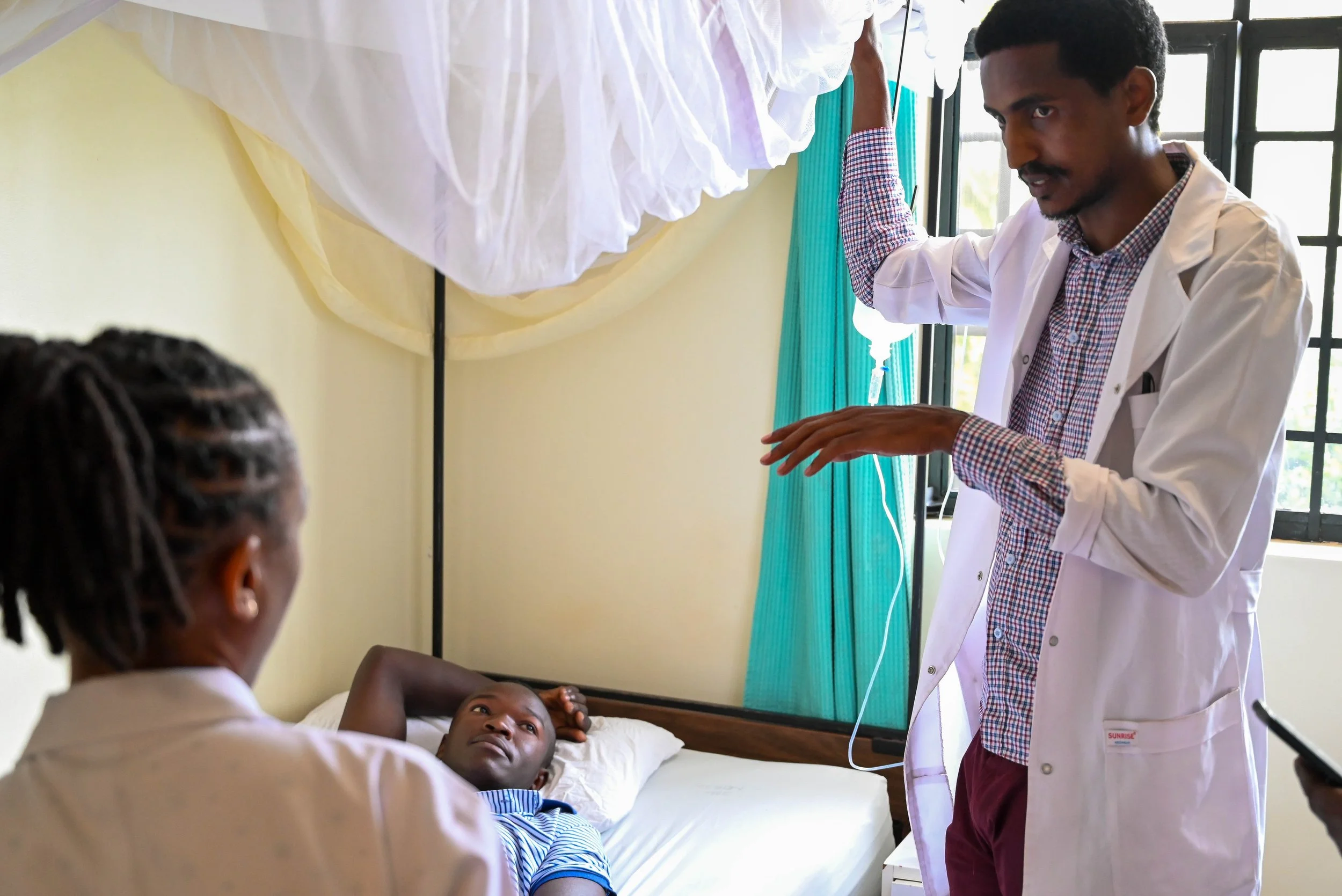
That's why our team was surprised when Daniel*, a 19-year-old boy who resides in the Ngorongoro area, was admitted to FAME’s inpatient ward with Malaria. 

We learned that Daniel had just returned from a trip to the southern highlands of Tanzania. He had traveled to Songea, a region in southwestern Tanzania, to see his mother for a month. Songea is at an elevation of 3,600 feet above sea level. The altitude, among other factors, makes it a high-risk area for malaria. 

It was on his way back to Karatu from Songea that Daniel started experiencing symptoms: fever, headache, chills, and nausea. The journey was long and traveling 690 miles on a bus is not the most comfortable. Daniel wondered if he could make it home to Karatu. He spoke to the man who sat next to him on the bus, told him that he was unwell and asked him to watch his belongings if he lost consciousness.

More than 17 hours later. Daniel arrived in Karatu. 

I was nauseous and in pain when we arrived in Karatu at almost midnight. I thought of coming to FAME but then had second thoughts on whether I was really sick or the long grueling journey had taken a toll on me. So I went home, took paracetamol and tried to sleep.
— Daniel

After a night of restless sleep, tossing and turning and waking up several times, Daniel came to FAME the next morning. 

I was lucky that my father was in Karatu. I called him and asked him to bring me to FAME. He came on a Boda Boda (motorcycle) to pick me up. I was so sick I couldn’t sit upright; he had to support me.
— Daniel

Dr. Lingato Olekotoy (right) consults with Dr. Joselina about Daniel’s case.

Once at FAME, Daniel was received by a doctor and sent to the lab for tests. 

After doing tests at the FAME laboratory, I was diagnosed with malaria and was admitted to the inpatient ward. This is the second time I have gotten malaria, the first time being when I lived in Dar es Salaam [elevation: 187 feet above sea level] seven years ago, but the symptoms this time were different! I don’t remember being this sick!
— Daniel

After two nights at the inpatient ward, Daniel is ready to go home.

The care at FAME has been exceptional. The food was delicious; I’m extremely sad that malaria took my appetite away and I couldn’t eat much. I might return for the food alone; this was a missed opportunity! I’m happy with the treatment and thanks to FAME, I’m starting to feel back to my old self again.
— Daniel

Drs Joselina (left) and Lingato (right) are joined by Dr. Emmanuel Mbilinyi (second right) and Nurse Iluminata Sanka (second left).

Through the National Malaria Control Program (NMCP) and in collaboration with its partners, the Government of Tanzania has made significant strides in the fight against malaria, resulting in a remarkable reduction in malaria cases. This is reflected in the number of malaria patients at FAME: in 2021, we saw 53 malaria cases; this dropped to 38 cases in 2022. 

FAME’s Head Doctor, Gabriel Kissima, explains the malaria cases we receive at FAME: 

Because of Karatu’s high altitude, we don’t usually get many malaria cases from around here. Often, the patients have traveled outside Karatu or live outside our catchment area. At FAME, close attention is paid to the differential diagnosis of febrile illnesses [fever], as early recognition of symptoms and signs perceived as malaria are vital for effective case management.
— Dr. Gabriel

*While the patient’s name has been changed to protect privacy, permission was secured to share his photos and story with FAME supporters and to raise awareness of available medical care at FAME Medical.

FAME Africa
Human-Wildlife Conflict: Buffalo Attack

Lugongo poses at FAME’s inpatient ward.

Three months ago, we covered the human-wildlife conflict in our catchment area, where a young boy was attacked by a leopard while herding goats in the Serengeti and was quickly rushed to FAME for treatment, saving his life. You can read his story here.

This week, we encountered a similar case, only this time, it was a buffalo attacking a 59-year-old man, Lugongo*, as he picked some native wild vegetables.

Since the death of his wife a year ago, Lugongo has had to take up her chores, including picking wild vegetables for food from the forest. His home borders the Ngorongoro Conservation Area (NCA), sharing the same ecosystem as the wildlife. Due to this, human-wildlife conflicts are not unusual. 

On this fateful day, Lugongo and his friend ventured deep into the forest, searching for wild vegetables, as they often did. Suddenly, he was attacked from behind and thrown in the air.

I didn’t understand what was going on. One minute I was laughing hysterically with my friend; the next, I was high in the air. When I fell, I saw that a buffalo was attacking me. Terror, shock and fear engulfed me. I know about the buffalo. It’s a very dangerous animal. Its horns would shred me to pieces; if that didn’t work, it could easily trample on me. It’s a very heavy animal.
— Lugongo

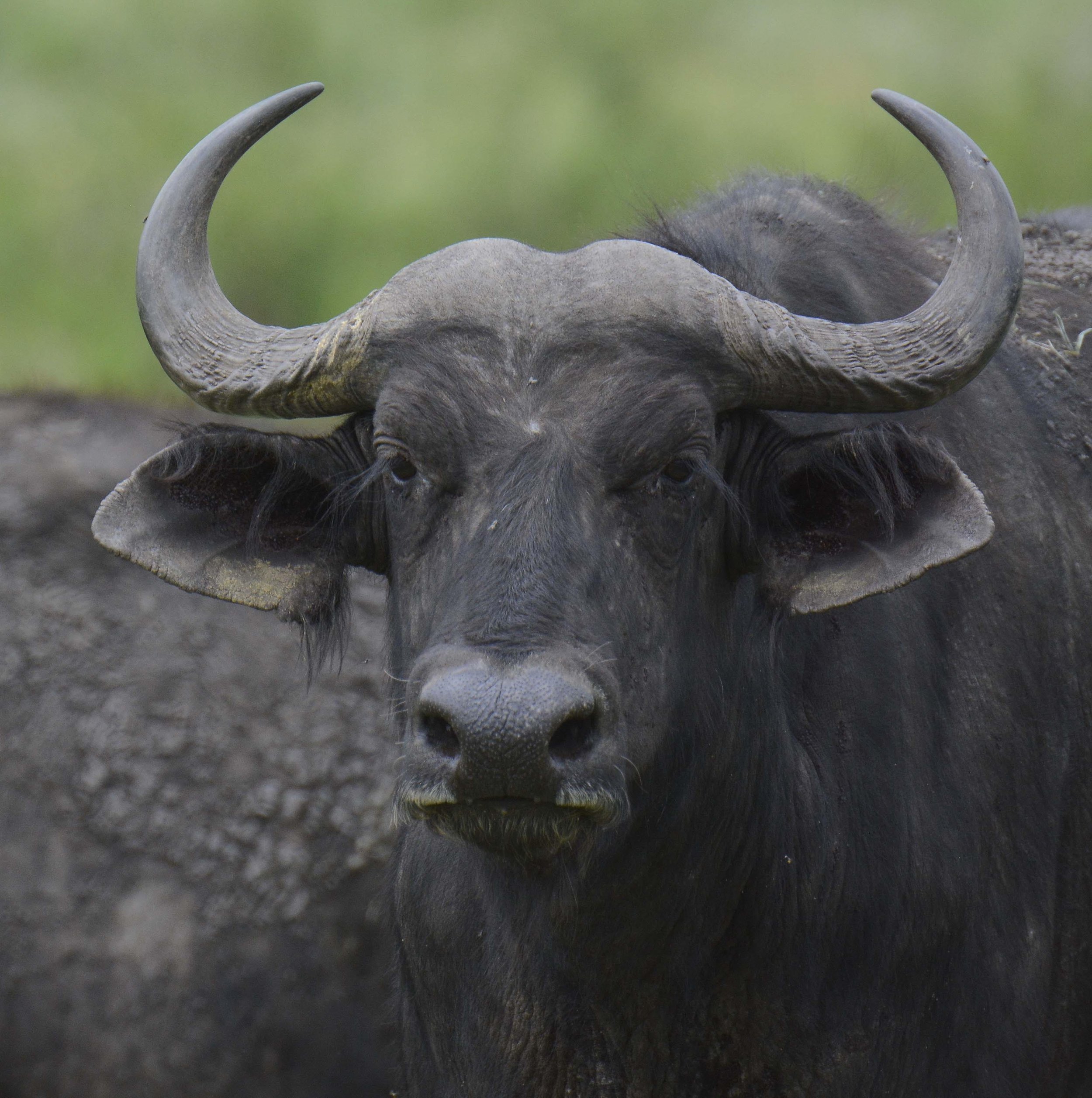
The African buffalo is a member of the Big Five wildlife animals. It weighs 660 to 1,840 pounds, is 4 to 5 feet tall and is extremely strong (National Geographic). It is herbivorous and favors dense forests and open plains for food. It is easily seen in protected areas and national parks such as the Ngorongoro Crater and the Serengeti.

Lugongo’s friend started screaming and throwing sticks and stones at the buffalo to chase it away. This alerted other people in the village, who ran to help scare the buffalo off. When it finally ran off, Lugongo was in bad shape. The villagers put him in a car and quickly rushed him to FAME. Time was of the essence if he was going to survive. 

Here, FAME’s Head Doctor, Gabriel Kissima, describes Lugongo’s condition when he arrived. 

Lugongo had suffered a traumatic chest injury from the attack. He had a cut on his chest that was 3.9 inches long and 1.5 inches wide, with many rib fractures and extensive damage to his lungs and internal organs. He had lost a lot of blood and needed emergency surgical intervention. He was sent to the operating room (OR) for trauma assessment and a thoracotomy [a surgical procedure that goes into the chest] was performed. This enabled the surgeon to see through the damaged lung and internal organs. The left lower lobe [lung] was repaired.
— Dr. Gabriel

African Buffalo, photographed in Ngorongoro by FAME’s Board Chair, Dr. Michael Rubenstein.

At FAME, surgery is increasingly becoming integral to the healthcare we provide. Once it was discovered that the patient required immediate surgical intervention for his life-threatening injuries, FAME’s surgical team moved swiftly and coordinated their work with each other to have a successful operation and save his life. With FAME’s catchment area including national parks, FAME often deals with injuries related to human-wildlife interactions that may not be as common elsewhere, such as Lugongo’s case. FAME’s surgical team is crucial for treating complex cases and saving lives in time-sensitive situations, even as essential surgery remains inadequate and poses significant challenges in rural Tanzania.  

It has been four days since the surgery and Lugongo is awake and fully alert. The doctors expect a full recovery. 

FAME saved my life. My family confided in me that they were sure I would die since the injuries were so severe. After four days here, I feel much better. I’m still in a little pain, but I can sit up and talk to the doctors and nurses when they come around. I am telling my story to warn people of wild animals’ danger and ask them to be careful. And if they are ever attacked, FAME will save them!
— Lugongo

*While the patient’s name has been changed to protect privacy, permission was secured to share his photos and story with FAME supporters and to raise awareness of available medical care at FAME Medical.

FAME Africa
Neonatal Jaundice at FAME

22-year-old Saraphina* is admitted to FAME’s Special Care Nursery (SCN) with her four-day-old son. After a routine baby vaccination visit to FAME’s Reproductive Health Clinic (RCH), he was diagnosed with Jaundice, a yellow discoloration of a newborn's skin that occurs when the baby's blood contains an excess of a yellow pigment in red blood cells (Bilirubin).

The diagnosis was a huge shock. The baby looked fine and was breastfeeding quite well. After a routine blood test, they told me he had jaundice. I didn’t know what that meant, but the RCH staff went to great lengths to explain what it was and how because my son was born full term and had no other medical issues, it was generally not dangerous in this situation. Still, he needed phototherapy for a day or two
— Saraphina

Phototherapy involves a special type of light used to treat newborn jaundice by making it easier for the baby's liver to break down and remove the bilirubin from their blood. Phototherapy aims to expose the baby's skin to as much light as possible.

Saraphina and her son at FAME’s Special Care Nursery (SCN).

Saraphina, a first-time mother, came to FAME when she got pregnant on the recommendation of her big sister, who had given birth at FAME six months earlier. Seraphina came to FAME for her prenatal classes, gave birth at FAME and has now enrolled her son in FAME’s baby clinic at the RCH.

I had an easy pregnancy, with my son being born naturally at full term weighing 7.7 lbs. I thought the pregnancy and the delivery were the hardest part. Still, I’m finding out Kuzaa Si Kazi Bali Kulea Ndiyo Kazi [It is not difficult to nurse a pregnancy, what is difficult is to bring up a child- Swahili Proverb].
— Saraphina

Saraphina’s son was taken to FAME’s Special Care Nursery for phototherapy. 

They had explained that my son would have to be under special lights for a day or two to help eliminate jaundice, but I was intimidated once I saw the lights. I was scared the lamp would burn him too hot; he was just four days old! They assured me that the light would not harm the baby and that special glasses would protect his eyes.
— Saraphina

After two days, Saraphina and her boy are ready to go home. 

I want to thank FAME for supporting me on this journey of motherhood. FAME has been here from the start. If it weren’t for FAME, I would not have known that there was a problem with my child. I asked the RCH staff how they knew what to test for and they told me that these were routine tests for every newborn coming for a postnatal checkup within seven days. As mothers from this area, we are blessed to have FAME.
— Saraphina

FAME now has four phototherapy units. The two newest phototherapy lights were very generously donated by Redding West Rotary group. They have been a crucial addition to increase FAME’s capacity to treat newborns for jaundice and reduce costly referrals for families.

*While the patient’s name has been changed to protect privacy, permission was secured to share her photos and story with FAME supporters and to raise awareness of available medical care at FAME Medical.

FAME Africa
Brucellosis at FAME

FAME’s Pediatrician, Dr. Elissa Zirinsky (left) together with FAME’s Social Worker, Kitashu Nganana (right) talk to Sankara and his father (middle) during the consultation.

At FAME’s Outpatient Department (OPD), we meet a dad and son duo who’ve come in for their follow-up appointment. Sankara*, age 11, suffers from brucellosis, an infectious disease caused by direct contact with infected animals, eating or drinking contaminated animal products, or inhaling airborne agents. Sankara’s brucellosis is likely caused by ingesting raw (unpasteurized) milk from infected cows.

Sankara and his father come from a village two hours away from FAME. They first came to FAME a month ago when Sankara had eye problems. He complained of eye pain, redness and blurred vision. He also had a fever and vomiting.

Sankara suddenly could not see very well. He could not count the cows correctly when they came home from the fields in the evenings, something he had done many times since he was a little boy. He then started having a fever and vomiting and became very weak. After trying local herbs and he wasn’t getting better, I brought him to FAME.
— Sankara's Father

After having his blood tests done at FAME, Sankara was diagnosed with brucellosis. 

I have heard about brucellosis before, but I was surprised that Sankara had it. I was very worried about him as it was clear that something was wrong. But the doctor reassured me he would be fine.
— Sankara's Father

In 2022, FAME treated 30 cases of brucellosis. This number is down from the 33 cases treated in 2021. This decrease is partly due to the Tanzanian Government’s 5-year One Health Strategic Plan (2015-2020) to enhance collaboration among humans, animals and wildlife health sectors to reduce the transmission of infectious diseases from animals to humans.

Sankara was given antibiotics and instructed to come back for a check-up after a month. Today he’s back and ready to see FAME’s pediatrician, Dr. Elissa Zirinsky. FAME’s Social Worker, Kitashu Nganana, joins the consultation to help with the translation, as Sankara’s father only speaks Maasai. 

Dr. Elissa enters the examination room and greets the duo with a cheerful Maasai greeting, “Takwenya!” and Sankara and his father burst into fits of laughter! It turns out this Maasai greeting is only used towards women, never to boys or men! Sankara’s father, however, quickly reassures Dr. Elissa that they are very proud of her for speaking their language!

Dr. Elissa is happy with Sankara’s improvement since his first visit.

Brucellosis can be challenging to treat, so I’m happy that Sankara is responding well to medication. Today I gave him the first dose of IV antibiotics and with Kitashu’s help, arranged for him to go daily to a health dispensary near his home for the remaining six days. This makes it much easier for the family, as they live far from FAME. I trust the family to complete the antibiotics course and look forward to seeing Sankara in a few weeks for a follow-up. We have talked to them about the importance of boiling milk and cooking meat thoroughly to prevent brucellosis. We asked them to use this opportunity to educate their community as well.
— Dr. Elissa

“In my community [Maasai], it is common for boys between the ages of 9 and 12 to drink raw milk from the cows. They believe it makes them strong as they prepare for their warrior stage. When we get these cases, such as Sankara’s, we take the opportunity to educate them on the dangers of eating raw meats and drinking raw milk.”

-FAME’s Social Worker, Kitashu Nganana

I was shocked when FAME called to remind me to bring Sankara for his follow-up visit and asked how he was doing. I was blown away! FAME deeply cares about us and I’m happy that my son is in your care. It might be normal for you to check up on your patients after they leave, but for us, it means the world that someone cares this much about us. Thank you.
— Sankara's Father
Thank you for giving me medicine to take the pain away!
— Sankara

*While the patient’s name has been changed to protect privacy, permission was secured to share their photos and story with FAME supporters and to raise awareness of available medical care at FAME Medical.

FAME Africa