If You Build It, They Will Come

by Co-Founder Susan Gustafson
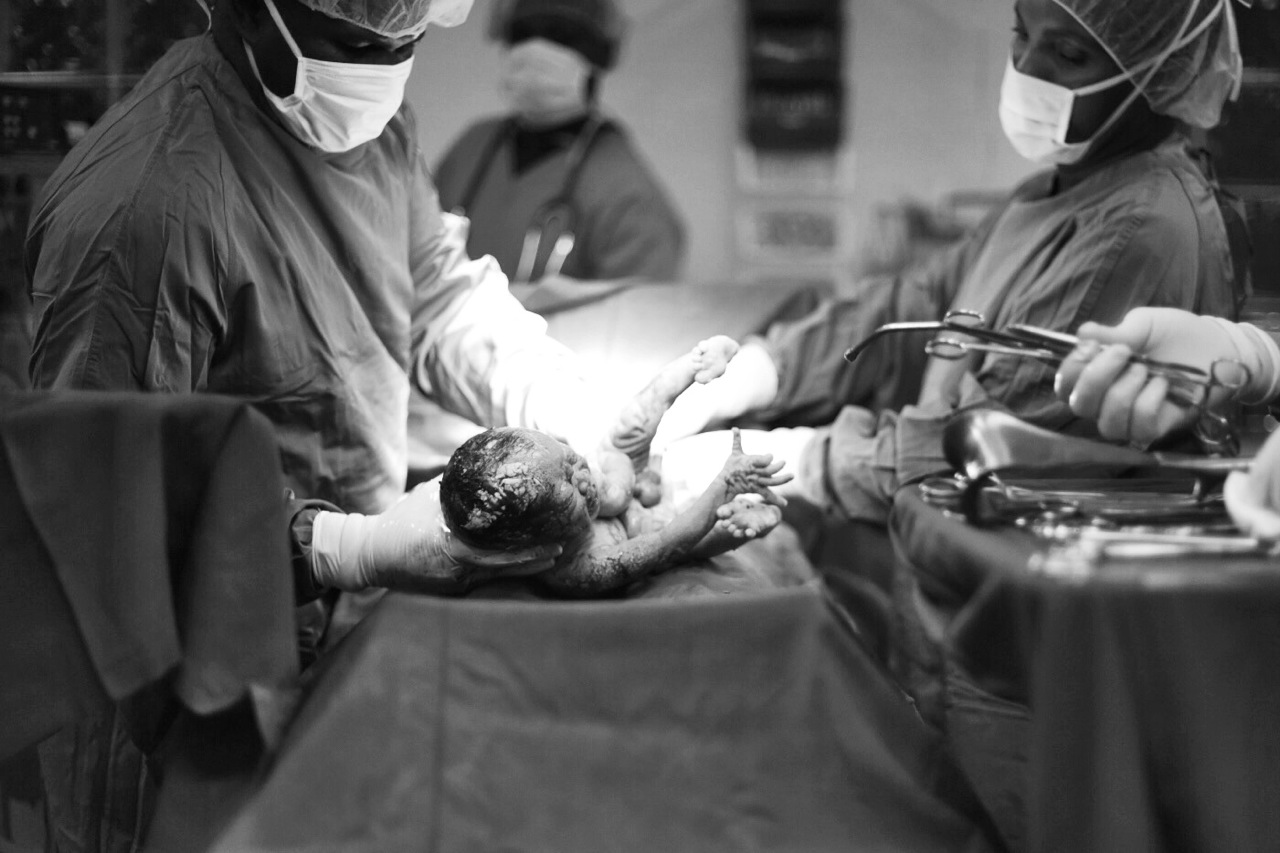
Photo by Ali Mendelson

Photo by Ali Mendelson

Paulina arrived at FAME at 1:30 pm on a Friday, having already been in labor for 14 hours. Nawaso, only 33 weeks pregnant, arrived a few hours later. Having suffered a seizure two days prior, it didn’t take the doctors long to diagnose Nawaso with severe eclampsia and make the decision to perform an immediate C-section. Just as the team was prepping her for surgery, Paulina’s condition began to deteriorate. Still in labor but not progressing, she was wearing out and her baby was showing signs of fetal distress. This would soon be another “first” at FAME, with both Operating Rooms being put to use at the exact same time. Still understaffed, volunteers stepped up to the plate and our Tanzanian team rallied. In OR #1 the FAME team performed an emergency C- section on Nawaso, delivering a 4 pound baby boy. The baby was ventilated and warmed by one of our nurses and then transferred to the incubator where grandmother and father were anxiously awaiting news. In OR #2, a second FAME team was performing another C-section on Paulina, resulting in the birth of a healthy 6 pound baby girl. Soon thereafter, both mothers were recovering in the ward with their newborns, alive today because of the services YOU are enabling FAME Medical to provide.

In addition to these two women and their newborn babies, you are helping our doctors and nurses touch the lives of thousands more. We are thrilled to report that 159 women have delivered their babies at FAME Medical so far this year, and many more were treated for antenatal complications. Your generosity has enabled us to create, train and support our committed team of Tanzanian healthcare providers to provide emergency obstetrical care — a service women desperately need in rural Tanzania.

There have already been 20,433 outpatient visits this year as well and another 867 general hospital admissions. These patients are facing everything from life threatening emergencies to devastating diseases to long neglected common infections robbing them of their quality of life. They are doing so in an environment with extremely limited medical resources. Your giving enables us to provide them with the medical care they need. Join us in making this and more possible in 2016. Please consider making as generous a donation as you can. Regardless of the size, your gift will make a tangible difference in the lives of our patients. It will quite literally save lives and restore hope for a people and community we hold dear.

The Strength in What Remains
Dr. Michael with a little patient, Photo by Ali Mendelson

Dr. Michael with a little patient, Photo by Ali Mendelson

By Neurologist, Dr. Michael Rubenstein

I am taking today's blog title from an amazing book by Tracy Kidder about a young medical student who survives the genocide in Burundi to find himself in the United States. It's a true story and so as not to give away too much I will suggest that you find a copy and read it. The inspiration for today's blog, though, is another amazing story of strength and hope here in Northern Tanzania.

Our very first patient of the day was a young woman who had recently been diagnosed with epilepsy and was on a medication that she was not taking on a regular basis. Thus, she was continuing to have seizures. After taking our history and examining her, though, we had some concern for the type of epilepsy she had and felt that an EEG would help to sort it out as the medication one uses is often dictated by the type of underlying epilepsy the patient has. We brought her over to the ER which is serving as our makeshift EEG lab for the time being and the epilepsy team hooked her up for a study. She was patient No. 1 for this groundbreaking technology at FAME. Amazingly, she had exactly the type of epilepsy that IS NOT well treated by the medication she was taking and she was converted over to a medication more effective for her condition. In fact, the medication she was on can sometimes worsen seizures for patients with her condition. This could certainly make the difference between well controlled and poorly controlled epilepsy which would make all the difference in the world for this young woman.

We saw an early tremor dominant Parkinson's patient who we had not seen before - Dr. Thu was incredibly excited since she will be going into a movement disorder fellowship next year and this was right up her alley. We saw another stroke patient who I first saw in 2011 and continue to follow up with on a regular basis even though he has continued to do well. The hardest thing here is to get patients to remain on their long term medications, though, as it is just something they aren't used to doing. We had wanted him to remain on aspirin but he had unfortunately stopped it several months ago after his prescription ran out. It is not due to non-compliance, or lack of adherence as they now refer to it, but rather that it's just something that isn't build into their culture at the present time. We'll continue to work on that.

So now for the story that inspired the title for today. A woman was brought to FAME today by her friend and eldest son. She is 47-years-old and the single mother of five children and the primary caregiver for her elderly mother. One year ago, during the night and for no apparent reason, people came into her home and threw acid onto her face. Those responsible have never been caught and there was no clear motive to suggest why it may have happened in the first place. She spent two days in a local dispensary (about three hours from FAME) before they realized that she needed more extensive care. She was then transferred to another hospital where she spent only three days. Antibiotics and bandages were applied and she was sent home. When she arrived home she found that many of her possessions there had been stolen. The acid has disfigured her face to such a degree that she has lost both of her eyes and is now blind and all that remains of her nose are two small holes for nostrils.

Despite this horrendous injury and disfigurement, she has persevered and has a remarkable attitude. When asked about any sad thoughts, she does admit to some concerns as to how she will continue to care for her children and her elderly mother, but says that she has accepted what has happened to her and is ready to move on. Her only complaint to us was a minor headache. She was an incredibly lovely woman and when she spoke it was quite easy to forget her disfigurement or the ordeal that she had been through. At the end of our visit, she asked if she could have a photo of her with Thu and myself. I think all of us wondered if we would have that amount of strength had we been put through a similar situation. And, almost to add insult to injury, we found today that she also has diabetes as her blood sugar was extremely elevated and that this will also need to be dealt with. As I walked beside her to the lab for her blood work, I could feel the strength and livelihood emanating from this woman who made me realize that in the depth of our struggle for survival, there are always those unlikely individuals who have demonstrated an even superior strength to have risen from further depths and will always give us eternal hope that we may do the same. It is these unlikely encounters that remind of us of our internal strengths. 

A Little About Context

By Co-Founder Susan Gustafson

Dr. Joyce Cuff, just returned for her fifth year of volunteering at FAME Medical. As always, she returns with a level of dedication that amazes and inspires. Over the next 9 months, Dr. Joyce will be generously sharing her expertise with our team at FAME. She will also be spearheading the microbiology and culture and sensitivity project we hope to have up and running soon. We are thrilled to have her back. The following excerpt is from her personal blog. I am sharing it with you because it captures some of the landscape around us, as well as the daily challenges so many of our patients face.

The drive from the airport to FAME is always a powerful experience for me. The contrast between New England and Northern Tanzania seems particularly stark during those few hours. The first thing that I notice is how parched the land is around Kilimanjaro and Arusha. Large herds of cattle seem to graze on dirt, kicking up clouds of dust as they move from one grassless place to another. The few watering holes that still have water serve as lifelines for the cattle and the people. People travel great distances to collect water in plastic jerry cans or buckets, sometimes carrying the buckets on their heads or on poles balanced across their shoulders, at other times strapped to the back of a donkey or loaded onto a donkey cart. While at the water hole people bathe and wash their clothes and drape them on thorn bushes to dry and exchange news of the day. As we get closer to Karatu, the landscape changes, first to fields of dry, yellow grass and finally, when we reach the higher elevation of Karatu, we see some green. It is not the rich, verdant fields we see after the rains, but at least there is recognizable vegetation. Like the landscape, the circumstances of people’s everyday lives vary from desperate to some level of comfort and security. This differs from New England in that the proportion of people in the lower levels of the comfort scale is so much higher here and the signs of affluence very much less common. It is my hope and my belief that FAME acts much like the watering holes I see on my way to Karatu, providing a medical lifeline for those in the area, regardless of circumstances.
Susan Gustafson
Taking it to the Village

By Sokoine Kipaiwa

Sokoine with Traditional Birth Attendant

Sokoine with Traditional Birth Attendant

My name is Sokoine Kipaiwa, and I have one year and a half working at FAME reception. I recently started new responsibilities as a community outreach counselor. My first task, working on a project for our Every Mother Counts grant, was to make sure that we visit, as much as we can, all the Traditional Birth Attendants (TBAs) around the nearby areas of Karatu District and Ngorongoro. Our main goal is to make pregnancy and childbirth safe for every mother by informing all the nearby communities about the new services we offer at FAME medical, including Reproductive and Child Health (RCH), the delivery ward and the operating theater.

I remember my first visit was at Jilambo Village in the Karatu District on June 2nd at 10:30am. The RCH team and I visited one active TBA, Regina Christopher, at her own home. The first question she asked us was “why is FAME visiting the TBAs? Why are you using your time and money this way?” We thought she was going to chase us away from her home, so I had to look down and so did my fellows, and everyone was quiet. Then she said “we are a community of low income and so very poor that nobody ever remembers to visit you at your home.”

Then my heart began to pound, and I told her “Bibi, we are both human, and we were born to help each other every time in every place without minding costs and time we spend.” We explained to her the importance of working together with the local dispensary’s health providers and home birth attendants as well.  We explained the signs for pregnant women to seek help at a hospital, danger signs during labor or birth, danger signs during pregnancy, danger signs after birth, and for the newborn, and all the other services we offer at FAME. We gave her our brochures and emergency cell phone numbers.

She was very delighted to hear that FAME Medical was cooperating with the TBAs and providing quality healthcare services within Karatu villages and nearby areas. She said, “throughout my life, now I’m 67 years old, I never held and shared information from health organizations who educated and appeared to a TBA like me, but only you are doing this in our village” She provided with us her cell phone number for anything we need from her and said we can call her back at any time and she will be together with us and help us. Finally, every one of us was very happy to have met with an active and experienced TBA as we start our outreach program.

FAME RCH Coordinator, Joyce Ngowi, with TBA's 

FAME RCH Coordinator, Joyce Ngowi, with TBA's 


A New Video for FAME
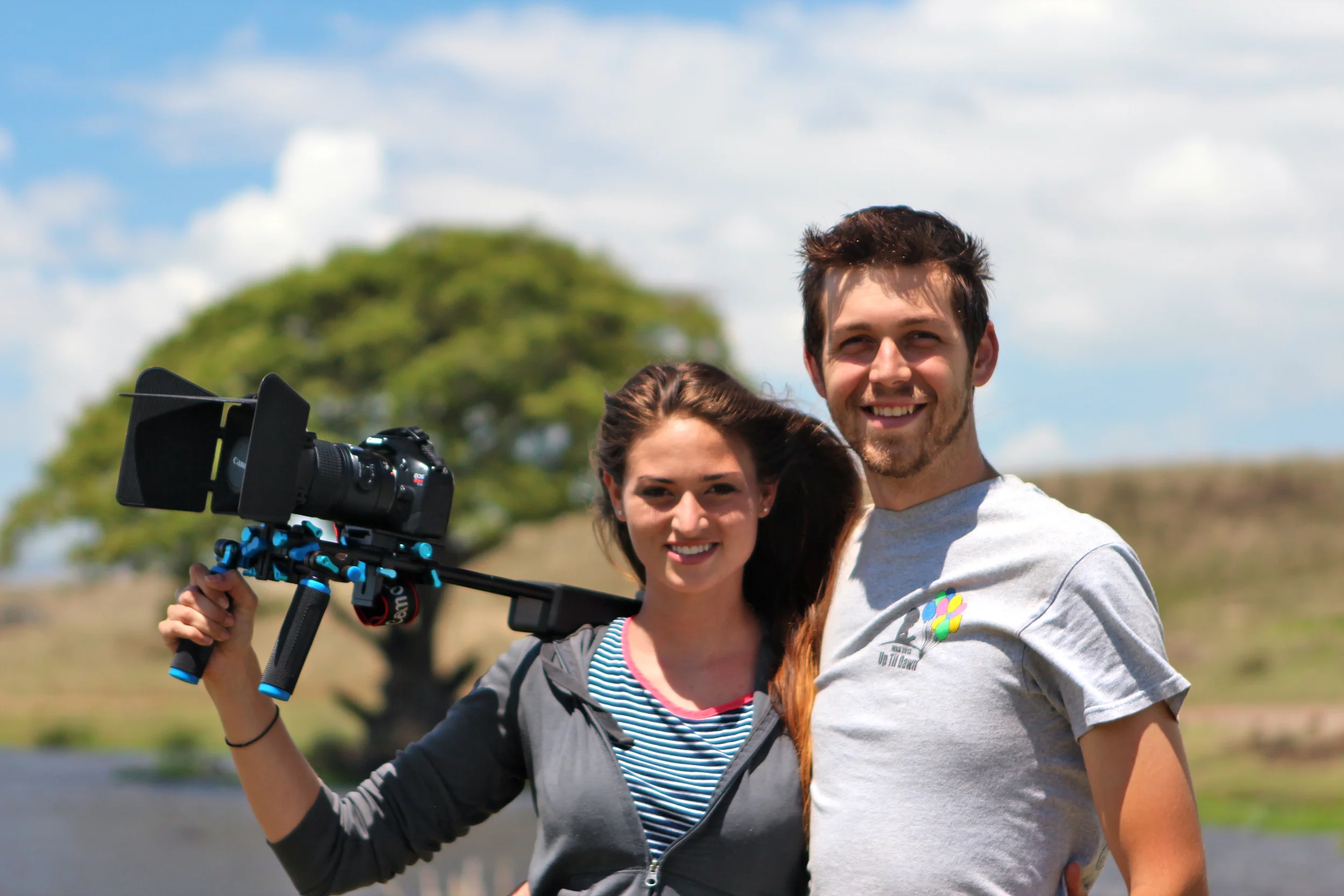
Hannah Bowman and Elliot Beckley

Hannah Bowman and Elliot Beckley

By Co-Founder Susan Gustafson

Frank and I just returned from another fantastic fundraising tour in the US! We were thrilled to be able to share the new FAME video (by Hannah Bowman and Elliot Beckley) at events and gatherings along the way and now wish to share it with ALL of YOU.  

One night, about a year and a half ago, I spent several hours reading almost every word of text on FAME’s website. I was both hooked and awed — especially at the enormous progress they have made in just the last several years. Not everyone can afford to take time off and fly to Tanzania to see this organization at work though, so I wanted to help FAME share their story across the ocean. Elliot and I started a fundraising campaign through the crowdfunding site Indiegogo, and by hosting fundraising events to pay for our equipment and travel expenses. By November of last year, we met our goal and started on our three month journey to Karatu. We spent our time soaking in Tanzania and FAME and filming the daily lives of the staff and patients there. We knew when people SAW the landscape, the buildings, and most importantly, the PEOPLE who have created this oasis of healthcare in rural Tanzania, they would be just as awed as we were by the work FAME is doing.
— Hannah Bowman

Our heartfelt thanks to Hannah and Elliot for making this short video -- for managing to capture the essence of what FAME is accomplishing at FAME Medical in Karatu, Tanzania. We deeply appreciate their hard work, their dedication and their extraordinary gift for bringing our work home to YOU! Enjoy.

Hannah Bowman studied film at Western Kentucky University. After graduating, she moved to Los Angeles and began working at City Room Creative, editing web and special event videos, as well as working on White Horse Picture's most recent documentary, "A Faster Horse," which premiered at the Tribeca Film Festival this spring.

Elliot Beckley studied music at Western Kentucky University and currently works in Kentucky as an Audio Engineer for First Baptist Church in Bowling Green, and for the Southern Kentucky Performing Arts Center.


Susan Gustafson