Meet FAME Nurse Anesthetist, Sehewa
DSC_0724.jpg

By Volunteers Olivia Herrington & Emma Duge

Sehewa was born outside Dodoma, Tanzania’s capital. He began primary school at age eleven, having spent the previous several years caring for his younger sister. Throughout primary school, he sang in his church’s choir. One day, as his graduation was approaching, his pastor made an announcement: the church had decided to facilitate applications for young people at his stage of education to enter nursing college. This was when the country had only a handful of formally trained Tanzanian healthcare workers to serve a rapidly growing population, particularly in rural areas. His mother, a farmer, had always wanted the best for her children and applied to the pastor on Sehewa’s behalf. After an interview, he was selected. So, straight out of primary school, eighteen years old and entirely uncertain what this new stage in his schooling would hold, he began his studies at the Kilimatinde School of Nursing in Tanzania’s Singida Region.

These years were difficult ones for Sehewa. He returned home every college break to help his mother farm in order to raise money to pay his school fees. But, in the final year of the three-year nursing program, even their extremely hard work did not earn enough to make the payment. Five months before he was due to take final exams, the school sent him away. The situation was desperate, but no one at home was willing to give up on Sehewa’s studies. A close family friend sold one of the cows her son was herding. The price of the cow still did not quite meet the full cost of the school fees, but it came close enough to persuade the college to let Sehewa take his exams. The college deducted the remainder from his salary over the next few months, as he transitioned from being their pupil to working in their hospital as a TN III (Trained Nurse Grade III).

Sehewa remained at Kilimatinde for five years and learned there how to work as a surgical nurse. He assisted ophthalmic surgeons and became fascinated by the field. Pulled by the voracious intellectual appetite that has defined his adult life, he sought further education to pursue specialized ophthalmic training, this time in Mvumi—back in the Dodoma area. When he returned to Kilimatinde, he was moved from the surgery department to the eye department. He served the surrounding communities through mobile clinics, screening people in their home villages for cataracts and glaucoma.

In 1998, the physicians he had assisted, who visited Kilimatinde regularly but were based in Mvumi, convinced him to work for them full-time in Mvumi. Sehewa spent the next fifteen years providing crucial medical care there. At Mvumi, ophthalmic treatment included the full suite of outpatient, inpatient, and surgical care. Just as he had been trained at Mvumi, he at that point took on the responsibility of training others. He also continued his mobile clinic work, treating patients with minor concerns immediately and bringing those who required surgical intervention to the hospital for care. The Christian Blind Mission (CBM), then based in Germany, provided funding to expand their reach and annually increase the number of patients served. CBM also supplied intraocular lenses, car maintenance, medications, and food for the hospital, in addition to paying for students to travel to Mvumi to learn.

In 1999, Sehewa again felt inspired by the needs he saw at the hospital to enhance his medical expertise. Babies were coming to Mvumi with congenital conditions, and, unlike adults, infants cannot undergo eye operations with only local anesthesia. They squirm too much for a procedure to be performed safely. Sehewa moved to Kenya for three months to learn more about putting babies under general anesthesia. Eventually, Sehewa completed his secondary school education through evening classes while working in Mvumi and then continued his formal education in nursing, ultimately becoming a Registered Nurse and Nurse Anesthetist. 

In 2012 he learned of FAME through his cousin, who was already on the hospital’s staff. He applied for an open position at the hospital and was accepted, beginning work here as a nurse anesthetist and eye clinician. Sehewa is “very, very proud” that he is able to work at FAME and that his sons, Steve and Stanely, are receiving an excellent education at the Tumaini Junior School and Tumaini Pre-Primary School, respectively, just a few minutes down the road. He loves how much he is able to learn here, particularly through comparing techniques and exchanging knowledge with the volunteer doctors. He is also grateful that he can send money regularly to his mother in Dodoma, showing his appreciation for her commitment to him—without which he could not have become a nurse.

Sehewa enjoys the challenge of working with complex equipment at FAME. He is also glad he can seek advice from Dr. Frank, whom he very much admires, when he has especially difficult questions about operating such equipment. He finds deep meaning in his capacity to work hard and care for people in critical condition. Sehewa looks forward to spending the rest of his working life here.


Susan Gustafson
Meet Nurse Evelyne
DSC_0702.jpg

By Volunteers Olivia Herrington and Emma Duge

Mama Evelyne was first inspired to pursue nursing when she was in primary school. 62 years later, she continues to work with the same passion that she possessed at such a young age.

She was born in Tanzania’s Kagera Region, a part of the country with a long history of accepting refugees from neighboring nations. Evelyne worked in the region’s refugee camps from 1988 through 1995, serving countless people who had fled extreme violence in the years leading up to, during, and following the genocide in Rwanda and genocidal civil war in Burundi. Her responsibilities as a clinician in the camps were varied, challenging, and rewarding. She recalls the anguish her patients felt, the chaos of an environment in which people’s shared reality revolved around losing all that had grounded them. Evelyne was devoted to their care, which often involved delivering babies—work she continues to this day.

Years later, when visiting her son in Karatu, she discovered FAME. Her extensive clinical background was appealing to the hospital which, at the time, was in need of experienced nurses. The hospital offered her a position on the spot, and she was delighted to accept. She enjoys being challenged by her work here at FAME and has extended her contract so that she can continue working in FAME’s Maternity Ward. Her commitment, wisdom, and masterful expertise are evident in all that she does.

Susan Gustafson
Hope Prevails

Family is important in Tanzania. It is important the world over. For 35 year old Tasiana, starting a family was beginning to seem like an impossibility. After multiple doctors and hospitals, and 4 unsuccessful pregnancies, two of which were stillbirths at term, she was beginning to think she would never be a mother. Pregnant with her 5th child, she was desperate to get some answers. That’s when she found Dr. Walii Msuya and FAME Medical. After taking a complete history and reviewing her records during that initial consult, Dr. Msuya made a commitment to Tasiana – he would do his level best to determine what was causing her inability to deliver a healthy baby. Reaching out to volunteer US-based OB/GYN consultants and his colleagues at home, studying on-line journals, and using his own clinical skills in the days and weeks to follow, he came up with a working diagnosis—Antiphospholipid Syndrome or APS. APS is an autoimmune disorder in which the body recognizes certain normal components of the blood and/or cell membrane components as foreign substances and produces antibodies against them. In pregnancy, this is a very high-risk situation for both mother and unborn baby, with mother’s body essentially attacking the placenta which damages the blood supply to the baby and usually causes death to the unborn child. Needless to say, the management is exceedingly delicate, requiring closely controlled anticoagulation for the mother during pregnancy.

Anxious to get high quality prenatal care, Tasiana began FAME’s prenatal program in March, while Dr. Msuya and our maternal health nurses followed her closely. Following treatment protocols for this condition, she was admitted to the labor ward at 38 weeks for close observation and fetal monitoring, with a scheduled C-section to follow a few days later. Both Tasiana and her unborn baby remained stable, so she was taken to the Operating Room on August 23rd where she delivered a strong 7 pound baby boy. And after just a few short days in the hospital, Tasiana was able to take her healthy newborn home — her hope renewed, her dream finally a reality.

A culture of patient-centered care and life-long learning is what we try to cultivate at FAME Medical. Dr Msuya exemplifies both. A doctor who treated this woman like a member of his own family, a doctor who committed himself to finding some answers that would make a difference in a family’s life, and a doctor courageous enough to step up to the plate despite the challenges, knowing that Tasiana was out of options. Thank you , Dr. Msuya. We are proud to have you on the FAME team!

It’s who we are. It’s why we’re here.
Nurse Siana Nkya and Safi Mbwambo in the OR

Nurse Siana Nkya and Safi Mbwambo in the OR

By Volunteer Nurse Practitioner Brad Snyder

It’s being a chameleon, becoming whoever the person you’re with needs you to be. It’s waking up everyday knowing that undoubtedly you will change a life and in return have yours changed. It’s pushing yourself to new limits, frequently on the edge of comfort as you try your best to fix and heal the person in front of you. It’s brainstorming at the bedside with a team of gifted clinicians trying to figure out the cause of a man’s internal bleeding as his blood counts continue to drop. It’s checking on a 1 day old then suddenly grabbing the oxygen and performing a resuscitation when he changes without any warning. It’s coming together in a moment’s notice and becoming one skilled unit, fighting the battle to keep a little life alive. It’s winning the battle.

It’s watching a doctor’s skill as he diagnoses cardiac anomalies with an echo or saves a woman from bleeding out during a complicated C-section. It’s opening books and crunching numbers as you try to solve a medical mystery alongside other uncertain fighters pulling deep on dusty knowledge and experience. It’s coming to a solution while vulnerably admitting that you’re not 100% certain of this plan, but it’s the best we can do with what we have. It’s feeling the slight relief of a definitive partnership amidst ambiguity and uncertainty. It’s seeing a nurse take peanut butter and a spoon into the room of a patient with severe burns and watching her patiently give one spoon at a time. It’s looking into her  determined eyes as she says, “I know I can’t fix the burns but this is what I can do, so I’m doing it.” It’s feeling a rush of compassion flow through your body.

It’s a nurse’s poignant assessment as she picks up danger signs in pregnancy and prevents a catastrophe. It’s giving a woman a chance to be a mother, one of life’s greatest gifts. It’s a counselor gently comforting a suicidal woman buried deep in a cloud of depression with the fear of no way out. It’s giving her a glimpse of light and the possibility that this doesn’t have to last forever. It’s walking into a room as a midwife with experience twice as long as you’ve been alive turns the breech baby of a woman in active labor. It’s hearing the cry of a healthy baby and taking a collective sigh of relief. It’s feeling grateful to have such skilled, passionate people on your team.

It’s hearing the gentle humming of a mother who just lost her 6-year old to a battle against sickle cell disease. It’s walking outside with a father as he holds back tears surrounded by family and friends and giving him a safe space to feel whatever he needs to feel. It’s being a quiet presence as he sobs in your arms in a moment of utter grief and disbelief. It’s realizing that pain like this can only be felt by others who have experienced such a profound loss.

It’s staying up through the night diligently monitoring two premature babies as they struggle to survive in an incubator instead of the safety of their mother’s womb. It’s reading neonatology articles, emailing colleagues and adapting guidelines to what we can do here. It’s watching mothers give their babies life-saving breast milk to keep their tiny bodies growing. It’s praying that it all works out. It’s going home and preparing to wake up and do it all over again tomorrow. It’s holding onto hope. It’s who we are. It’s why we’re here.

Oh, how things have changed
If you build it, they will come
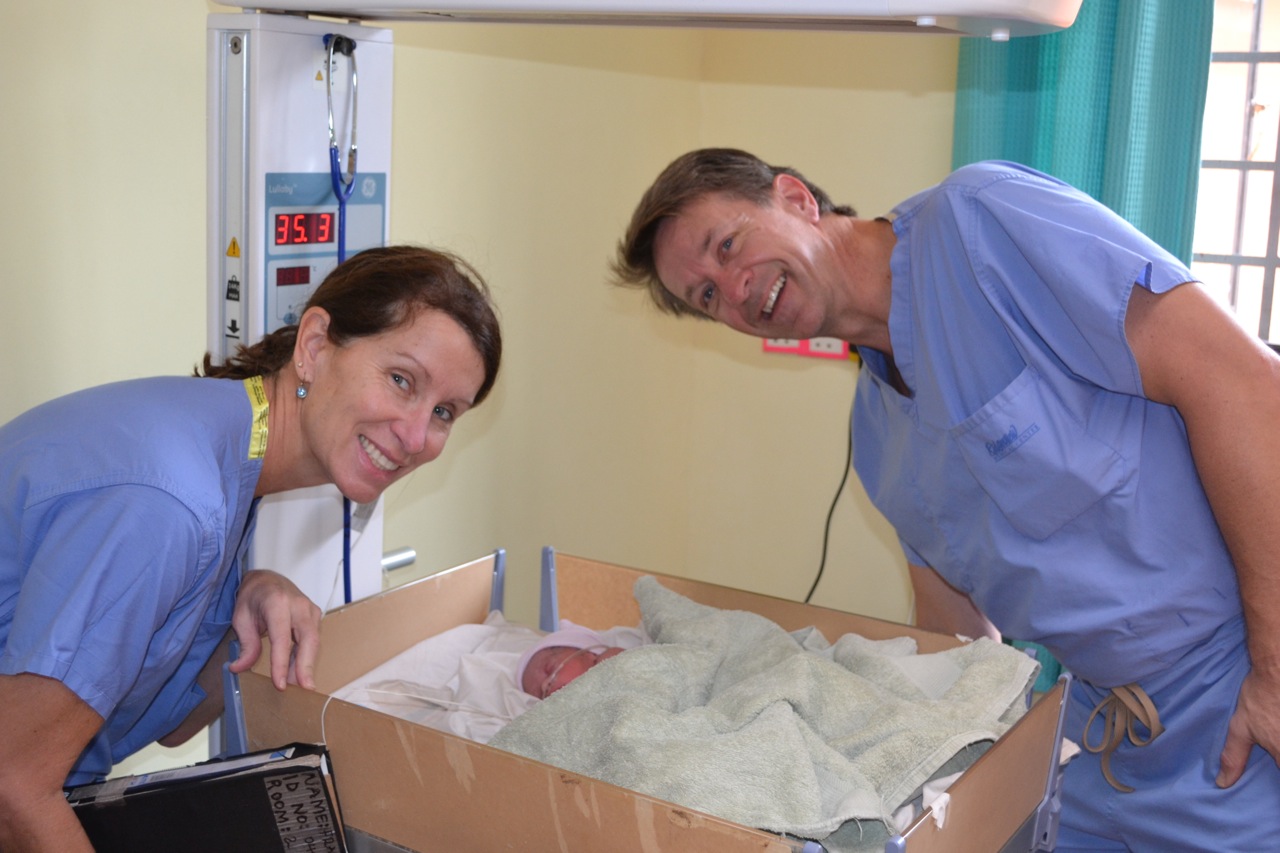
Dr. Mark and Dr. Monica with one of the triplets

Dr. Mark and Dr. Monica with one of the triplets

Although that quote was most famously related to a baseball field in “Field of Dreams”, it applies to the Obstetric unit at FAME Medical as well. We first came to volunteer at FAME in December 2014, just a few months after the opening of the new unit. During our 2 week visit, we assisted in 2 deliveries and 2 hysterectomies. We also saw patients with the FAME doctors in the outpatient clinic. Although we didn’t have as many operative teaching opportunities as we had hoped, we both were overwhelmed by the enthusiasm of the doctors and staff and their genuine desire to gain as much clinical information as we could provide. We planned to be back for another visit as soon as we could arrange it.

In the same way that this blog was going to be sent to Susan within 2 weeks (it’s now been 6!), our next opportunity had to be delayed until we could schedule it in December 2016. Oh, how things have changed!

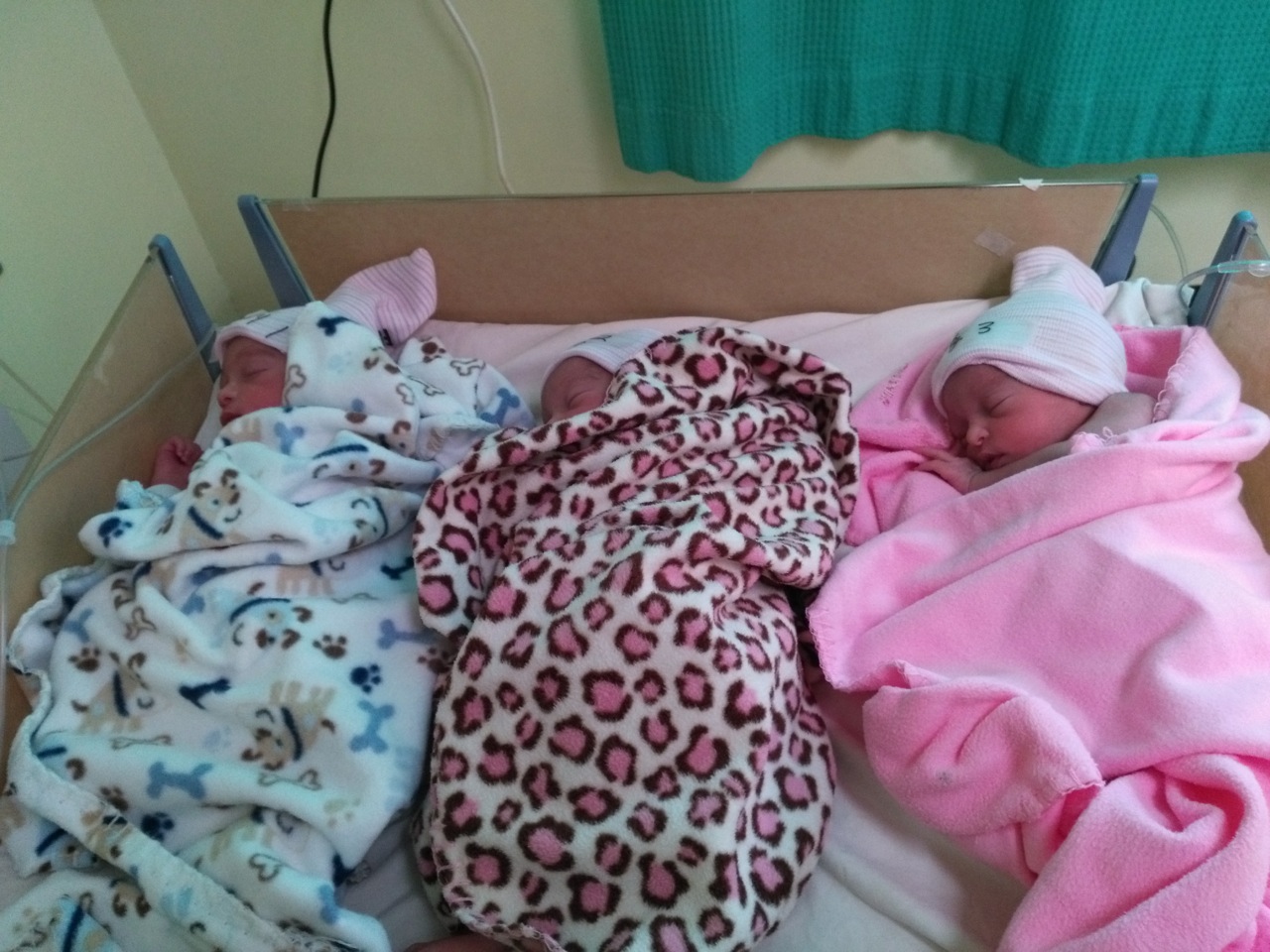
Whereas we had only 2 deliveries in 2 weeks in 2014, there are now more than 40 per month. The reputation of the staff and facility have spread so quickly that new facilities are being built for maternal and child health, and plans are being developed for a maternity wing that would include space for antepartum admissions as well as postpartum care. In this two week visit, we assisted the FAME doctors with several Cesarean deliveries, including for the mother who had the first Cesarean delivery at FAME returning for her repeat Cesarean. Another was for a mother with spontaneous triplets diagnosed only three weeks before she presented to FAME at 32 weeks with leaking fluid. (One week later, all three babies were gaining weight and were able to go home, thanks to a donor who funded formula to supplement her breast milk primary feedings.) We had the opportunity to participate in several other surgeries as well, tubal ligations, cervical cerclage, myomectomies: we began to wonder what we had wished for in 2014!

The donations that allow FAME to continue to expand have also funded an infant warmer, without which many babies might not have survived. The most astounding example is the infant born at least 12 weeks early (may have been more like 15 weeks early, as gestational age is sometimes difficult to document in Tanzania) who weighed <500 grams (1 lb 1.5 oz) at birth. We were blessed to be there the day the little one surpassed the 1 kg milestone! That is a miracle anywhere in the world, even more so in rural Tanzania. There isn’t a way to describe the joy in the mother’s smile as the nurse showed her the baby’s weight on the scale.

Which brings us to the best part of our visit – the staff! We knew the doctors we had met two years before had been enthusiastic to learn, but we didn’t have the opportunity to work then with the nursing staff as much. The staff in the “Operating Theater” wanted to review proper scrub procedures, the maternity staff sought information on post-partum hemorrhage, the staff in the outpatient clinic asked about cervical cancer screening, the doctors questioned surgical techniques…. We have never met a group of people so dedicated to the work they have chosen and so intent on improving their own abilities so that the care they provide is the best it can be. The new doctors and nurses added to the staff are just as enthusiastic as the “veterans” from our first visit.

It is truly humbling to help take care of more exceptionally high risk patients in 2 weeks than we would see in months, if not years, in the U.S. Two women presented with eclamptic seizures and several more with severe hypertension in pregnancy, one with a severe shoulder dystocia at delivery, another with post-partum bleeding, a case of infection after a miscarriage…. And the doctors at FAME take it in stride. Cases like these can intimidate anyone, even when the best facilities in the world are available. Watching the staff at FAME provide excellent care in creative ways, using the available equipment, is amazing.

We can’t wait to see what they are able to accomplish by the time we return next! Best wishes to the entire FAME family in 2017, with profound thanks to all of the friends and donors who have helped make FAME possible.

Dr. Monica Norwick
Dr. Mark LaRose
Waconia MN, USA