Finding Comfort 200 Kilometers From Home
 
Lemayian, Linda, and Emmanuel after his operation

Lemayian, Linda, and Emmanuel after his operation

Lemayian* and Emmanueli* traveled 207 kilometers and 11 hours to FAME from their home in Loliondo, a small village just south of the border between Kenya and Tanzania. Lemayian, the father of seven-year-old Emmanueli, was willing to go to great lengths to get his son the treatment he needed. “I knew FAME from my fellow villagers,” Lemayian told Angel, one of FAME’s social workers. “They said there is a very nice hospital in Karatu that is treating all kinds of diseases and doing operations.” His son Emmanueli had been complaining of arm pain after he had received treatment in a local dispensary for a fracture. When it was clear the pain wasn’t getting any better and was becoming more and more unbearable, Lemayian knew he needed to find advanced treatment for his son. They arrived in our Outpatient Department in February. Emmanueli was quickly admitted after an exam showed that he had severe damage to the tissue in his left arm. A long trip was further extended when Emmanueli required surgery and two months of follow-up treatment.

Fortunately, FAME has the resources necessary to perform complex surgeries in a sterile environment. With an operating room that has all the necessary gasses for proper anesthesiology and a trained OR team, we’ve been able to provide life-saving surgical care for our patient population, including Emmanueli. When Emmanueli was being prepared for surgery, Linda, one of our anesthetists who is also from Loliondo, was able to comfort him. As a young Maasai, Emmanueli didn’t speak Swahili yet and only spoke the local Maasai language. Linda was able to speak to him in his local language and provide a sense of security and reassurance as he went in for his initial operation. For the next couple months in and out of the operating theater, Linda would become a familiar face and calming presence – a piece of home, even 200 kilometers away.

After numerous trips to the OR for a skin graft and dressing changes following his operation and almost two months in the inpatient ward, Emmanueli and Lemayian became friends to all of us. During their stay, the nurses would sit with Emmanueli each day, coloring with him or teaching him a few Swahili words. He would walk around campus, hand in hand with staff, growing in his confidence and feeling at ease in a once unfamiliar environment. However, the sweetest part of Emmanueli’s extended stay with us here at FAME was Lemayian’s evident dedication to his son’s recovery. From bringing him 207 kilometers away from home and staying by his side through his entire stay, Lemayian was committed to ensuring that Emmanueli would return home a healthy, happy child regardless of how long it took. He was supportive of our staff’s treatment plan and was always willing to listen to how he could help his son and his community. “I will let [my village] know that it is not good to stay with a patient who is having a very bad condition for a very long time at home,” Lemayian told our team. “It may lead to a very bad condition like what happened to me.”

Prior to being discharged, Emmanueli had just received his final dressing change and was given instructions for wound care in the future. He said all his goodbyes to his new friends who had colored with him, walked with him, played with him, and kept him company during his months in the inpatient ward. As he left with his father, we were confident he was in good hands. Lemayian was a kind and loving father who would look out for Emmanueli for the rest of his life.

*Names have been changed to protect patient privacy
 
FAME Africa
A Story of Hope "Tumaini"

By volunteer pediatrician, Dr. Jonas Ekwall

DSC_0950.JPG

During my last day at FAME, I was asked: “What will you remember the most from your time here?” I thought to myself: I will remember the dedicated staff, their skills and the amazing work they do. I will think of all the things I’ve learned, the friends I’ve made, happy memories and laughs, but also a few sad ones. I will carry all of that within me for a long time – and it makes me smile when I, now on my way back to the cold north, let my mind wander through the memories of the past month. For example, there is the big, lovely smile of Dr. Assenga on the morning of May 4th; a beautiful picture in time that will stay with me. 

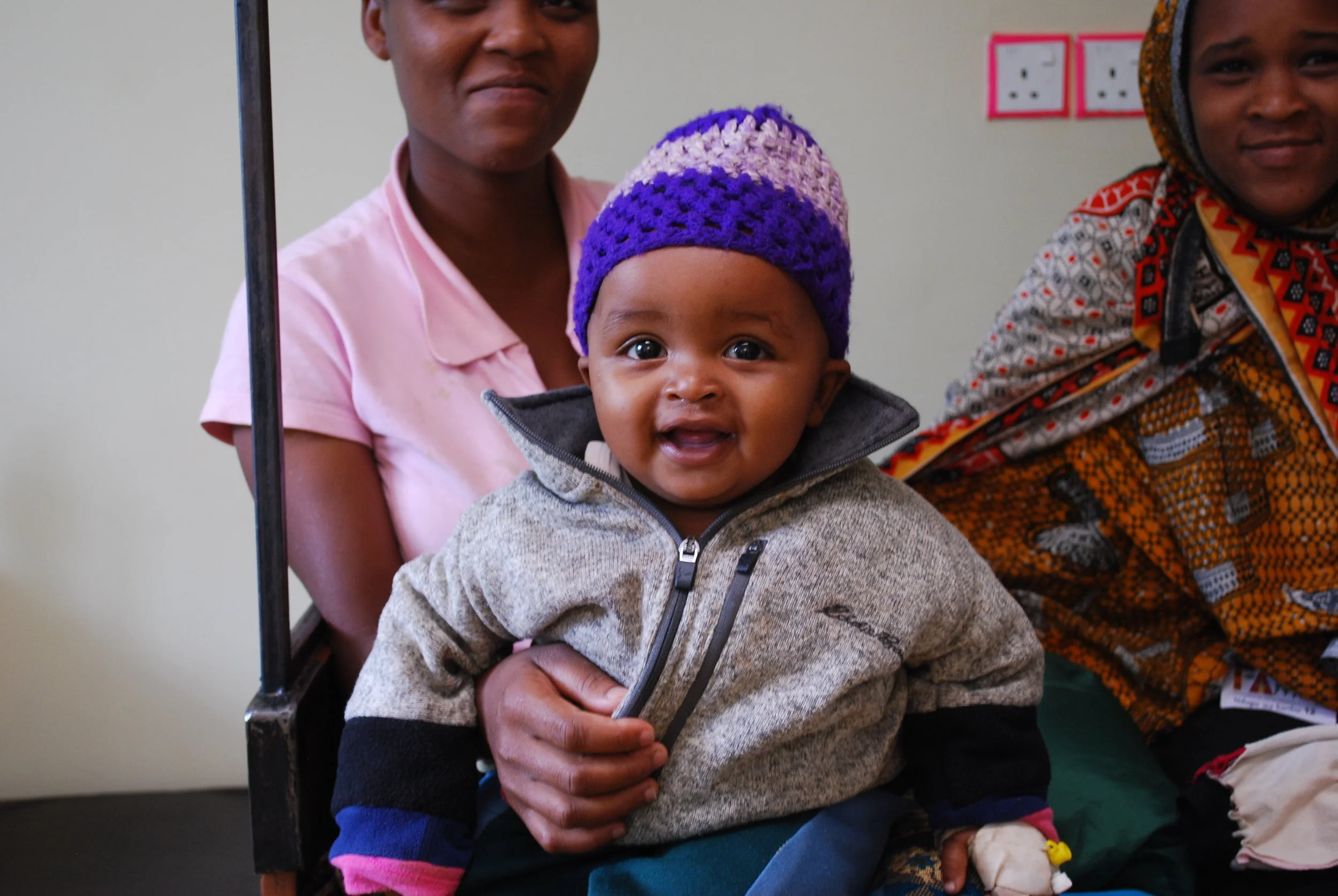
Some stories will just stay in your mind, and the story of Tumaini is one of those. This story not only showed the immense strength and stamina of a little baby boy, but also the fantastic medical and nursing skills of the FAME staff. 

On the evening of May 3rd, a previously healthy 8-month-old boy named Tumaini, from the outskirts of the Karatu district, was referred to FAME with his mother. Three days earlier, he had started to have a cough and fever. The family managed at home during the first couple of days. Yet, on the third day the mother took Tumaini to a nearby health center, where he was admitted and began treatment for pneumonia. He rapidly got worse and, after a few hours, he was in such bad shape that he was transferred to FAME. 

At admission, Tumaini’s mother said that his breathing had gotten worse during the day; that during the last three hours before coming to FAME, he had been unconscious and had twitches or seizure-like movements. When the ambulance arrived after a challenging journey, he was unconscious and had severe respiratory distress, as well as difficulty breathing and a severely low oxygen saturation of 64%. Tumaini was immediately resuscitated by FAME’s night shift staff and began to improve in oxygenation and consciousness. He was then admitted with severe obstructive bronchopneumonia. During late evening his condition slightly improved, but he was still in severe respiratory distress and not fully conscious or responsive. With Tumaini in this state, and at this late hour, a referral was not an option. It would have been too dangerous. To hopefully create some positive pressure, his oxygen delivery was shifted to high flow nasal canicula and he received iv hydrocortisone and repeated doses of nebulized adrenaline and salbutamol. During the night, the nursing staff worked like an ICU staff, watching the boy, adjusting the nasal prongs, and positioning and repositioning him and his mother to create the most optimal way of breathing possible. 

At a late hour, I left the ward, but it was hard to fall asleep while thinking of the baby boy up in ward 1. When I opened my eyes a few hours later, the first thing that struck my mind was: “Did he make it through the night?” I quickly got dressed and went up to the hospital. Even before arriving, I spotted Dr. Assenga, the night shift doctor, walking slowly through the ward corridor. I was still not fully awake, but I could clearly see that he was looking at me with a big smile on his face. Then he shouted out: “The boy is breastfeeding and he is a bit angry. He did it!” We laughed with joy and hugged and went in to join the night shift nurses. 

Tumaini sat in the bed, his breathing and the color of his cheeks significantly better. I couldn’t believe my eyes, but there he sat in the bed laughing at us.

 In Swahili Tumaini means “hope”. I think Tumaini’s remarkable story captures the essence of how I experienced my time at FAME. It captures the fantastic staff, their dedication, their belief in what they do and their constant wish to improve their skills and knowledge. Thanks to them, Tumaini went home happy and laughing with his mother seven days later. This story reminds me of what an old pediatric professor back home in Sweden once said to me: “Good health care is not defined by the sign on the front door of the hospital, it’s defined by the people working behind that door.”

 
FAME Africa
Edina’s Story
Edina and her newborn after their check up

Edina and her newborn after their check up

Upon discovering she was pregnant with her third child, 33-year-old Edina* decided to enroll in FAME’s prenatal program. She’d already had two C-sections. After regular attendance at our prenatal clinic, our medical team decided to be cautious and schedule her for a C-section at 39 weeks. Surgery day arrived and she was rolled into the OR. With Dr. Lisso and our American surgery volunteer, Dr. Kelly, scrubbed in and the anesthetist by their side, the team was ready go. Within minutes of starting the surgery, they found themselves in the throes of a medical emergency. Edina was suffering from Percreta: her placenta had grown through the uterine wall and she was suddenly losing a tremendous amount of blood. The team had to get the baby out fast and stop the bleeding. They called the lab for more blood. A healthy, crying baby was lifted out and whisked away by a nurse while the doctors began closing the uterus. The anesthetist continued giving Edina blood and monitoring her closely. With the surgery completed and Edina stable, the team wheeled her back to the ward for close observation. She soon began bleeding again and the team raced her back to the OR, where they had to perform a hysterectomy. After several hours and six units of blood, Edina was stabilized for good. She and her husband, newborn, and two other children experienced a joyful reunion. “I was so scared after the doctors told me I had to return to surgery because I was losing too much blood,” she told our team during her follow-up visit. “But they counseled me a lot and I agreed because I didn’t want to die and leave my baby and my kids. I thank God for leading me to FAME because I don’t know where I would be today if I hadn’t [come].”

* Name has been changed to protect patient privacy

FAME Africa
Postpartum bleeding + FAME Africa

Originally Posted on Days For Girls website here. To learn more about Days for Girls, visit DaysforGirls.org.

DfG volunteer, Alexa, with a new mama in our current labor ward.

DfG volunteer, Alexa, with a new mama in our current labor ward.

Over the years, Days for Girls has learned that our DfG Heavy Flow Kit works not only to help women and girls manage their menstruation, but is also a wonderful answer to help women also manage the bleeding they have after childbirth (lochia) that can be very heavy and generally lasts about six weeks and sometimes even longer. 

Knowing this sparked an idea with one of our amazing supporters and volunteers, Alexa Renehan.  She also supports the work of the rural hospital, FAME Africa, that is located on a hilltop in northern Tanzania.  Alexa knew they were just opening up a maternal care center there and thought the new mothers could benefit from a DfG washable pad.

She introduced the DfG Africa team to the FAME Staff who were excited to learn about our DfG Heavy Flow Kits.  A partnership was formed and a local enterprise in Tanzania was started to make the DfG pads that are sold to FAME for them to share with new mothers after their deliveries. 
 
With limited access to maternal care, Tanzania has an estimated maternal mortality ratio of 556 per 100,000 live births and perinatal deaths continue to comprise a significant portion of under-five deaths. This highlights the importance of responding early in pregnancy and continuing to follow up afterwards to potential issues that arise. The subject of postpartum bleeding is not widely discussed so adding this into their discharge program has made a big impact.  

“Women in Tanzania complain of getting rashes, vaginal infections, and UTI's from the low quality disposables available here. Wearing these irritating disposables for 6 weeks straight while healing and caring for a new baby has the potential to create undue stress and discomfort. I am so proud we are able to offer this option to the mothers in our area."


-Leesha, FAME clinical educator for maternal health | midwife| DfG Enterprise Leader

 In April, Alexa, traveled to South Africa and Tanzania with Days for Girls team members to see this new partnership. While visiting FAME in Tanzania, she met with new mothers and learned how life changing and affirming it is for new mothers, like Editha (above) to have the proper care before, during AND after birth.

This year, FAME will expand its work with maternal and child health by opening a 24-bed Maternity Center with a Level 2 Nursery, operating room, and 4 delivery rooms to accommodate the increasing number of women who now come from outside their district of Karatu, Tanzania.

 About FAME Africa and DfG’s Partnership:

The Foundation for African Medicine and Education (FAME) was founded in 2002 by Dr. Frank Artress and Susan Gustafson. The Foundation's mission is to provide quality healthcare and education to severely under-resourced populations in rural Tanzania. Days for Girls began a joint partnership with FAME in 2018 to supply DfG Heavy Flow Kits and our Ambassador of Health (AWH) education to all postpartum mothers who delivered at FAME. Some of FAMES staff were trained to teach our DfG AWH curriculum to new moms so they know how to care for their DfG Kit. In addition, jobs were created in the community when a local enterprise was started. This enterprise, Boma Africa, not only sales their DfG Kits to FAME but also to other organizations and people in the area.

 
FAME Africa
"I work directly with patients every day." - Safi, RN

Based on interviews with Safi, FAME RN and Ward 1 Supervisor

 
Safi in our general inpatient ward, Ward 1.

Safi in our general inpatient ward, Ward 1.

Safi’s desire to become a nurse started when she was young, growing up in Same, south of Mount Kilimanjaro. “One day, I was becoming very sick,” Safi reminisced. “I was prescribed medicine to take orally. I hated taking medicine orally, so I chose to hide the medicine under my mattress instead of taking it. I was still sick because I wasn’t taking my medication, so I had to go back to the clinic. They prescribed me a new medication, but it was an oral medication again. I finally told them that I didn’t want to take any oral medication, which worked out because then they gave me an injection. Since then, I wanted to work in medicine so I could talk with patients about their needs and concerns.” Following secondary school, Safi attended school to become a Nurse Assistant. She met Frank and Susan while Dr. Frank was still practicing at a clinic in Arusha, just before they opened the FAME Medical Outpatient Clinic in Karatu. A friend of Frank and Susan had told Safi they were looking to hire nurses, so she applied to be a member of the original team. She helped open the outpatient clinic as a Nurse Assistant in 2008. In 2009, Frank came to her to tell her the good news that FAME wanted to sponsor her to go back to school. At that point, she was ready to go back to school to upgrade her degree. She went back to school for three years and returned to FAME as an RN. “My experience at FAME 100% helped me in school,” Safi said. “I really enjoyed the courses and I was performing well.” Safi came back to FAME in 2012 just as the Inpatient Hospital was getting started. In 2014, she became the Ward 1 Supervisor. “I like being a nurse because I work directly with patients every day,” she said. For over a decade, Safi has been working at FAME, listening to each patient’s needs and supporting her nursing team in the Inpatient Ward.

 
FAME Africa