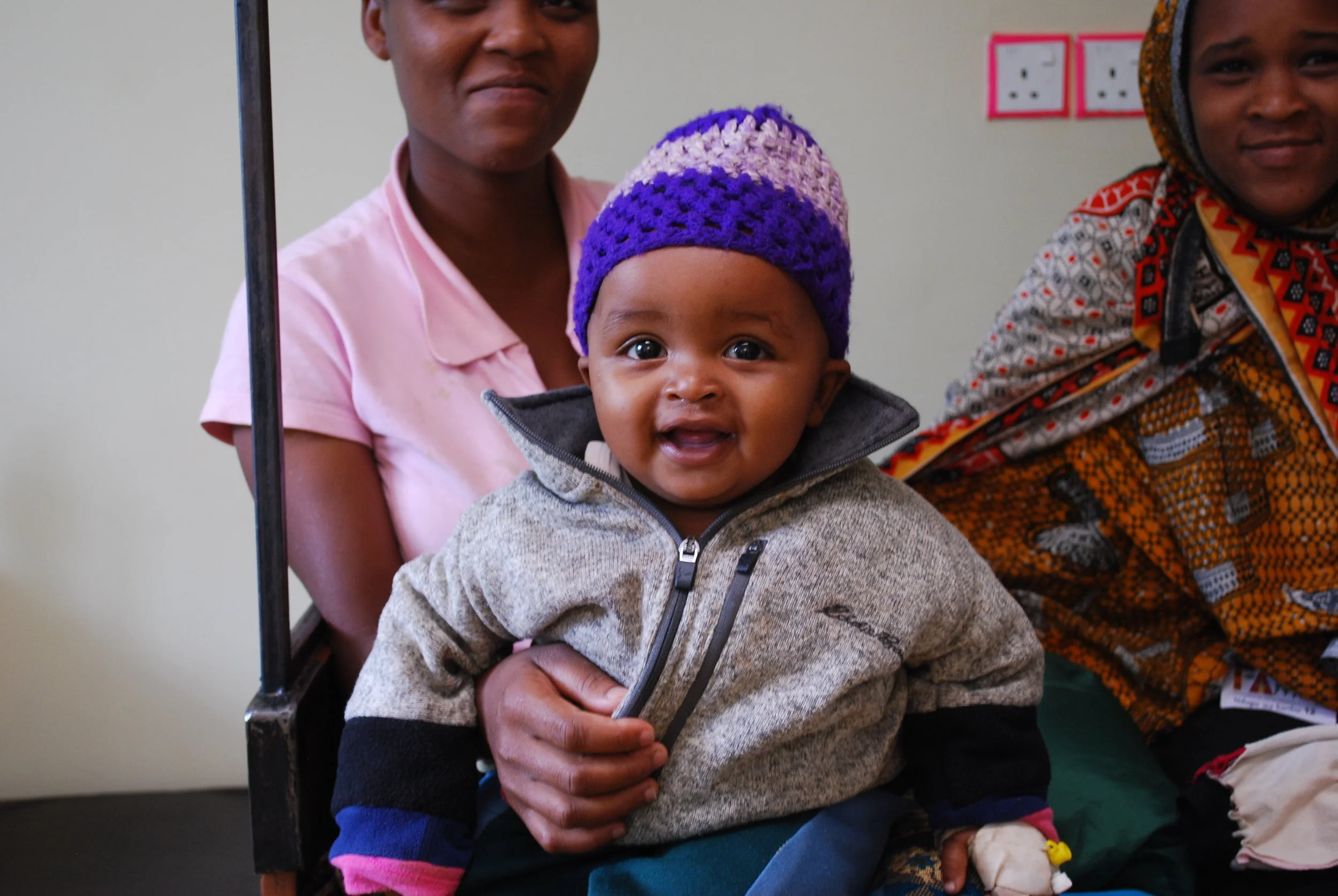
A Hectic Day in Neurology Clinic

By Volunteer Dr. Mike Rubenstein

DSC_0690.JPG

Over the last several years, we have come up with a pretty good system for just how to schedule our neurology clinics during each of the months that I am here with the residents. We knew that to build the program we would have to come on a recurring basis (hence the visit every six months) to develop a trusting relationship with the clinicians here and the patients and families who come to see us and appreciate our care. Back in 2011, we had also developed the Neurology Mobile Clinics to serve some of the more remote areas of the Karatu District. This model seemed to work very well: The clinics were very well attended, and patients, who wouldn’t normally come to FAME for medical care, could continue seeing us in the villages, while also having access to FAME if necessary. What began in 2010 with my teaching the FAME clinicians how to do a neurological examination for patients, has now evolved into a well-organized, month-long clinic attracting nearly 300 patients each time we visit.

Our visits are now comprised of an approximately week-long, clinic that we do here at FAME, a week of mobile clinics that entail travel to more remote villages in the district, and then several days of clinic back at FAME, where we see follow-up patients or patients who missed us the first time around. News of the clinics, including the mobile clinics in the villages, is well disseminated to the community by FAME staff. They travel throughout the district announcing our arrival a month in advance and inform potential patients of the types of disorders we treat. In addition, FAME’s social worker, Angel, has a list of patients who had visited FAME in the time between our visits with neurological disorders and would need to return to see us.


The first few days after our arrival are reserved for those patients Angel will call. This structure allows the new residents to get a good feel of how things run here. Every patient is seen with an interpreter (who might also be a clinician) or possibly two interpreters if the patient doesn’t speak Swahili, which is not uncommon among some of the local Iraqw and Maasai populations. The medications we use are limited and some are different than those we have in the US. The doses are different than what we are used to and the options for testing are considerably different. Additionally, the types of therapies we have at our disposal are much more limited than those in the US. However, in the end, it is still mostly the same disorders we are treating here, though the differentials may vary quite a bit. The principles of medicine are still the same, and it is all a matter of taking a good history, performing a good examination, and developing your differential. It is actually medicine the way medicine was meant to be practiced – an all too uncommon event in today’s world.

DSC_0244.JPG

Today was our first announced day and what we encountered outside the emergency ward (having been taken over this month to be our neurology clinic) was a bit of a mob scene, with patients everywhere waiting for Angel to get them registered. They would then proceed to have their vitals taken so we could begin to see them. Our first patient at morning report was a young gentleman, who had arrived during the night with new onset left hemiplegia following left neck pain. He was also found to be HIV positive – a new diagnosis. He would need to be seen in consultation by one of the residents.

We had three exam “rooms” for patient visits, and I told Angel that we could start by registering thirty patients for the day, as I knew we would inevitably see more than that. Later in the morning, the residents suggested setting up a fourth station to see patients waiting in the hallway adjacent to one of the other stations. So, it was with this arrangement that we began to plod away seeing patients for our first “announced” clinic day of the season. The number of patients we would see would quickly increase well beyond the thirty we had originally registered.

Ståle, a gentleman who runs a home in Mto wa Mbu and whom I have known for several years, came this morning with his car full of neurologically impaired children. Somehow, he has been tasked with caring for a number of young men with muscular dystrophy, most of whom we diagnosed and have treated for several years. He brings all of them on the same day packed into his Land Rover with their wheelchairs tied to the top.

Every resident who has met Ståle and the children he cares for has been changed for the better after seeing the dedication he has to these kids and the wonderful outlook these children have, despite knowing the condition they have and what the future holds for them. With this in mind, we saw all the kids, most of them with Duchenne’s muscular dystrophy, and continued on with our incredibly busy day.

One of his young boys, who had recently moved to Ståle’s home and had been assumed to have Duchenne’s muscular dystrophy, was clearly different from the other children. I saw him with Amisha, a neurology resident from Children’s Hospital of Philadelphia, and, unfortunately, we really had no history as the boy couldn’t give us any and Ståle had no family members to contact. The boy was unable to walk, but had no pseudohypertrophy of his calves and the majority of his atrophy was in his shoulders and arms. He also had some mild wasting of his temporalis muscles. Given this constellation of findings, it became clear to us that he had either fascio-scapulo-humeral or limb-girdle dystrophy, both of which have a tremendously better overall prognosis than Duchenne’s as they have a normal life span, albeit with significant disability. Still, it was a bit of good news we were able to relay.

Finally, in the midst of our incredibly busy clinic, I found that a patient had been brought in to see us on a stretcher and was promptly placed in the emergency room. Dr. Gabriel had mentioned to me previously that there was a patient he wanted us to see (and appropriately so), who had been in the hospital here in July with presumed encephalitis and wasn’t recovering. Unfortunately, after bringing the patient in, he promptly began with focal seizures that appeared to be epilepsia partialis continua – something that can often be difficult to treat. According to his family, the seizures had begun about a week prior and were essentially occurring on a regular basis. His original presentation was such that he was found unresponsive by his family at home and then had been brought into a local hospital where he remained unresponsive for about another 48 hours before being transferred to FAME. Here, it was clear that he had an encephalitis and underwent an LP and was placed on antibiotics and acyclovir. He eventually had a CT scan showing numerous large early hypodensities in the brain and more specifically, the bilateral temporal lobes, the most common location for injuries that occur in herpes encephalitis.

He had been treated with a 21-day course of oral acyclovir, but had never really woken up. He had also been placed on carbamazepine for his seizures, but at a relatively low dose considering the injuries to his brain and his propensity to have seizures for the rest of his life. As he lay on the emergency room gurney, unresponsive with continuous jerking of his left face, arm and leg, his family stood by patiently awaiting our input and whether we had anything at all to offer their 28-year-old family member. There was no issue with handling the seizure part of the equation, but having our very own infectious disease specialist here was certainly a blessing. We have no confirmatory tests here such as a PCR on the spinal fluid, so the diagnosis would be based on the clinical features that were quite suspicious for HSV encephalitis with treatment that had been delayed by at least several days. Herpes simplex encephalitis is something that must be treated immediately upon consideration of the diagnosis, as the virus rapidly multiplies and the damage it causes becomes more extensive. It is also irreversible once it occurs. The mortality rate for HSV encephalitis can be very high even when treated and the morbidity is great with chronic seizures and very common severe cognitive deficits.

We had to tell the family that he would not recover any of his function and would almost unquestionably remain unresponsive if he did not succumb to some complication. Yet, we could possibly improve his seizures by increasing his carbamazepine and, if that did not work, we could add phenobarbital later.

Our other patients were the typical mix of epilepsy, Parkinson’s disease, headaches, and back pain, to name but a few. Thankfully, we had no plans for the night as we had seen a total of 42 patients – the largest number we had seen in a single day.

 
NeurologyFAME Africa
Back to School: Hosiana Update!
b4a63e86-980f-40ab-ae73-14e95c303561.JPG

When I walked past the wards after our daily morning patient report meeting, there was an unusual amount of commotion and excitement. As I poked my head in, I saw a sweet, familiar face I hadn’t seen in some time. Our nurse Hosiana was back, visiting us from Huruma School of Nursing in Moshi, and everyone was excited to hear all about her experience. She had a short break between semesters and had decided to return to FAME to briefly volunteer before visiting her family and then heading back to school. “I missed FAME, that’s why I wanted to come before going back, even if just for three days,” she told us.

With support from one of our funders, the Brethren Community Foundation, Hosiana enrolled in a year-long  program in 2018 to upgrade from Enrolled Nurse to Registered Nurse. She is really looking forward to second semester because she will be studying midwifery, which she’s really passionate about.  

Hosiana has been performing incredibly well in school. She received all As this semester and hasn’t had any challenges. “It wasn’t easy,” she said, “but having the support from FAME makes me study hard. I don’t have to worry [about fees], so I feel encouraged to study my best.” She’s excited for this coming semester and knows she’ll continue to make FAME proud.  

Hosiana feels very comfortable at school and has enjoyed being exposed to different environments outside of FAME. However, she still misses being with us in Karatu. As she noted during her visit to FAME, “I’m a good ambassador. I keep saying, ‘we provide the best care ever.’ We are super good.” We are all looking forward to having her back on the team in six months!

 
FAME Africa
FAME: A Learning Organization

By Administrative Volunteer, Chelsea Affleck

 
DSC_0909.jpg

In health care organizations, there is commonly tension between the administration and the providers. I am happy to report that this trend does not extend to FAME. Here in Karatu, Tanzania, FAME operates as a collaborative team unit where each staff member is valued for their contribution. In my time volunteering, I have witnessed a remarkable level of integrity, work ethic, and commitment to learning upheld at all levels of the organization. It is evident that staff members are proud of their role and eager to advance their skills to help patients. 

I'm telling you – the folks at FAME are all a big family. From day one, the camaraderie and cohesion was palpable. I felt embraced even before stepping foot on the red dirt soil of Tanzania. Phoebe, FAME's Volunteer Coordinator, was in communication with me from the get-go. She guided me through the logistics of getting to FAME and supplied me with helpful tips. When I showed up on site, each new person that I saw would approach me with a warm exclamation of "jambo!" and an outstretched hand. I felt like I was joining a community. 

All volunteers and a number of the providers live on site at FAME. I was happy to take up residence in one of the airy and well-equipped bungalows on the edge of the hilltop. My first morning, upon waking up, I headed out to the back porch for a little morning meditation session. I sank into the rhythmic flow of my breath, but was suddenly pulled out by the friendly bark of a dog coming up the hillside. Oscar came prancing on up to investigate who I was and if I was the kind of visitor who eagerly gave out hugs and treats. Unfortunately for Oscar, I am much more of a cat person and shooed the pup away. As Oscar bounded off, I looked up to see Oscar's owners, Frank and Susan, out on their morning walk. They smiled and waved from a distance. Though I had yet to meet the FAME co-founders,  I could sense from their smiles and calm presence that they were glad to have me aboard. In learning about FAME's history, I could tell that Frank and Susan see the staff as their family and are deeply invested in the growth and well-being of the organization as a whole.   

As a recent Masters in Health Administration student, I showed up at FAME with fresh ideas about organizational behavior, change management, and process improvement. The administrative staff was eager to hear my thoughts and welcomed input. I enjoyed my time volunteering and worked to distill my reflections into tangible and appropriate recommendations. Yet, in the end it was the FAME staff that shored up my understanding of health care leadership.    

FAME's sincere and individualized support of the success of its employees exemplifies a culture of learning, meaning that the organization strives for continuous learning and transformation. For example, FAME's medical staff and volunteers are skilled at transferring knowledge with learning often built into the weekly schedule. Each Tuesday and Thursday, the team comes together for a seminar, where volunteers will share a skill or technique that can be of use for FAME patients. The whole team then works together to integrate these methods into operational flows.

A second example of FAME's commitment to the growth of their employees is William Mhapa. William started at FAME as a Community Health Coordinator back when FAME was a mobile clinic. Over the years, Frank and Susan had seen him show up each day to his job and were impressed with his work ethic and humility. In return, he was gradually given more responsibility. Today, William serves as FAME's HR and Operations Manager, supporting FAME's 150 employees and managing daily operations. Last year, FAME provided the support necessary for William to enroll in a Master’s of Science in Health Systems Management program in Kenya. He recently submitted his thesis, "Factors Influencing Low Uptake of Health Insurance Scheme in Tanzania, The Case of Karatu" and is expected to graduate this year. Over the years FAME has provided support for two doctors, three nurses and one lab technician to return to school and advance their scope of treatment.   

Unpredictability is the nature of the game in health care, particularly in rural Tanzania. The curiosity, commitment, and culture of learning at FAME has allowed the organization to be nimble and adaptive in the face of unpredictable resources and patient needs. I may have learned the distinguishing characteristics of a learning organization during my master’s program, but it wasn't until I had the opportunity to work within one that I digested what it really takes: Grit, authentic interest, and investment by each team member united around a shared vision. For FAME, that vision is for communities in rural Tanzania, where individuals from all walks of life have access to quality medical care and frontline health workers have the resources they need to treat disease and save lives. And it's happening, I've seen it!

 
FAME Africa
Finding Comfort 200 Kilometers From Home
 
Lemayian, Linda, and Emmanuel after his operation

Lemayian, Linda, and Emmanuel after his operation

Lemayian* and Emmanueli* traveled 207 kilometers and 11 hours to FAME from their home in Loliondo, a small village just south of the border between Kenya and Tanzania. Lemayian, the father of seven-year-old Emmanueli, was willing to go to great lengths to get his son the treatment he needed. “I knew FAME from my fellow villagers,” Lemayian told Angel, one of FAME’s social workers. “They said there is a very nice hospital in Karatu that is treating all kinds of diseases and doing operations.” His son Emmanueli had been complaining of arm pain after he had received treatment in a local dispensary for a fracture. When it was clear the pain wasn’t getting any better and was becoming more and more unbearable, Lemayian knew he needed to find advanced treatment for his son. They arrived in our Outpatient Department in February. Emmanueli was quickly admitted after an exam showed that he had severe damage to the tissue in his left arm. A long trip was further extended when Emmanueli required surgery and two months of follow-up treatment.

Fortunately, FAME has the resources necessary to perform complex surgeries in a sterile environment. With an operating room that has all the necessary gasses for proper anesthesiology and a trained OR team, we’ve been able to provide life-saving surgical care for our patient population, including Emmanueli. When Emmanueli was being prepared for surgery, Linda, one of our anesthetists who is also from Loliondo, was able to comfort him. As a young Maasai, Emmanueli didn’t speak Swahili yet and only spoke the local Maasai language. Linda was able to speak to him in his local language and provide a sense of security and reassurance as he went in for his initial operation. For the next couple months in and out of the operating theater, Linda would become a familiar face and calming presence – a piece of home, even 200 kilometers away.

After numerous trips to the OR for a skin graft and dressing changes following his operation and almost two months in the inpatient ward, Emmanueli and Lemayian became friends to all of us. During their stay, the nurses would sit with Emmanueli each day, coloring with him or teaching him a few Swahili words. He would walk around campus, hand in hand with staff, growing in his confidence and feeling at ease in a once unfamiliar environment. However, the sweetest part of Emmanueli’s extended stay with us here at FAME was Lemayian’s evident dedication to his son’s recovery. From bringing him 207 kilometers away from home and staying by his side through his entire stay, Lemayian was committed to ensuring that Emmanueli would return home a healthy, happy child regardless of how long it took. He was supportive of our staff’s treatment plan and was always willing to listen to how he could help his son and his community. “I will let [my village] know that it is not good to stay with a patient who is having a very bad condition for a very long time at home,” Lemayian told our team. “It may lead to a very bad condition like what happened to me.”

Prior to being discharged, Emmanueli had just received his final dressing change and was given instructions for wound care in the future. He said all his goodbyes to his new friends who had colored with him, walked with him, played with him, and kept him company during his months in the inpatient ward. As he left with his father, we were confident he was in good hands. Lemayian was a kind and loving father who would look out for Emmanueli for the rest of his life.

*Names have been changed to protect patient privacy

 
FAME Africa
A Story of Hope "Tumaini"

By volunteer pediatrician, Dr. Jonas Ekwall

DSC_0950.JPG

During my last day at FAME, I was asked: “What will you remember the most from your time here?” I thought to myself: I will remember the dedicated staff, their skills and the amazing work they do. I will think of all the things I’ve learned, the friends I’ve made, happy memories and laughs, but also a few sad ones. I will carry all of that within me for a long time – and it makes me smile when I, now on my way back to the cold north, let my mind wander through the memories of the past month. For example, there is the big, lovely smile of Dr. Assenga on the morning of May 4th; a beautiful picture in time that will stay with me. 

Some stories will just stay in your mind, and the story of Tumaini is one of those. This story not only showed the immense strength and stamina of a little baby boy, but also the fantastic medical and nursing skills of the FAME staff. 

On the evening of May 3rd, a previously healthy 8-month-old boy named Tumaini, from the outskirts of the Karatu district, was referred to FAME with his mother. Three days earlier, he had started to have a cough and fever. The family managed at home during the first couple of days. Yet, on the third day the mother took Tumaini to a nearby health center, where he was admitted and began treatment for pneumonia. He rapidly got worse and, after a few hours, he was in such bad shape that he was transferred to FAME. 

At admission, Tumaini’s mother said that his breathing had gotten worse during the day; that during the last three hours before coming to FAME, he had been unconscious and had twitches or seizure-like movements. When the ambulance arrived after a challenging journey, he was unconscious and had severe respiratory distress, as well as difficulty breathing and a severely low oxygen saturation of 64%. Tumaini was immediately resuscitated by FAME’s night shift staff and began to improve in oxygenation and consciousness. He was then admitted with severe obstructive bronchopneumonia. During late evening his condition slightly improved, but he was still in severe respiratory distress and not fully conscious or responsive. With Tumaini in this state, and at this late hour, a referral was not an option. It would have been too dangerous. To hopefully create some positive pressure, his oxygen delivery was shifted to high flow nasal canicula and he received iv hydrocortisone and repeated doses of nebulized adrenaline and salbutamol. During the night, the nursing staff worked like an ICU staff, watching the boy, adjusting the nasal prongs, and positioning and repositioning him and his mother to create the most optimal way of breathing possible. 

At a late hour, I left the ward, but it was hard to fall asleep while thinking of the baby boy up in ward 1. When I opened my eyes a few hours later, the first thing that struck my mind was: “Did he make it through the night?” I quickly got dressed and went up to the hospital. Even before arriving, I spotted Dr. Assenga, the night shift doctor, walking slowly through the ward corridor. I was still not fully awake, but I could clearly see that he was looking at me with a big smile on his face. Then he shouted out: “The boy is breastfeeding and he is a bit angry. He did it!” We laughed with joy and hugged and went in to join the night shift nurses. 

Tumaini sat in the bed, his breathing and the color of his cheeks significantly better. I couldn’t believe my eyes, but there he sat in the bed laughing at us.

 In Swahili Tumaini means “hope”. I think Tumaini’s remarkable story captures the essence of how I experienced my time at FAME. It captures the fantastic staff, their dedication, their belief in what they do and their constant wish to improve their skills and knowledge. Thanks to them, Tumaini went home happy and laughing with his mother seven days later. This story reminds me of what an old pediatric professor back home in Sweden once said to me: “Good health care is not defined by the sign on the front door of the hospital, it’s defined by the people working behind that door.”

 
FAME Africa