Trainee Spotlights
DSC_0400.jpg

Richard Samson

Richard is from Maliasili in Karatu District. He graduated from the Assistant Medical Officer Training Center in Tanga Region in August 2019, with a Clinical Officer Certification. He joined FAME as a trainee on April 21st, 2020. During his course of study he received training in clinical medicine across departments. At FAME, Richard is taking vital signs and screening patients at RCH, OPD, and at the entrance to the hospital as part of our COVID-19 strategy. He has also participated in doctors meetings and doctor education sessions. He wishes to study medicine abroad some day and specialize in a medical field that will allow him to help as many people as possible.


DSC_0995.jpg

Africanus John

Africanus is from Rhotia in Karatu District. He completed his Clinical Officer program at Machame Health Training Institute in August 2019. He started training at FAME in February 2020 to gain professional medical experience. His Clinical Officer classes included training in all medical departments including: internal medicine, pediatrics, obstetrics,  reproductive and child health, and gynecology. Eventually Africanus hopes to get a bachelors in medicine and go on to take a specialty in internal medicine. At FAME he screens patients at OPD for symptoms of COVID-19 and provides assistance to FAME doctors wherever he can.


DSC_0692.jpg

Allice Saul

Allice is from Kimandolu, which is located 74 miles west of FAME in Arusha. She also completed her Clinical Officer program at Machame Health Training Institute in August 2019. She became a trainee at FAME in April 2020. Her training at Machame was broadly focused, giving her experience in all medical departments. However, she is most interested in specializing in obstetrics and gynecology. At FAME Allice has been screening patients for COVID-19 symptoms at RCH, OPD, and the entrance to the hospital. She has also been working with FAME’s doctors as they conduct cervical cancer screenings. Allice chose to become a doctor because she likes working with people. She finds it rewarding to help patients, their families, and the community as a whole.


DSC_0981.jpg

Boniface Evance

Boniface has lived in Karatu for the past six years. Originally from Moshi, he graduated from Mount Meru Tour Guide School in 2016. He started helping at FAME in April 2020. At FAME, Boniface has helped to implement new policies and practices developed in response to COVID-19. He works outside the outpatient clinic, helping to manage the flow of patients and ensure everyone adheres to FAME policies regarding masks and hand washing. Eventually, Boniface hopes to study medicine and become a Pharmacist.
FAME Africa
Saving Lives with Cervical Cancer Screenings

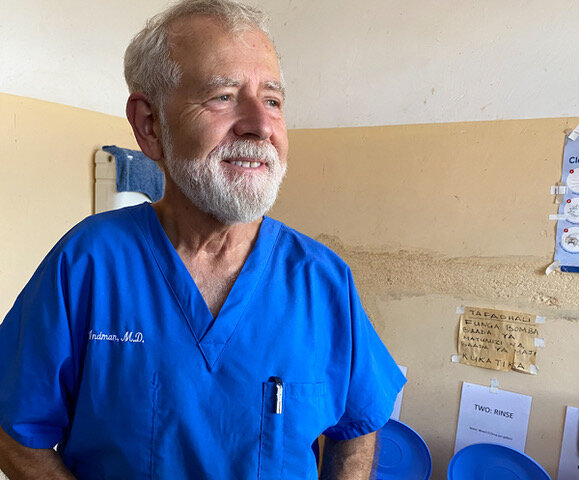
By Volunteer OBGYN Specialist, Dr. Paul Indman

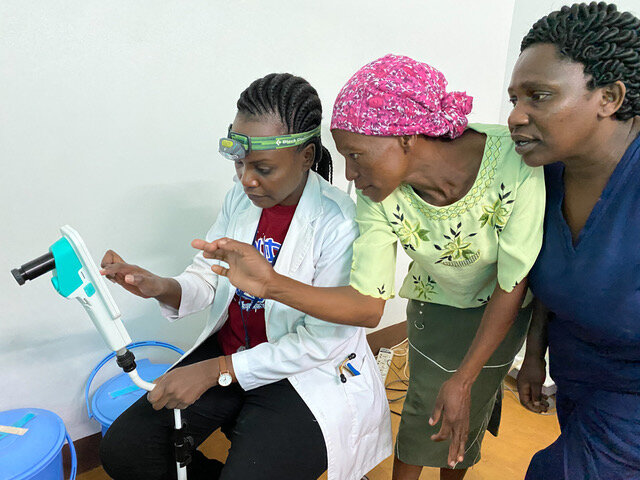
Cervical cancer is the most common form of cancer in Tanzania, killing nearly 7,000 women each year. Traditional screening methods, such as PAP and HPV testing, require reliable follow up and multiple visits if treatment is needed.  This is impractical for much of the population of Tanzania, due to the vast distances women need to travel to reach medical facilities.  

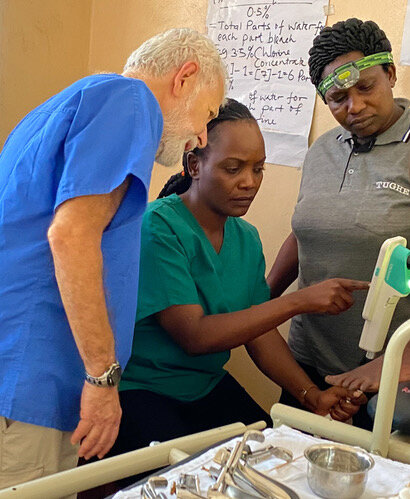
A large part of my GYN practice in the San Francisco Bay Area was devoted to the evaluation and treatment of dysplasia (pre-cancer) of the cervix by examination with a special microscope called a colposcope.  For many years I taught colposcopy to the residents at Stanford University as well as gynecologists and mid-level practitioners.  Developing countries often lack the luxury of using specialized equipment such as a colposcope. Instead they rely on a simplified method of inspecting the cervix called VIA (Visual Inspection with Acetic acid). This can identify some cases of dysplasia and allow immediate treatment in the same visit, and has been shown to decrease deaths from cervical cancer by about 30%.  However, without magnification many smaller abnormalities are missed and some normal areas are over diagnosed as precancerous, leading to unnecessary treatment. 

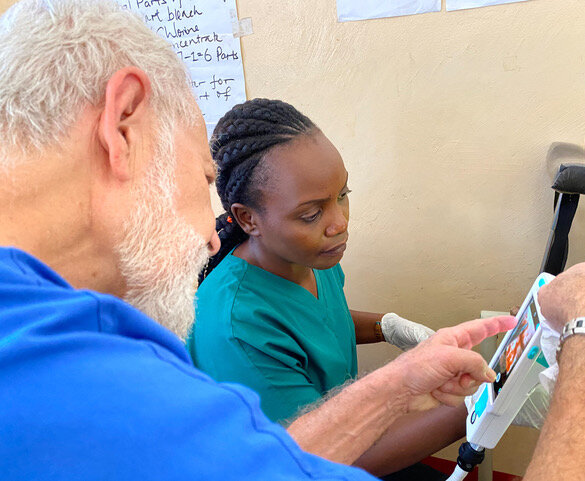
Advances in technology led to the development of a small colposcope, the EVA MobileODT, which uses a smartphone to take magnified photographs of the cervix.   I brought the colposcope to FAME with slides and a comprehensive video on cervix examinations to demonstrate exactly what we were looking for.  All of the Tanzanian staff including Dr. Anne, Dr. Caren and Nurse Midwives Siana and Joyce, spent a lot of time watching the video and going over the slides when we weren’t screening patients.  Well in advance, they arranged outreach programs in the neighboring communities, in order to screen women who were at high risk of cancer but had never been screened. By the end of the November we had screened 93 women at FAME, 83 at the Gorofani and Barazani clinics near Lake Eyasi, and four women in the Endulen Hospital in Ngorongoro.  All in all, we found 42 precancerous lesions that were treated on the spot, making it highly unlikely they will progress to cancer.  We found two cases of cervical cancer, which were treatable in their early stage. 

Sometimes a biopsy is needed to determine whether a lesion is cancerous, but in Tanzania many women struggle to even afford the small cost of having their biopsy read.  While dysplasia can be treated on the spot, that treatment is not suitable for invasive cancer, which is treated entirely differently.  Also, the ability to get biopsy feedback on the exam is essential to the learning process.  Before leaving FAME, I worked with FAME leadership to form and personally support a special fund so that biopsies can be done without regard for one’s ability to pay. 

Due to the lack of widespread knowledge about cervical cancer, it’s not easy to go into the communities and encourage women to come in for screening.  While HPV vaccination programs will greatly reduce the risk of developing cancer, it will take years before the effects are seen across the country.  While it is satisfying to know that we likely prevented 42 women from dying of cervical cancer, I am even happier that the staff at FAME learned to use the colposcope to improve the accuracy of their screening.  After all the successful screenings we did together, there was no way I could take the colposcope home with me.  At the request of every one of the practitioners, the EVA mobileODT has a new home at FAME.  I’m eagerly looking forward to spending another month at FAME in 2020.

A Newborn's Resilience, The Love of a Mother, and The Commitment of a Team

By Maternal Health Consultant and Midwife, Leesha Mafuru

It was the morning of October 4th when Halima walked into our new maternity center carrying a tiny package bundled up in a colorful fabric, her newborn baby. She had a preterm delivery at another hospital in the area — not one baby, not twins, but triplets! Her triplets were very premature, born at only 27 weeks. Survival at 27 weeks is rare, not only in Tanzania, but even in developed countries. Sadly, by the time Halima decided to come to FAME, two of the triplets had already passed away. 

Photo Izumi Vignette.jpg

The moment they arrived, FAME's nurses and doctors jumped into action, admitting Baby Patricia to our Special Care Nursery (SCN). She weighed only 1.98 lbs., but was clearly a fighter. These babies are known as micro-preemies and carry a huge risk for complications and mortality. Our Special Care Nursery is not equipped to provide the level of care typically necessary to save babies this fragile. However, there is a high-level NICU in Arusha that specializes in these cases (the only one in the country), so after stabilizing and evaluating Baby Patricia, our doctors recommended a transfer there. Despite being the best option for Baby Patricia, the cost of care there was simply beyond the family’s reach. They decided to stay at FAME and to reconsider only if Patricia’s health changed. 

FAME doctors and nurses kept watch over Baby Patricia as if she were their own, monitoring her feedings, fluids, temperature and oxygen levels 24 hours a day. In order to help her breathe, she was put on CPAP, a machine she stayed on for 6 weeks. It was a very steep learning curve for our team, and the NICU specialists in Arusha graciously provided consultation and advice every step of the way, as did a FAME volunteer pediatrician. Slowly but surely Patricia's weight started to increase and Halima was able to start doing skin-to-skin Kangaroo Care, expressing milk every two hours around the clock and learning how to feed Patricia through her oral feeding tube. 

As the days and weeks went by, her breathing became stronger and stronger, requiring smaller and smaller whiffs of oxygen along the way. The time spent skin-to-skin with her Mom only added to her amazing resilience. The team excitedly watched the thermostat on the incubator get lower and lower as Patricia’s own body developed some fat stores and was able to maintain its own temperature. Even her tiny little cheeks began to fill out. And then she reached 32 weeks or 8 months gestational age and began to suckle at the breast!

To her mother’s great joy, she was a champion nurser from the start. After weaning off the oxygen altogether, she graduated out of the nursery and into Kangaroo Care alone. Within just a few days days, Baby Patricia was finally ready to go home, weighing a healthy 5.6 lbs.

In the end, Halima and Baby Patricia were with us for two full months. For the FAME team, it was an enormous milestone — one that illustrates the power of teamwork, compassionate care, and commitment to learning. For this mother and family, there was no greater gift FAME could have given than to help this little one beat the odds and get to go home in her mother’s arms in time for Christmas.

We are so grateful to our supporters and friends for enabling FAME to have the resources and staff to care for Baby Patricia, the fragile but mighty little human who needed us. Be blessed this holiday season, in the New Year and always!

Note: Names of mother and baby have been changed to protect privacy 

The Long Road to Recovery

By FAME

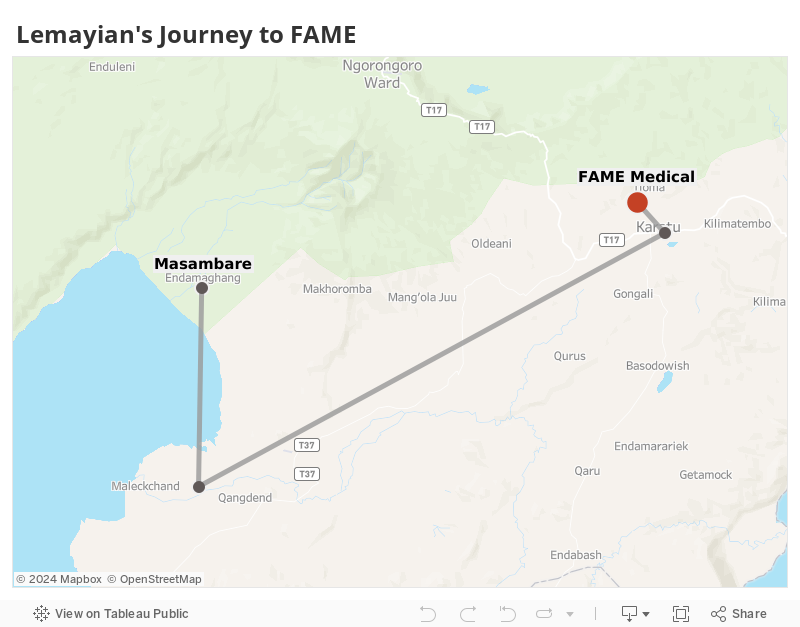
Three year old Lemayian arrived at FAME Medical in visible pain. He was rushed to the emergency room by the FAME team, where they quickly learned from his distraught mother what had happened two weeks earlier. He had been playing tag with the other children when he bolted inside his home to hide. He collided with a pot of boiling porridge, which caused third degree burns over most of his body.

From there Lemayian’s road to recovery was a long and painful one.  He was rushed to a medical facility in Mang’ola near Lake Eyasi. However, as that facility was unable to provide the emergency care Lemayian required, he was transferred to a different medical facility in central Karatu. Shortly after being moved there, his relatives recommended he seek medical assistance at FAME instead, due to its reputation in the area for burn care.

DSC_0198_.jpg

At FAME, Lemayian received multiple skin grafts and dressings for his burns —operations that are, unfortunately, all too common at FAME.  In 2019 thus far, burn dressings have been the second most common procedure performed at FAME. More than 40 dressings and five skin grafts have been conducted at FAME so far this year.   

 While the average inpatient stay at FAME is about three and a half days, Lemayian stayed with us for just under a month due to the severity of his injuries.  As he improved day by day, he became very popular and well-liked by FAME staff and our FAME dog Charlie.  His inquisitive and engaging little spirit, along with his stubborn perseverance,  had a special way of drawing people in.  In only a couple of weeks, he was walking again and exploring everything within his reach.

His mother Neema was kind and appreciative of the treatment we provided for Lemayian. “The treatment was wonderful because Lemayian received very fast care and treatment. I was very scared because the wounds seemed like they would never get better. I thank FAME Hospital and the doctors a lot for making this happen and allowing us to go home. We have nothing to give in return only that we pray for you all.”

Lemayian was looking better than ever when he returned to FAME several weeks later for another dressing change. It was deeply gratifying for our medical team to see him in such good spirits and to know that he has a new lease on life.

NOTE: The names of the patient and mother were changed to protect their privacy.

FAME Africa
Thank you FAME
Saying my final goodbye to our staff during our Friday lunch

Saying my final goodbye to our staff during our Friday lunch

By Kathrine Kuhlmann, Communications & Marketing Coordinator

I first joined the FAME team a little over a year ago as the Communications and Marketing Coordinator and, let me tell you, this is an extraordinary place. I know what you’re thinking: it’s my job to say that. The thing is, FAME makes my job incredibly easy. I get to share the stories of compassion, of lives saved, of hard work, and of the miracles that I see on campus every day. I also get to interact with our incredible patients and community. I get to know the dad who stayed with his son in our inpatient ward for months and we still greet one another when we see each other in town. I get to photograph a young Maasai woman who speaks neither Swahili nor English, but has survived Cerebral Venous Sinus Thrombosis and is now giggling with me looking at her image, happy and healthy. I get to share a meal with a mama who took in a child from our maternity ward when his mother passed away and celebrate with her when he’s beginning to crawl! I get to cry tears of joy with a father whose 13-year-old son can finally, for the first time, get consistent care for his epilepsy and begin to learn what it’s like to live a life with an effective treatment plan. I get to hear stories of tragedy and triumph, of sadness and strength, of death and life, and I get to share those stories with you.

There are certain sounds that echo through the halls that I’ll never forget from my time at FAME: the metronome-like consistency of a patient monitor matching pace with the heart of a critical patient, the sigh of relief and absolute bliss after a healthy delivery, the wailing of a mother who lost a piece of her heart unexpectedly in the emergency room, the laughter of a child who has recovered from his skin grafting and finally gets to go home, the stillness of campus after a long day. Working in the health sector is a daily challenge filled with these moments of both joy and sorrow, with incredibly tangible results: either the patient leaves healthy or they don’t. However, I’ve been grateful to see how, independent of the outcome, the FAME team uses each case as an opportunity to learn, to understand, and to build their treatment capacity.

Working at FAME has had a massive impact on me, and not just that I can keep up with a clinical conversation without Googling every other word or that I can see bodily fluids without spewing my own, but an impact on how I approach community development. I have never seen a hospital, in US or abroad, which is so attentive to each individual patient, acting out of genuine empathy. I’ve also never met a team so eager to learn from challenging circumstances, new patients, or specialty volunteers. During my time on the Karatu campus, I’ve gotten to work with our 157 member awe-inspiring, genuine, and selfless local staff and over 60 incredibly thoughtful, kind, and skilled international volunteers and I’ve learned countless lessons from them all. I’ve learned how to be an effective teacher, how to approach each day with joy and gratitude, how to make a hat out of a cloth napkin, how to hold on to hope, how to make the perfect chapatti and beans, how to be a good story teller, and, most importantly, how to be a life-long learner. To the staff, the administration, and the volunteers, thank you. Thank you for being my family, for loving the community of Karatu so well, and for making me a better person through it all. With all my heart, thank you.

FAME Africa