World Diabetes Day 2021

Today is World Diabetes Day. A day to raise awareness of the challenges surrounding access to diabetes care. Today presents an opportunity to highlight the urgent need for increased access to diabetes diagnosis and treatment.

2021 marks the 100th anniversary of the discovery of insulin. However, for marginalized communities such as those in rural Tanzania, many people with Type 1 diabetes struggle to access insulin as well as the necessary basic treatment technologies such as blood glucose meters and test strips. Diabetics who get a diagnosis are not guaranteed access to regular screening for complications or given education around diabetes to enable them to manage the disease. 

The number of undiagnosed diabetics is higher than those diagnosed in marginalized areas, and the World Health Organization (WHO) recognizes the rapidly rising rate of diabetes in low and middle income countries. Left undiagnosed, diabetes is a major cause of blindness, kidney failure, heart attacks, stroke and lower limb amputation.

Here, we highlight the story of Lemaiyan*, a Maasai man who has recently been diagnosed with Type 1 diabetes at FAME.

“I didn't know anything about diabetes before my diagnosis. I was shocked and scared when the doctor told me. However, the doctors and nurses have educated me about diabetes and shown me how to use insulin. They have also shown me how to store the insulin since I don't have a fridge back home. I’m very grateful to FAME for the good care I have received.”

-Lemaiyan*

When Lemaiyan* turned 21 years old, he was too sick to celebrate. He was experiencing severe abdominal pain, nausea and vomiting. He also noticed that for the last three months he had lost excessive amounts of weight, 27lbs to be exact. He was also experiencing excessive thirst and frequent urination.  

After numerous trips to the local dispensary, Lemaiyan* decided to make the long trip to FAME  to seek treatment, as he was not getting any better. Accompanied by his parents, he started the long journey from his small village in Ngorongoro, covering over 60 miles.

At FAME, he was diagnosed with Type 1 diabetes and immediately put on insulin. He spent two nights in FAME.

Insulin prices are high in Tanzania, however FAME provides insulin free of charge to patients who cannot afford it. Together with our team of social workers, we review each case individually to ascertain the level of help and support needed. 

FAME joins the rest of the world, today and every day, in fighting for access to diabetes care for those in need.

*While the patient’s name has been changed to protect privacy, permission was secured to share his photos and story with FAME supporters, and to raise awareness of available medical care at FAME Medical.

FAME Africa
Promoting Patient-Centered Care

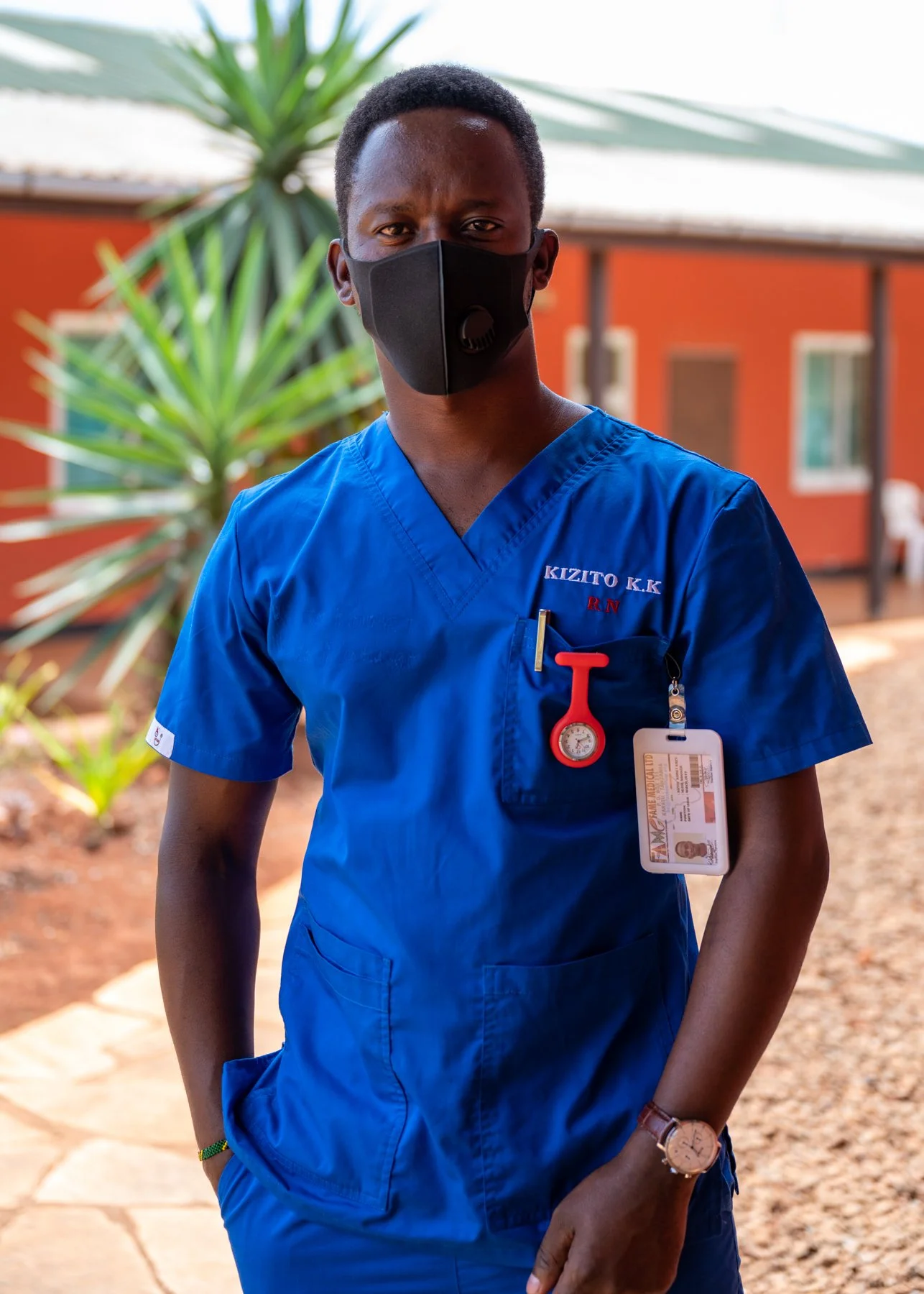
We often tell stories of our patients with happy endings. Today we highlight the remarkable success that FAME’s own Head Nurse, Kizito Koinet Kileu, achieved in the just concluded Scientific Conference and Annual General Meeting held in Mbeya, in south western Tanzania. 

The conference, "Nurses, A Voice to Lead - A vision for future healthcare," was hosted by the Tanzania National Nurses Association (TANNA) and was attended by over 1,200 healthcare professionals from Africa, the United States of America, and the United Kingdom. 

Kizito gave an inspiring presentation on Customer care satisfaction in the health industry, Principles of customer care that made such a strong impression, it was recognized as the most powerful presentation of the conference.

Kizito graduated from nursing school in 2016 and shortly after moved to Zambia to work for a HIV project led by the Southern African Development Community (SADC). The project focused on implementation of testing centers, community outreach work and education, leaving Nurse Kizito missing patient interaction terribly. He joined FAME in April 2019, and has been an instrumental part in making FAME a success, not only to the staff that work here, but to all the patients around Northern Tanzania who travel far and wide to seek medical care at FAME.

Kizito is familiar with customer care satisfaction in the health industry given FAME’s mission of advancing patient centered and quality medical care in Northern Tanzania. 

A few months ago, Kizito conducted customer care training for FAME’s medical and non-medical staff. His preparations for this were incredible learning opportunities: he listened to patients, relatives and colleagues – to find out precisely how to best collaborate, share decision making and come up with a comprehensive care plan in order to achieve a patient’s specific health needs and desired health outcomes. 

When it came time to present at the Scientific Conference and Annual General Meeting, he stood confidently at the podium and shared his own experiences to a room full of nurses at the conference centre in Mbeya. We can now proudly share that his experience and advice has reached healthcare personnel from all corners of Tanzania and beyond.

Other topics presented at the scientific conference included maternal deaths, nursing innovation, autism spectrum disorder, and post-operative wound care in surgical wards. All crucial to ensure better results when dealing with patients with a wide variety of needs.

Nurse Kizito promises to use the knowledge acquired in the conference to inspire his nursing team and other FAME health professionals. 

We at FAME are very proud of Kizito!

You can see a video of Kizito explaining what inspired him to be a nurse below.

“The conference was wonderful; I would have felt very sad if I had missed it. It was awesome as I met other healthcare providers from not only Tanzania hospitals but also colleagues from Botswana, Uganda, Kenya, and South Africa. It was inspiring to discuss nursing-related issues with them.”

-Head Nurse, Kizito Koinet Kileu


FAME Africa
When Preparedness Saves Lives
The moment my child was sick….I was thinking he could die at any time….I was just happy from the moment I was received here. I didn’t know the treatment he was receiving, but I am happy that nurses and other people were coming and seeing my child, and day after day I saw him improving.
— Issaya’s Mother on the care she received at FAME Medical (translated from an interview conducted in KiMaasai)

I will never forget the tiny blue and yellow striped sock lying at the end of the bed as the FAME ER team rallied around a very young child who was obviously in crisis. Attached to a small white oxygen tank, a nurse from another medical facility had just carried the patient in after supporting him throughout an emergency transport from Mto wa Mbu to Karatu.  With his small chest already retracting, nine month old Issaya was audibly wheezing and visibly in distress.

In the throes of what the ER team would immediately recognize as acute bronchiolitis and probable pneumonia, they worked quickly and seamlessly to save this precious life. I’ve always watched in awe when skilled doctors and nurses respond to emergency situations — the intense focus, the seemingly unflappable demeanor, the decisive action — each provider stepping into their role yet working in harmony, with singular purpose. These are the things I observed in this situation too — as they nebulized this little one who was struggling to breathe. Without missing a beat, the team inserted a bronco dilator into his trachea, dilating his lungs and clearing his airway. Issaya was terribly dehydrated, and so they inserted an IV into a vein in his scalp to replenish his depleted little body. Within 1/2 hour he was breathing easier. Within an hour, he was breathing well enough to breastfeed in his mother’s arms.

It is hard to believe how quickly a life, especially a child’s life, can be snatched away in the absence of emergency medical care AND how just as quickly a life can be reclaimed in the presence of healthcare providers equipped to respond in a crisis.  Once the little patient was stable enough to be moved, Dr. Mwaluko began the process of admitting Issaya to our general inpatient ward. Still fragile and in need of close observation, ward nurses attended to his oxygen and inhaler needs and labs were drawn to further inform treatment. Ultimately, the preliminary diagnosed was confirmed — acute bronchiolitis/pneumonia, along with anemia. Antibiotics and iron were added to his treatment regime. Over the next two days, FAME nurses would keep a close eye on Issaya’s progress and provide support and encouragement to his worried mother. Finally, he was well enough to return home in the arms of a very grateful mother.

Note: We would learn over the course of Issaya’s stay that the family had traveled from their home village to Babati, roughly 100 miles away, where they boarded a bus bound for Mto wa Mbu. It was there that a Health Center started treatment but ultimately recognized that he needed a higher level of care. They made a referral to us, transporting Issaya another 18 miles up over a winding escarpment to FAME Medical in Karatu. This is the gap FAME is here to fill and the kind of collaboration between health facilities that we aim to cultivate.

*While the patient’s name has been changed to protect privacy, permission was secured to share his photos and story with FAME supporters, and to raise awareness of available medical care at FAME Medical.

FAME Africa
A Day to Celebrate

On a cold and foggy Tuesday morning, staff in the Maternity Center gather together as they prepare to surprise one unsuspecting mama. Heads turn as they stride uniformly into the Maternity Ward, huddled around something not quite visible. The cluster of nurses slowly parts to reveal Maternity Ward Supervisor, Ruhama Lyanga, holding a cake she’d baked the night before. Ruhama makes her way over to Kanoni, a mama under care in the Maternity Center for just under three months. As they present the cake, Kanoni smiles, her eyes lighting up in anticipation.

Kanoni came to FAME mid-November when her water broke just 26 weeks  into her pregnancy. After seeing a doctor she was given antibiotics and steroids to help the baby’s lungs develop.  She stayed at FAME for two weeks, before finally giving birth to Imani. While Imani was brought into this world through a normal vaginal delivery, her first few months would be anything but normal.

Born a meager 1.15 kilograms or 2 ½ pounds, Imani was quiet and tired, unable to cry forcefully as most babies do after birth. Imani was placed into one of the infant incubators in our Special Care Nursery (SCN), where she was monitored and fed around the clock. FAME’s SCN has the only incubators and CPAP machine in the district.  In order to breathe and slowly gain weight, Imani needed continuous positive airway pressure therapy, a.k.a. a CPAP Machine, for nearly two months. Yet when the time came to take her off the CPAP Machine, the situation took a turn for the worse. While her lungs were continuing to develop, she was struggling to breathe without the assistance of the CPAP Machine — an uncommon situation for premature infants that gain weight and show improvement.  

In order to figure out why Imani was still having trouble breathing, FAME staff did an X-ray of her lungs which showed some anomalies. Shortly after, they consulted with Dr. Swanson who runs the Neonatal Intensive Care Unit (NICU) of the Arusha Lutheran Medical Centre (ALMC), a private hospital based in Arusha and partner of FAME. Dr. Swanson suggested that the difficulty in breathing was a symptom of bronchopulmonary dysplasia, a chronic lung disease that develops in preterm babies due to the extended use of CPAP and oxygen. This is just one of the many possible complications that arise from premature birth. He recommended a medication regime of steroids for Imani, which helped wean her off the CPAP Machine within a week.

It had been a long three months for Kanoni, and the Maternity Center staff wanted to do something special for her.  As a long-term patient, she had become part of the FAME family, and Ruhama wanted to show her just how much all the nurses and midwives care and love her. And now that Imani had been off oxygen for four days, she was clearly looking much healthier, and a celebration was in order.

I am proud of them because they know how to care for preemies and are confident
— Ruhama Lyanga, Maternity Ward Supervisor

This cake was just as much a celebration for Kanoni and Imani, as it was for FAME staff. In the two and a half months that FAME staff had meticulously cared for Imani, she had grown to 2.25 kilograms or 5 pounds. Every time the Nurses went in to check on Imani they relied on the skills and training they developed during the Nursery Care Workshop, taught by our Maternal Health Coordinator, Leesha Mafuru. Everything from IV fluids, feeding times, and even positioning Imani correctly in a little nest within the infant incubator had to be precisely calculated to keep Imani as healthy as possible.

The Maternity Center filled with warmth and joy as cake was shared between all the mamas and staff. Kanoni held back tears of joy as Ruhama and many of the nurses shared kind words and sentiments. Relief washed over the room, as everyone took a moment to relax from the demanding care they provided over the past couple of months. Imani had made it; she no longer needed special care and now has a bright future ahead of her. Kanoni spent one last day in the Maternity Ward enjoying the company of the staff, before being discharged. She then headed home with her beautiful baby girl.

FAME Africa
Healing, Dancing and Hope

Late one evening in June, three-year old Sironka was sleeping peacefully in his bed while his mother, Esiankiki, was outside milking the cows. As is common in most Maasai houses, there is a small communal fire in the center of the home for cooking and warmth. As Sironka turned over in his sleep, he rolled off the bed and fell into the fire.

Esiankiki, alerted to his screams, ran inside to see what had happened.  Sironka was badly burned and needed urgent medical attention. His father knew other Maasai from the village who had been treated at FAME, and decided that was where Sironka needed to go. The four hour journey from their village of Endulen to FAME was made by Sironka and Esiankiki on a Dala Dala, the local form of public transportation.

Upon reaching FAME, Esiankiki, who speaks KiMaasai, had difficulty communicating with the doctors and nurses who were speaking Kiswahili. Fortunately, the next morning Esiankiki was greeted by Kitashu, a FAME social worker fluent in KiMaasai, or KiMaa, and Kitashu became the translator between the little boy’s mother and the medical staff.

In the weeks following, Kitashu checked on Sironka frequently to monitor his recovery and was pleased to see that he was healing well and becoming more energetic. Appreciating the difficulty for this little patient and his mother being surrounded by foreign-sounding people in an unfamiliar environment, and wanting them to feel more comfortable, Kitashu started playing Maasai gospel music for Sironka and his mother on his phone. And little Sironka, absolutely delighted, began to dance!

After that first dance, Kitashu returned every day to hold little dancing sessions with Sironka and his mother out on FAME’s central lawn. He created a playlist of Maasai songs, and the one being played when this photo was taken is called Osim Lai by a Maasai artist called Tychius, and translates to “you are my hope.” All three looked forward to their daily entertainment.

Soon, Sironka will be able to return home, fully recovered. While this has been a very difficult journey for him and was a particularly heart-wrenching case for everyone involved in his care, we at FAME share tremendous pride in having managed his recovery with the assistance of many teams, including the creativity of Kitashu who worked to help Sironka and his mother adapt to FAME’s unfamiliar environment. We’re hoping to see Sironka again, under different circumstances, and look forward to more of his dance moves!

*Names have been changed to protect the privacy of the patients

FAME Africa