World Tuberculosis Day

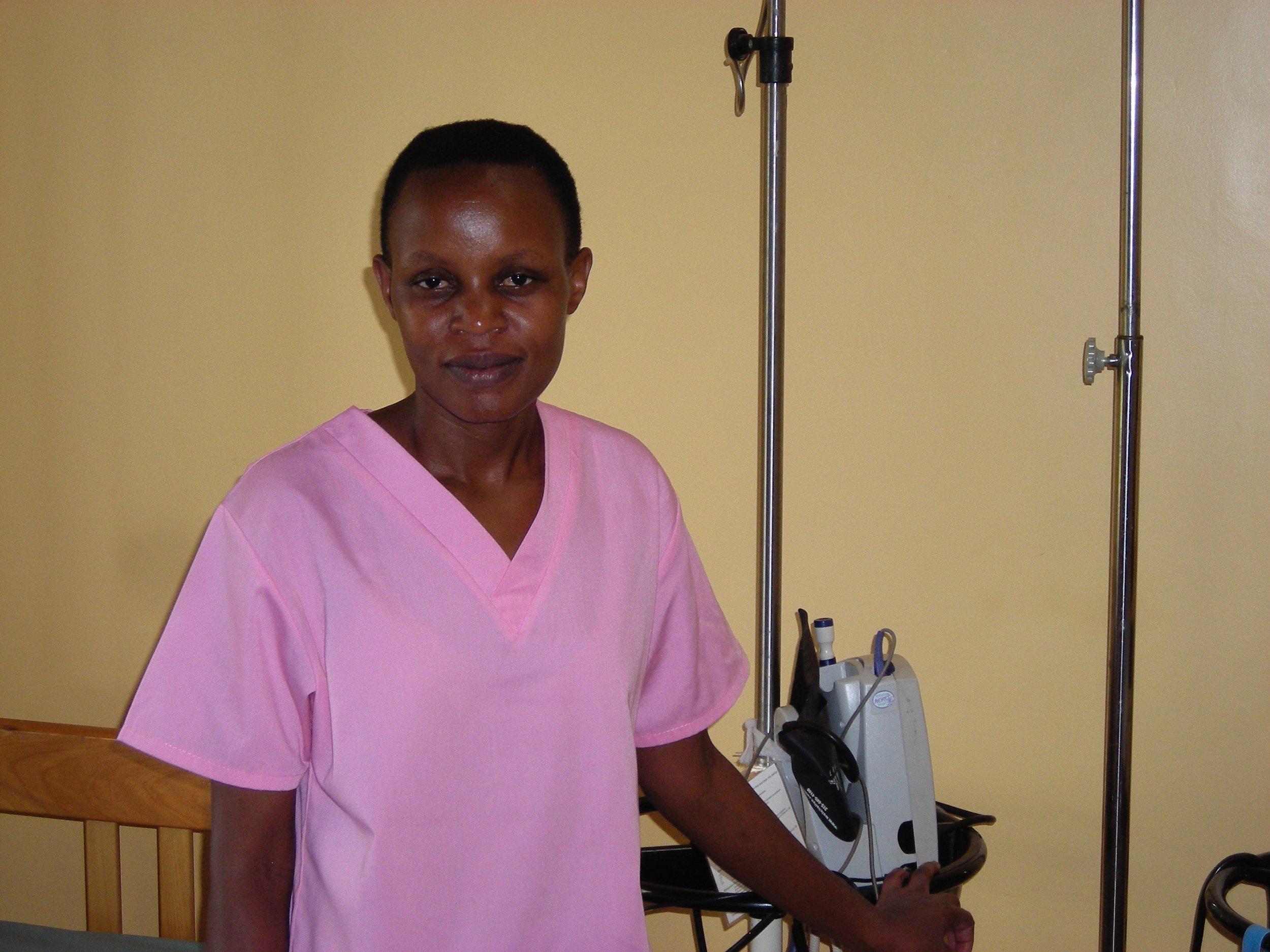
Mama Ntimama and her daughter during the interview.

World Tuberculosis (TB) Day aims to raise public awareness about TB's devastating health consequences and highlights the efforts to treat and eliminate it. 

Tanzania is one of 30 “high-burden” countries for TB, with only 65% of TB patients receiving treatment. Poverty, malnutrition, HIV infection and diabetes are the main determinants of TB disease in the country (USAID).

In the first few months of 2023, FAME has already treated 29 TB patients, an increase from 19 patients treated by this time last year. 

This week, the same week we are recognizing World TB Day, FAME had two TB patients in the inpatient ward. One was Mama Ntimama, a 79-year-old woman from Ngorongoro who traveled 60 miles to FAME to access TB treatment.  

Accompanied by her daughter, Mama Ntimama came to FAME after months of being sick: suffering from an extreme chronic cough and chest pains. 

I had been to my local dispensary twice, but the medicine they gave me did not work. So I turned to local herbs and roots for treatment, but my condition worsened.
— Mama Ntimama

Mama Ntimama’s children decided to send her to a hospital, as her condition was worrying.

My children told me that I needed to go to a hospital or I would die. I remembered FAME, where I was admitted in 2019 when I was very sick and was cured after a few days, so I asked them to bring me here. At this point, I couldn’t eat or walk. My children could not afford the long journey to FAME or the treatment, so they sold some cows for the money.
— Mama Ntimama

Mama Ntimama passionately tells her story.

Once at FAME, diagnostic tests were done and Mama Ntimama was diagnosed with TB.

I knew nothing about this disease before the doctor told me. I thought I had a bad cold that couldn’t go away. I was admitted five days ago and after the medicine, I already feel better than I have in months. I’m looking forward to going back home.
— Mama Ntimama

Cases like Mama Ntimama’s are not uncommon. According to WHO, TB remains a significant concern in rural areas of Africa, where the disease often goes undiagnosed and/or untreated. Factors such as poverty, poor living conditions, limited access to basic healthcare services and social stigma contribute to the high incidence of TB in rural areas.

The doctors at FAME have educated me about this disease. Now I understand what it is and how dangerous it can be if left untreated. If I adhere to my treatment, I will be completely cured.
— Mama Ntimama

TB is treatable but early diagnosis and treatment are needed to prevent serious complications. To combat TB in our catchment area, the government-sponsored TB program at FAME continues to focus on prevention, early diagnosis and effective treatment. Educating communities about TB and its symptoms and increasing access to diagnostic tools and treatment options are crucial services in order to combat TB in the communities FAME serves and throughout Tanzania. 

On World TB Day, I would like to tell people if you have symptoms like mine or have been in contact with someone who has TB, get medical attention immediately. People with TB should not have close contact with others until they receive medicine because they can spread the disease when they cough. I want people also to know that local herbs and roots will not cure TB. It is only cured by medicine from the hospital and following what the doctor says about how to take it.
— Mama Ntimama

Acknowledging this year’s theme of “Yes, We Can End TB!”,  FAME’s TB and HIV/AIDS coordinator, Dr. Jacob Olekeiya, says: 

Tanzania bila kifua kikuu inawezekana. Tuungane pamoja kutokomeza kifua kikuu (A TB-free Tanzania is possible. Let’s work together to eradicate TB.)
— Dr. Jacob

*The patient’s name has been changed to protect their privacy and permission was secured to share their story. The quotes have been translated from Maasai to English.

FAME Africa
Volunteer Reflection: Diane Berthel-Retired Business Executive

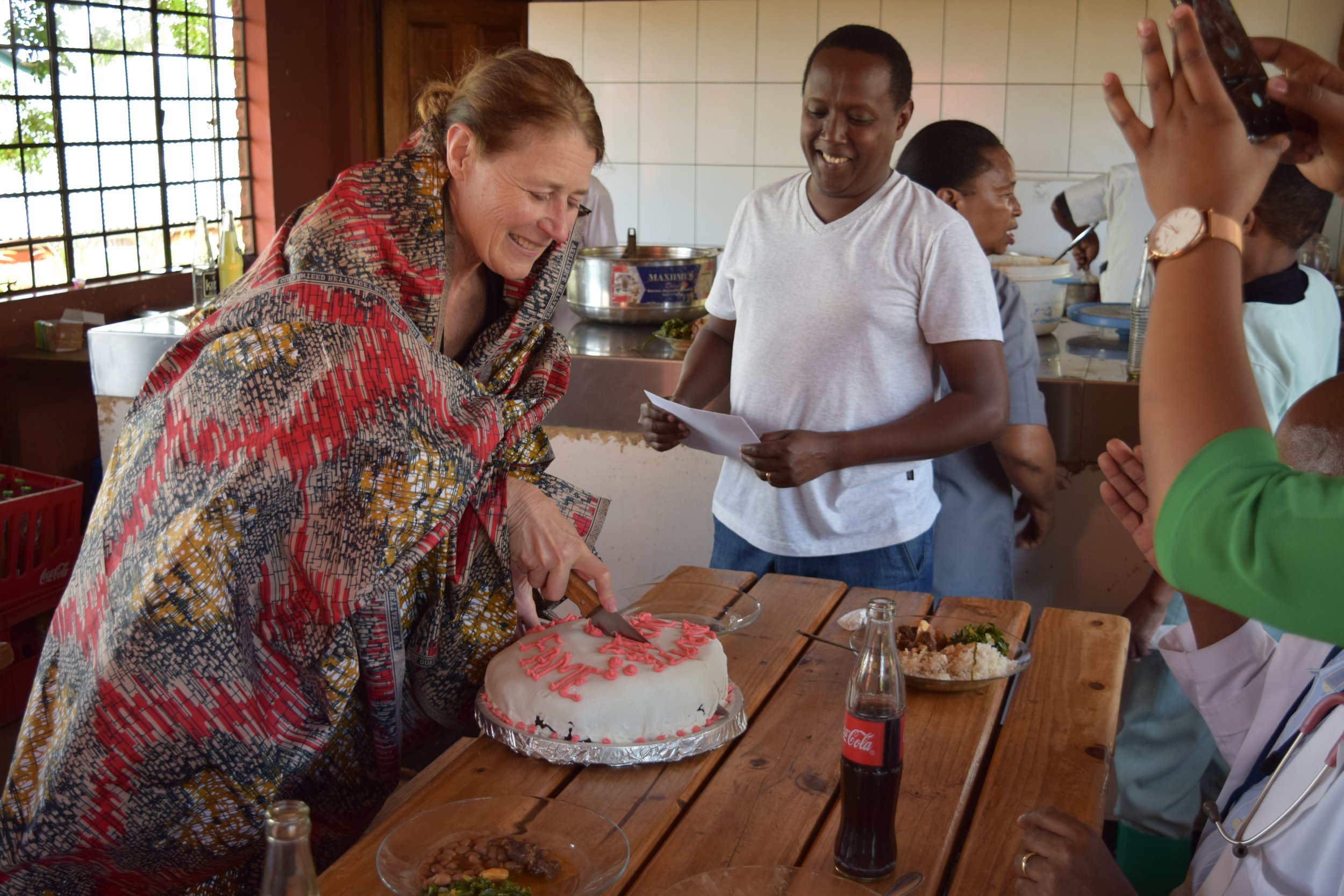
From Left: Nurse Ruhama Lyanga, Diane Berthel and Nurse Safiniel Shedrack Mbwambo.

FAME, February 2019.

Diane’s going away party.

FAME, November 2019

FAME staff after a training session with Diane.

FAME, January 2018

Sue [FAME’s Digital Media Manager] asked me to do a volunteer reflection. But I think she is asking, “Why are you here and not sipping drinks on a beach somewhere?” Good question!

I have been retired for ten years and believe that “purpose fuels passion” (the theme of my blog) and passion is the fountain of youth. In short, the people and mission of FAME keep me young! Add to that the opportunity to truly EXPERIENCE Tanzania's natural beauty and cultural richness and I’m in!

I’m not a medical volunteer, so what is it that I do? I’m a management coach, a strategist, whatever is needed volunteer. I mostly look, feel, listen and then respond: What do I notice? What is shared? How can I help adjust the direction to maximize resources at FAME? To do this, the staff must trust me. I come every year for three months for the consistency that drives trust.

Dr. Julius said it eloquently when I arrived this year. He said, “Before you came, I thought administration-insignificant. Now I see we are all heading in the same direction. It is good!”

Dr. J’s comment was encouraging because I meet with every department here. I call them “look-up” sessions. No matter what specific work we are doing, we see the mission and vision when we look up: Patient-centered care, an environment that encourages lifelong learning, and resources to do our work! And we each play a role in healing patients.

Everyone here is a healer. In this morning’s meeting, I reminded housekeeping about their role in healing. I start with my standing joke that the toilets at FAME are so clean I could eat my lunch there. Then I asked them to imagine how good it feels to lie on clean sheets with
newly washed floors when sick. When patients feel good, they can begin recovering.
— Diane

For groundskeepers, I tell them to imagine how a frightened patient feels sitting in a beautiful garden while waiting for a doctor. So much about this healing environment is a model for healthcare everywhere. Kind receptionists, prescriptions that can be filled, accurate and quick lab tests, a safe and tranquil campus, good food and drinking water, and many more reasons for patients to relax into the patient-centered care that FAME promises and provides.

Another elixir for me is the commitment to learn and improve, with “patient care” always at the heart of it. As an addicted learner, I am thrilled when I hear things like “since your meetings last year, everyone knows that we start on time” or when talking the “FAME DNA” of lifelong learning comes up.

After an orientation with new employees, it is amazing when they share how excited they are to be here.

Management and supervisors are so responsive because they genuinely want the best for their patients and teams. Frank, Susan and William gently bring me back to earth when my ideas go too far!
— Diane

So why wouldn’t I just move in permanently? Tempting, but I do need an occasional drink on a

beach or in my backyard in Minnesota!

FAME Africa
HAPPY INTERNATIONAL WOMEN'S DAY FROM FAME

Women are the majority of patients we treat at FAME, making up 63% of the total patient visits in 2022. FAME invests heavily in women's comprehensive healthcare services including reproductive health services such as preventative care, prenatal and postnatal care, family planning and obstetric and gynecological care. 

This year, on International Women’s Day, we highlight three female FAME healthcare workers committed and dedicated to their work. These women have worked at FAME for over a decade. They understand the unique needs of the women in our catchment area and provide culturally sensitive and gender-responsive care.

Dr. Anne Ghati has been at FAME for 11 years and Nurses Siana N’kya and Safiniel Mbwambo have been at FAME for 15 years. Siana and Safi were the first nurses hired at FAME, back when it was just a mobile clinic and they have been a part of FAME’s growth over the years. In the spirit of International Women's Day, we talked to each of them about the services FAME offers for women, the importance and impact of offering these services, and why FAME is a wonderful place for women to work. 

Dr. Anne Ghati- FAME NEUROLOGIC focal DOCTOR

Dr. Anne Ghati.

Dr. Ghati talks to a new mother at FAME’s RCH.

Dr. Anne Ghati (left) pictured with Nurse Safi (right). FAME 2012.

Dr. Ghati is FAME’s focal neurologist and is also involved in obstetrics and gynecology at FAME. 

After working in Dar es Salaam for a few years, she experienced a growing dissatisfaction with city life and sought something different. That's when she stumbled upon a FAME job advert.

The advert said a female doctor would be an added advantage, so I quickly applied. I’m glad I did because working at FAME has been a dream! FAME’s support for women’s health and well-being is unmatched. In our catchment area, gender inequality often dangerously impacts women’s access to healthcare. Cultural and social norms prevent women from seeking healthcare services, particularly for reproductive health issues. FAME continues to address these barriers and create a healthcare system that is equitable and accessible to all, and I’m very proud to be part of this.
— Dr. Ghati

Dr. Ghati believes that education is essential for addressing gender inequality in healthcare. By increasing education and awareness, FAME empowers women to take control of their health and break down barriers to accessing care. 

FAME offers more than healthcare. We always talk to our patients, advise them and teach them to make informed decisions about their bodies and healthcare needs. We also work to reduce the stigma surrounding many women’s health issues in our catchment area.
— Dr. Ghati

Dr. Ghati also notes that the increased female presence in the healthcare workforce is important as women have been historically underrepresented in many healthcare professions, including medicine and nursing. She is proud that 48 percent of the employees at FAME are women and is hopeful that education will help promote gender equality by challenging gender stereotypes and discriminatory practices.

Siana Nkya, FAME’s Head of Emergency Department

Nurse Siana Nkya.

Nurse Siana during FAME’s first Mobile Clinic to Lake Eyasi, September, 2009.

Nurse Siana (right) with Nurse Safi (left). FAME 2009.

Nurse Siana during one of FAME’s mobile clinics in 2010.

One of the things I love about FAME is that we are always coming up with new programs to ensure that the women in our area have access to quality healthcare. The Maternity Center and Reproductive Child Health (RCH) Clinic continue to be instrumental in reducing complications during birth by providing quality prenatal and postnatal care. What started as simple rooms are now fully equipped departments supporting nearly 850 deliveries every year. Our Special Care Nursery, the only one of its kind in our district, helps save the lives of premature babies without having to refer them miles away. Cervical cancer screenings have also been a helpful addition to our program, as we see more rising cervical cancer cases at FAME. FAME doctors and nurses received training on treating and detecting cervical cancer in 2017 and 2018, which has been a huge help
— Siana

Siana, a mother, says that balancing a career in healthcare and motherhood can be challenging.

At FAME, all genders have equal access to opportunities, resources and treatment. The men do not get any preferential treatment! When I went on maternity leave, I wasn’t worried that my career development would stall. FAME was very supportive and I am very grateful for this; not all women have the luxury to take maternity leave and not have it affect their career.
— Siana

Siana talks about how gender inequality impedes women’s access to healthcare.

Our catchment area is primarily patriarchal and women are often scared of admitting they are sick lest they be seen as lazy. They are expected to prioritize their domestic responsibilities over their health. In the past, when the men brought the women to FAME, they insisted on explaining their interpretation of her condition to the doctors. Another challenge has been that women would never say anything about their private parts in front of men, so they tend to lie about their condition. FAME has dealt with these problems by hiring translators of different local dialects, so we don’t have to rely on spouses to translate and politely ask them to wait outside. This has worked well, and more women are opening up about their health problems.
— Siana

FAME continues to educate women on health issues through the local radio station programs where our doctors discuss common problems affecting women’s health. FAME also uses the television screens at the Outpatient Clinic and RCH waiting rooms to educate the women as they pick up a lot of information while waiting to see the doctor. 

Siana explains that there is still a lot of work to be done in terms of healthcare for women.

Despite the progress FAME has made in the last 15 years in providing quality healthcare to women, there is still room for improvement and expansion. As our catchment area grows, FAME needs to be able to handle the healthcare needs of these women who would otherwise have limited to no access to these kinds of services.
— Siana

Safi - FAME Nurse, Ward 1

Nurse Safiniel Mbwambo, affectionately known as Safi!

Nurse Safi, FAME 2010.

From Left: Nurse Siana, Nurse Safi and Nurse Patricia have a quick lunch on one of FAME’s mobile clinics in 2010.

I am very proud that FAME prioritizes women’s healthcare. Sometimes in our catchment area, we see men being healthy while the women are neglected and some even suffer from adult malnutrition. FAME works with local media to educate men on the importance of women’s health, as it is critical for the development and well-being of their families and communities.
— Safi

A program that Safi is very proud of is FAME’s outreach program to work hand in hand with Traditional Birth Attendants (TBA). 

We have had many cases of women giving birth at home and when complications occur, the TBAs do not have the skill to handle it and by the time the woman is brought to FAME, she has lost too much blood. Sometimes, the women suffer from severe anemia due to home births. Working with TBAs, FAME provides them with the necessary knowledge and skills to help women come to FAME for prenatal care and to help identify high risk conditions for pregnancy. They are also taught to recognize signs of complications and the importance of early referral to a medical facility to reduce the risk of maternal and neonatal mortality and morbidity.
— Safi

Safi reflects on the developments that FAME has made in women's health. She sees FAME’s surgical department as changing women's lives in our catchment area. The well-equipped operating rooms and trained personnel provide emergency obstetric care such as cesarean section delivery, which may be necessary to save the mother's life in case of complications during delivery. FAME’s operating room has also been instrumental in managing gynecological conditions such as ovarian cysts and uterine fibroids, which require surgical intervention.

Editor’s Note: Special Thanks to FAME’s Caroline Epe who provided all the throwback pictures! Asante Sana.

Join FAME in advocating for gender equality in healthcare in rural Tanzania by donating today! 

FAME Africa
Maternal Health at FAME: Placental Abruption

Gloria

When 30-year-old Gloria got pregnant for the fourth time, she was extremely cautious. Despite being born healthy and full-term, her third baby died a week after birth. The doctor at the clinic where she gave birth did not explain why and she still doesn't know what caused her child's death. 

When she fell pregnant several years later, Gloria was fearful that history would repeat itself.

With my previous pregnancies, I have always been ecstatic when I found out, but this time I was just scared. A friend told me of her niece who had twins at FAME and she had had a good experience and asked me to try it out. So I went to the Reproductive Health Clinic (RCH), where I started my prenatal classes. The staff at RCH reassured me and supported me so much that I started to be hopeful this child would survive.
— Gloria

The pregnancy was going well, but sadly at 31 weeks, Gloria suffered sudden sharp lower abdominal pains, bleeding and a splitting headache. 

Gloria’s baby in FAME’s Special Care Nursery (SCN).

The pain felt like labor pains. I have given birth naturally three times, so I’m familiar with that pain! I called my husband and told him the baby was coming and we needed to rush to FAME.
— Gloria

Gloria’s husband could not afford a taxi and they live 80 miles from FAME. So they took a public bus to Karatu and a Bajaji (Autorickshaw) brought them to FAME.

I was in so much pain and was crying when we boarded the bus; luckily, the other passengers were very kind. They offered me water and snacks, but I couldn’t keep anything down.
— Gloria

Maternity Nurse, Nuru Shaban Alute, watches the baby closely and makes sure he’s alright.

Gloria was diagnosed with placental abruption after an ultrasound and lab tests at FAME. This serious medical condition happens when the placenta detaches from the uterus wall, causing bleeding and potentially depriving the fetus of oxygen and nutrients. The doctors recommended an emergency C-section to deliver the baby quickly. 

The doctors counseled my husband and provided much information about my condition. Essentially, placental abruption can be life-threatening to both the baby and me. The emergency C-section was necessary to reduce the risk of further harm to myself and the baby. After this, my husband and I were confident in our decision to proceed with the surgery.
— Gloria

Gloria’s C-section went well and she delivered a baby boy weighing 3.2 lbs. The baby was taken to FAME’s Special Care Nursery (SCN) and put on a C-PAP machine, which helps premature babies who have difficulty breathing.

When I woke up from surgery, I immediately asked about the baby. I’ve never seen a baby that small! He had to be put in an incubator to keep him warm.
— Gloria

After four days at FAME’s SCN, the baby was clinically stable with normal vital signs and was slowly gaining weight.

I am happy! I am thankful! Without FAME, I don’t think my baby would have survived. The hospital close to my home has no incubator for these tiny babies, so I am not sure how they would have been able to save him. I don’t know how long he will be here, but I will follow the doctors’ advice. I look forward to the day I can take him home and introduce him to his siblings. They have always asked for a little brother and finally, FAME has helped me provide one for them!
— Gloria

* The patient’s name has been changed to protect their privacy and permission was secured to share their story. The quotes have been translated from Kiswahili to English.

FAME Africa
The Reality of Healthcare Access: Sophia and Mali’s story

Sophie

Imagine traveling 560 miles to access quality medical care. Imagine how challenging that can be, especially if you are sick and in pain. Imagine how the long travel times can exacerbate the symptoms and discomfort of your illness, leading to further health complications. 

This was the case of Sophia, who, together with her brother-in-law, Mali and his father, came to FAME this week. The trio comes from a village in Sanjo in northern Tanzania near the Kenyan border. 

Sophie has been sick for a couple of months. She says her headaches are worsening and she's having bouts of fever. She's visited her local clinics, but there has been no diagnosis. She has also ventured into the neighboring country, Kenya, visiting Narok, a town in the southern part of the great rift valley, to seek medical help for her headaches. All with no success.

I have spent all my savings in the last few months trying to get a diagnosis for my condition to no avail. The hopelessness about the lack of diagnosis and treatment weighed heavily on me. I am a mother of ten, so I’m always busy with my children, but lately, I haven’t been able to care for them. My friends have had to chip in and help.
— Sophie

When her father-in-law fell sick and Mali decided to bring him to FAME, Sophie begged him to let her join. 

I came to FAME years ago and had good results, so when I got sick again, I wanted to return but couldn’t. It’s such a long journey from home, which I cannot make alone as a woman. First, it’s an overnight trip, as by the time we get to Karatu 12 hours later, it’s already evening and we have to spend the night in Karatu and see the doctor in the morning. Spending a night in a foreign place is too scary for me to do alone and my husband would definitely disapprove! So I was happy to be able to accompany his family here.
— Sophie

Mali first came to FAME years ago when he had a neurological disorder. 

Mali

Someone in my church mentioned that FAME had good doctors, affordable healthcare and treated many complicated diseases. So I decided to come here. At FAME, I met the neuro team [led by Dr. Michael Rubenstein], who treated my symptoms and restored my daily functioning. From this treatment, my symptoms improved and finally went away entirely. This was six years ago and I have been okay since then!
— Mali

Mali explains that he has returned to FAME five times since, not including the number of times he has brought his relatives and family for medical attention. 

FAME is very far from our village. We come here because this kind of quality, affordable healthcare is unavailable to us where we live. To access it, we have to make a long journey. It’s a full-day trip and we take three buses to get here, so it’s not the easiest of journeys. It is an expensive trip for us as sometimes we use a lot of money usually saved for the home. However, it’s worth it. Once you have been to FAME, you are cured and can return to work!
— Mali

Today Mali is bringing his 75-year-old father to FAME. He has been suffering from a stomach infection for two months. He has sought medical help close to home, but his condition has worsened. This is the first time that Mali’s father has been to FAME. 

Sophie (left) poses with her Father-In-Law (center) and her Brother-In Law (right) at FAME’s Outpatient Department (OPD).

I have told Mzee [father] that the machines at FAME will see inside his stomach and show what is wrong!
— Mali
I have heard good things about FAME from my son and other villagers. That’s why I agreed to come here. It’s a long journey and I’m old and not as strong as I used to be, so it does take a toll on my body. My son assures me that the doctors here will find out what’s wrong and cure it. That would make me very happy.
— Mali's Father

Sophia was pleasantly surprised when she saw the doctor.

I have seen the doctor, who has treated me for the headaches and fever. He is optimistic that this treatment will work. He has asked about the swelling on my face, which I have had for many years. I told him that it had been operated on thrice but kept growing back. He has asked me to come back at the end of the month and talk to the surgeon, who will determine whether anything can be done about it. I’m happy because the doctor asked me about it, despite my not mentioning it. I have had so many failed operations and false diagnoses that I resigned myself to my fate, that this swelling would be on my face forever, but the doctor has given me hope! Even if nothing comes from the appointment with the surgeon, knowing someone cared enough to help is amazing!
— Sophie
FAME was definitely worth the long trip. It might be far from us, but at least it is here. And it is helping us!
— Sophie

* The patients’ names have been changed to protect their privacy, and permission was secured to share their stories. The quotes have been translated from Kiswahili to English.

FAME Africa